 how-to
Anti-Inflammatory Diet for Back Pain: A How-To Guide
Table of Contents
- How an Anti-Inflammatory Diet Supports Back Pain Relief
- Foods That Cause Inflammation in the Back: What to Eliminate
- Top Anti-Inflammatory Foods for Spinal Health
- How Long Does It Take for an Anti-Inflammatory Diet to Work
- Physical Therapy and Nutrition for Sciatica: A Combined Approach
- Practical Meal Prep Strategies for Limited Mobility
- Getting Started: Your Action Plan
- Frequently Asked Questions
Last Updated: October 1, 2026
How an Anti-Inflammatory Diet Supports Back Pain Relief
An anti-inflammatory diet back pain strategy works by reducing chronic inflammation that fuels spinal discomfort. When you eat foods that trigger inflammation, your body's immune system stays in overdrive. This constant state of alert makes pain signals louder and healing slower.
Many patients find that dietary changes become the missing piece after trying medication and injections. The foods you eat directly influence inflammation markers in your body, certain nutrients support tissue repair while others increase swelling and pain.
You can stretch and strengthen all day, but if inflammation is running high, your back won't improve as fast as it should. An anti-inflammatory diet back pain strategy addresses the root cause, not just the symptom.
This guide walks you through exactly which foods to eliminate, which to prioritize, and how to build meals that actually work when movement is limited.
Foods That Cause Inflammation in the Back: What to Eliminate
Pro-inflammatory foods trigger your immune system and increase pain signals:
- Refined carbohydrates and processed sugars spike blood sugar and activate inflammatory pathways
- Processed oils and trans fats contain excessive omega-6 fatty acids that promote inflammation
- Red meat and processed meats contain compounds that increase inflammatory markers
- Alcohol disrupts gut health and amplifies systemic inflammation
- Refined grains lack fiber and nutrients that reduce inflammation
The hardest part is actually stopping, these foods taste good and are convenient, but they work against your recovery.
Cut the worst offenders for two weeks and track how you feel. Most people notice reduced pain and stiffness within 10-14 days once they stop eating the foods that trigger inflammation in the back.
Top Anti-Inflammatory Foods for Spinal Health
These are real foods you can buy and prepare, even when movement is limited.
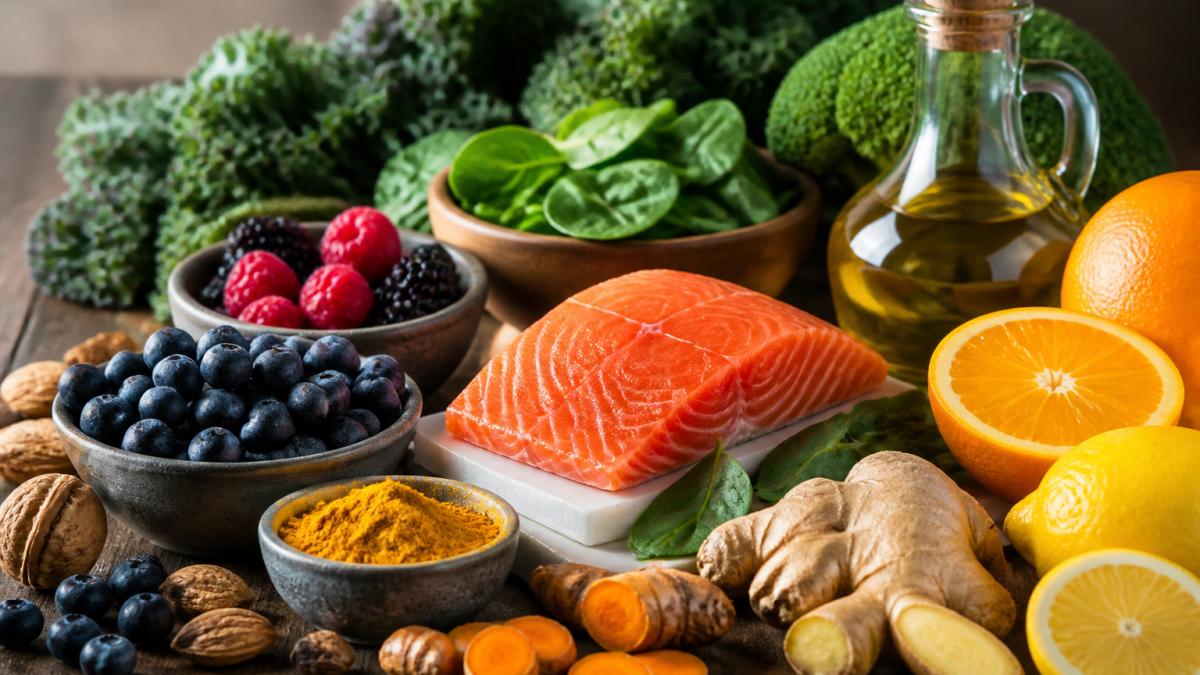
Fatty Fish and Omega-3 Fatty Acids
Fatty fish like salmon, mackerel, sardines, and herring contain omega-3 fatty acids that calm your immune system, reduce inflammatory compounds, and decrease pain and swelling in your spine.
Aim for fatty fish two to three times per week.
Leafy Greens, Berries, and Antioxidant-Rich Foods
Leafy greens like spinach, kale, and collards contain antioxidants that fight oxidative stress. Berries are packed with anthocyanins that reduce inflammatory markers and are low in sugar.
Other antioxidant powerhouses include:
- Citrus fruits (oranges, lemons, grapefruits)
- Tomatoes (cooked tomatoes have higher antioxidant levels)
- Bell peppers
- Broccoli and Brussels sprouts
Turmeric, Ginger, and Healing Spices
Turmeric contains curcumin, which reduces pain and improves function in chronic joint issues. Ginger contains gingerols that block inflammatory pathways. Use both fresh in tea, soups, or stir-fries.
Other spices with anti-inflammatory properties:
- Cinnamon
- Garlic
- Cayenne pepper
- Black pepper (enhances curcumin absorption)
How Long Does It Take for an Anti-Inflammatory Diet to Work
Most people notice reduced pain within 10-14 days of eliminating pro-inflammatory foods, though deeper tissue repair requires 4-8 weeks. A structured elimination protocol helps you systematically identify your personal trigger foods rather than guessing.
The 30-Day Elimination Protocol
Here's how to find your specific triggers:
Days 1-7: Complete Elimination Remove all common inflammatory foods at once: refined carbohydrates, processed oils, red meat, processed meats, alcohol, and refined grains. Replace them with whole foods: fatty fish, leafy greens, berries, olive oil, sweet potatoes, brown rice, and eggs. This isn't a guessing game, you're creating a clean baseline.
Move through each category:
- Whole grains (bread, pasta, rice)
- Legumes (beans, lentils)
- Nightshades (tomatoes, peppers, eggplant)
- Dairy (if you eliminated it)
- Alcohol
- Red meat
Why Timeline Varies So Much
Two people following the same anti-inflammatory diet see different results because they have different trigger foods. One person's pain drops 50% in two weeks. Another sees minimal change. The difference isn't willpower, it's whether they've actually eliminated their personal triggers.
Physical Therapy and Nutrition for Sciatica: A Combined Approach
Sciatica responds well to combining dietary changes with targeted movement. Dietary changes reduce inflammation while physical therapy restores proper movement and nerve mobility. The McKenzie Method identifies which movements reduce your pain; combined with an anti-inflammatory diet, results can be more effective. Start the diet for two weeks, then add targeted physical therapy for optimal results.
Practical Meal Prep Strategies for Limited Mobility
When standing to cook is impossible, build meals that require zero cooking and minimal prep.
No-Cook Anti-Inflammatory Meals
These meals assemble in under five minutes and require no heat or standing:
Grab a Free Discovery Call Today →
Overnight Oats
- Rolled oats + Greek yogurt + almond milk + berries + ground flaxseed
- Mix in a jar, refrigerate overnight, eat cold
Canned Fish Salad Bowls
- Canned salmon or sardines + pre-cut salad mix + cherry tomatoes + olive oil + lemon juice
- Assemble and eat immediately
Greek Yogurt Parfaits
- Greek yogurt + mixed berries + granola + honey
- Layer in a bowl and eat while seated
Hummus and Vegetable Plates
- Store-bought hummus + pre-cut vegetables (carrots, cucumbers, bell peppers, celery)
- Arrange on a plate and dip
Rotisserie Chicken Wraps
- Shredded rotisserie chicken + whole grain tortilla + spinach + tomato + olive oil
- Assemble while seated
Cottage Cheese Bowls
- Cottage cheese + sliced peaches or berries + almonds + cinnamon
- Mix in a bowl and eat cold
Budget-Friendly Anti-Inflammatory Staples
High-quality anti-inflammatory foods don't require expensive specialty items:
Affordable Omega-3 Sources
- Canned salmon with bones ($2-3 per can): cheaper than fresh, equally effective, bones add calcium
- Canned sardines ($1-2 per can): smaller cans, longer shelf life, higher omega-3 density per ounce
- Eggs ($3-4 per dozen): omega-3 enriched eggs cost only slightly more than regular
- Frozen fish fillets ($6-8 per pound): often cheaper than fresh, no waste, same nutritional value
Affordable Vegetables
- Frozen broccoli, Brussels sprouts, mixed vegetables ($1-2 per bag): flash-frozen at peak nutrition, no waste, lasts weeks
- Carrots and celery ($1-2 per bunch): extremely affordable, long shelf life, require no cooking
- Cabbage ($1-2 per head): one of the cheapest vegetables, lasts weeks in the fridge, naturally anti-inflammatory
- Canned tomatoes ($0.50-1 per can): cooked tomatoes have higher lycopene (antioxidant) than fresh, shelf-stable
Affordable Proteins
- Eggs ($3-4 per dozen): versatile, affordable, can be boiled in bulk
- Dried beans and lentils ($1-2 per pound): cook in large batches, freeze in portions, high fiber and plant protein
- Greek yogurt ($3-5 per container): buy larger sizes for better per-ounce cost
- Rotisserie chicken ($6-8 each): already cooked, lasts 3-4 days, shred and portion for multiple meals
Affordable Grains and Starches
- Brown rice in bulk ($0.50-1 per pound): cook large batches, refrigerate or freeze
- Sweet potatoes ($0.50-1 each): microwave in 5 minutes, no prep needed
- Rolled oats ($0.10-0.15 per serving): buy in bulk, shelf-stable for months
- Whole grain bread ($2-3 per loaf): freeze slices, use as needed
Affordable Spices
- Ground turmeric ($3-5 per container): lasts months, use daily in eggs, rice, soups
- Ground ginger ($3-5 per container): add to tea, oatmeal, or yogurt
- Garlic powder ($2-3 per container): add to any savory dish
Important: Supplement and Medication Interactions
If you're taking pain medication or blood thinners, certain anti-inflammatory supplements require caution.
Simple Meal Prep Routine for Severe Pain
If you have someone who can help, or if you have brief windows of lower pain:
Sunday Prep (30 minutes, sitting down)
- Cook brown rice or sweet potatoes
- Cook dried beans or lentils
- Boil a dozen eggs
- Buy rotisserie chicken, shred and portion it
During the Week
- Assemble meals from prepped components: grain + protein + vegetables + olive oil
- Meals take 3-5 minutes to prepare
Getting Started: Your Action Plan
Start here. Don't try to change everything at once.
Week 1: Elimination Remove refined carbs, processed oils, and processed meats. Replace with whole grains, olive oil, and fresh proteins.
Frequently Asked Questions
How can I reduce inflammation in my back naturally through diet?
Focus on nutrient-dense foods rich in antioxidants and omega-3 fatty acids: fatty fish like salmon, leafy greens, berries, and olive oil. Eliminate pro-inflammatory foods including refined carbohydrates, processed sugars, and trans fats. Spices like turmeric (containing curcumin) and ginger have natural anti-inflammatory properties. Consistency matters, most people notice reduced pain and improved mobility within 2-4 weeks of sustained dietary changes, though individual timelines vary.
What foods should I avoid if I have back pain?
Avoid refined carbohydrates, processed sugars, trans fats, and highly processed foods, which trigger systemic inflammation. Limit saturated fats, fried foods, and sugary beverages. These foods increase oxidative stress and inflammation markers that aggravate chronic back pain. Reading labels helps identify hidden sugars and trans fats. Even small reductions in these trigger foods can improve pain levels and support spinal health over time.
Can dietary changes improve the effectiveness of physical therapy?
Yes. Diet and physical therapy work synergistically. An anti-inflammatory diet reduces systemic inflammation while physical therapy addresses movement patterns and strengthens stabilizing muscles. Together, they address both the inflammatory environment and the mechanical causes of pain. Patients who combine nutrition with evidence-based physical therapy, such as the McKenzie Method, typically see improved progress and outcomes than either approach alone.
How does hydration support back pain management?
Proper hydration maintains spinal disc health and supports nutrient delivery to tissues. Dehydration can worsen inflammation and reduce the disc's ability to absorb shock, increasing pain. Aim for adequate daily water intake, and consider adding anti-inflammatory beverages like green tea (rich in antioxidants) to your routine. Hydration alone won't cure back pain, but it's a foundational element of a complete pain-management strategy.