 comparison
Best ATI Alternatives in Michigan: 2026 Clinic Guide
Table of Contents
- Why Patients Seek ATI Alternatives in Michigan
- Physical Therapy vs Chiropractic Care: Key Differences
- Direct Access Physical Therapy Michigan Laws Explained
- Benefits of One-on-One Physical Therapy for Chronic Pain
- How to Evaluate ATI Alternatives in Michigan
- Conclusion: Finding the Right Fit for Your Recovery
- Frequently Asked Questions
Last Updated: September 25, 2026
Why Patients Seek ATI Alternatives in Michigan
When a course of physical therapy ends without lasting relief, patients often start searching for something different. The reason is rarely the exercises themselves. It is the model of care. Many large clinics run on high patient volume, where one therapist supervises several people at once and a technician or aide handles much of the hands-on work. For a simple post-surgical knee, that can be fine. For chronic low back pain or sciatica that has lingered for months, it often is not.
At Spinal Haven, we hear this story constantly: "I did my sessions, I did my home exercises, and I still can't sit through a workday." Below, we break down what actually separates one clinic from another, how to evaluate your options, and the questions that reveal more than any brochure will.
Physical Therapy vs Chiropractic Care: Key Differences
The two professions share a goal, reduce pain and restore function, but they get there through different mechanisms, different training, and different visit structures. Understanding those differences is what lets you choose deliberately instead of defaulting to whichever office is closest.
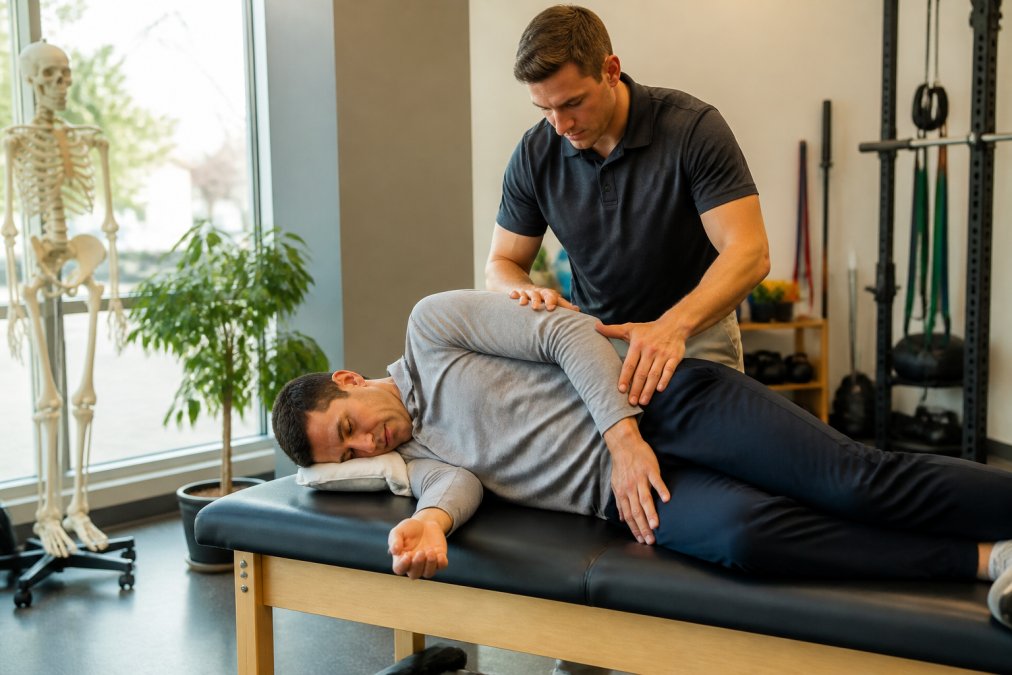
Mechanism. Chiropractic care centers on spinal manipulation and mobilization to improve joint alignment and reduce nerve irritation. Physical therapy focuses on loading, movement retraining, and manual therapy to rebuild strength, mobility, and tolerance. One is largely passive at the point of care; the other is active and progressive by design.
Training and credentials. Chiropractors complete a Doctor of Chiropractic (DC) program and are licensed by the state. Physical therapists now enter practice with a Doctor of Physical Therapy (DPT) and are licensed by the state. Within physical therapy, post-professional certifications matter: the McKenzie Method (Mechanical Diagnosis and Therapy) is a well-established system for classifying spinal pain and directing treatment, and the Selective Functional Movement Assessment (SFMA) is a movement screen used to find the source of dysfunction. A clinician trained in both brings a more complete toolkit than one who relies on a single approach.
Visit structure. Chiropractic visits are often short and scheduled on a recurring cadence. Physical therapy visits are typically longer and built around a plan of care with a defined endpoint. If your goal is to stop needing appointments, that structural difference matters.
Which is better depends on your problem:
- Acute mechanical back pain: Both can help. Chiropractic adjustment may bring faster short-term relief.
- Chronic pain with weakness or movement limitations: Physical therapy generally fits better because it rebuilds capacity, not just alignment.
- Sciatica with a clear nerve component: A movement-based physical therapy assessment often identifies which positions provoke or relieve symptoms.
- Ongoing maintenance: Physical therapy teaches self-management; chiropractic tends toward scheduled repeat visits.
Many patients use both, and the two are not mutually exclusive. The key is knowing what each is for, rather than defaulting to whichever office is closest.
Direct Access Physical Therapy Michigan Laws Explained
Michigan is a direct access state, meaning you can see a physical therapist without a physician referral first. That said, direct access is not unlimited. Michigan law allows a physical therapist to treat a patient without a referral for a defined period, after which a physician referral is required to continue. The exact window and any conditions are set in state statute, so confirm the current rule with the Michigan Public Health Code physical therapy provisions or your clinic before assuming you can skip the referral entirely.
What this means in practice: you can usually start treatment quickly, which matters when pain is limiting your work or training. Most clinics will still coordinate with your doctor, and if your insurance plan requires a referral for coverage, you will need one regardless of what state law permits.
Benefits of One-on-One Physical Therapy for Chronic Pain
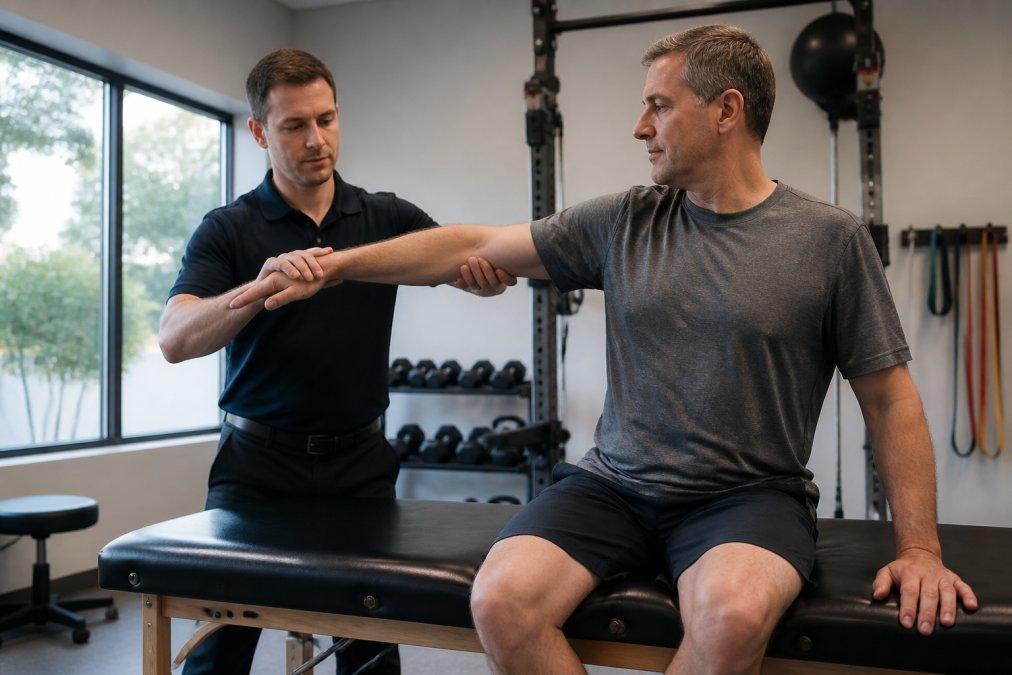
One-on-one care means the therapist treats you and only you for the full session. No shared attention, no handoff to an aide. For chronic pain, that difference compounds over weeks.
Why it matters:
- Assessment depth: A movement-based assessment such as the SFMA looks at how the whole body moves, not just the painful area. Root causes often sit somewhere else.
- Real-time adjustment: The therapist can change the plan mid-session based on how you respond, rather than following a printed protocol.
- Education: You learn what provokes your symptoms and what relieves them, which is the foundation of managing pain without endless appointments.
How to Evaluate ATI Alternatives in Michigan
Evaluating clinics comes down to three things: who treats you, how they assess you, and what they teach you. Ask about all three before you book.
Grab a Free Discovery Call Today →
Credentials and Certifications to Verify
Look for board-certified specialists and advanced certifications. The McKenzie Method (Mechanical Diagnosis and Therapy) is a well-established system for classifying spinal pain and directing treatment. The Selective Functional Movement Assessment (SFMA) is a movement screen used to find the source of dysfunction. A clinician trained in both brings a more complete toolkit than one who relies on a single approach.
When you call, ask specifically:
- Is the treating clinician a DPT, and do they hold post-professional certifications?
- Which certification bodies issued those credentials, and when?
- Do they treat the condition you have, or is it a general practice?
Questions to Ask During Your First Call
Use these to separate clinics quickly:
- Will I see the same therapist every visit, or does it rotate?
- Is treatment one-on-one for the full session, or shared with other patients?
- How do you assess the root cause, not just the symptom?
- What is your plan to help me manage this independently over time?
- Do you offer virtual visits for follow-ups or check-ins?
- How do you handle a flare-up during treatment?
Outcome Framing: What to Listen For
Competitors rarely publish success metrics, so you have to ask for them. A clinic that tracks outcomes can tell you, in plain language, how they define progress, reduced pain scores, return-to-work timelines, or functional milestones. A clinic that cannot describe its own outcomes is guessing. Ask: "How do you know a patient is improving, and how do you measure it?" The answer separates a clinic that manages care from one that manages appointments.
Self-Identification: Which 'ATI' Are You Actually Looking For?
The acronym 'ATI' spans several unrelated fields, and the right alternative depends entirely on which one you mean:
- Physical therapy / rehabilitation: If you are searching because a course of PT did not resolve chronic pain, the evaluation criteria above apply.
- Legal / pretrial services: If you are looking for community-based sentencing or pretrial diversion alternatives, you need a different set of providers and a different evaluation framework.
- Education / teacher certification: If you are looking for alternative certification pathways, the relevant programs and requirements are entirely separate.
- Substance abuse intervention: If you are looking for treatment alternatives, the clinical and licensing landscape is its own category.
Most people searching this term know which category they fall into. If you are not sure, start by naming the outcome you want, less pain, a credential, a legal resolution, and the correct category follows.
Conclusion: Finding the Right Fit for Your Recovery
The best clinic for you is the one that assesses why your pain started, treats you one-on-one, and gives you the tools to stay out of the treatment room. That is a higher bar than most people expect, and it is worth holding clinics to it.
If you have tried generalized physical therapy and still feel stuck, Spinal Haven was built for exactly that situation. Dr.
Frequently Asked Questions
What are the benefits of one-on-one physical therapy?
One-on-one physical therapy means your therapist focuses entirely on you during each session, rather than juggling multiple patients. This allows for real-time adjustments to your treatment plan, deeper assessment of movement patterns, and more thorough patient education. You learn self-management strategies you can use independently, which reduces reliance on ongoing appointments and supports long-term recovery.
Do I need a referral for physical therapy in Michigan?
Michigan allows direct access to physical therapy, meaning you can see a physical therapist without a physician referral in many cases. However, some insurance plans still require a referral for coverage, and certain conditions may need a physician's involvement. Check with your specific insurance provider and the clinic you plan to visit to confirm requirements before scheduling.
How does the McKenzie Method differ from traditional physical therapy?
The McKenzie Method is a structured assessment and treatment approach that focuses on identifying how specific movements affect your symptoms. Rather than passive treatments like ultrasound or massage, it emphasizes active patient participation and directional preference exercises. This method helps patients understand what worsens or improves their pain, giving them tools to manage symptoms independently over time.
Is physical therapy more effective than chiropractic care for sciatica?
Both approaches can help some patients with sciatica, but they work differently. Chiropractic care often focuses on spinal adjustments to improve alignment. Physical therapy addresses movement patterns, strength, and flexibility to address root causes. For chronic or recurring sciatica, physical therapy that includes education and self-management strategies may provide more lasting relief, though individual results vary.
How do I choose the right physical therapy clinic for back pain?
Look for clinics that offer one-on-one sessions, use movement-based assessments, and emphasize patient education. Ask about therapist credentials, such as McKenzie Method certification or SFMA training. Verify whether they offer virtual care options if convenience matters to you. A clinic that identifies root causes rather than just treating symptoms will help you build long-term self-management skills.