 ultimate-guide
Chronic Back Pain Treatment Options: A 2026 Guide
Table of Contents
- What Makes Chronic Back Pain Different From Acute Pain
- Conservative Treatment Options for Chronic Back Pain
- Physical Therapy for Chronic Back Pain: Addressing Root Causes
- The McKenzie Method for Back Pain: Mechanical Diagnosis and Therapy
- Exercises for Chronic Lower Back Pain That Build Lasting Relief
- Interventional and Minimally Invasive Procedures
- The Mental Health and Chronic Pain Cycle
- How to Choose the Right Treatment Path
- Frequently Asked Questions
Last Updated: September 1, 2026
What Makes Chronic Back Pain Different From Acute Pain
Chronic back pain is persistent pain lasting 12 weeks or longer, even after the original injury has been treated. Acute pain is a signal that something is damaged; chronic pain operates differently. Over time, the nervous system becomes sensitized, continuing to generate pain signals even when tissue damage has resolved. This is a measurable neurological process requiring a fundamentally different treatment approach.
The lumbar spine is the most common site for this transition. Poor movement patterns, prolonged inactivity, disrupted sleep, and psychological stress all contribute to keeping the pain cycle active. According to the National Institute of Neurological Disorders and Stroke's overview of back pain, chronic low back pain is one of the leading causes of disability in adults. At Spinal Haven, we see patients arrive having tried treatments designed for acute injury, wondering why nothing worked. The answer is usually that no one has properly assessed what is actually driving the chronic pattern.
Conservative Treatment Options for Chronic Back Pain
The most important thing to understand about conservative management is that "conservative" does not mean passive. The best conservative treatments actively address the mechanical, neurological, and lifestyle factors maintaining chronic pain.
Medication Management: NSAIDs, Muscle Relaxants, and Topical Relievers
Medications have a legitimate role in short-term pain modulation. Nonsteroidal anti-inflammatory drugs reduce inflammation and make movement more accessible during a flare. Muscle relaxants address spasm, and topical pain relievers offer localized relief without systemic effects. Tricyclic antidepressants can help with neuropathic pain and central sensitization.
The limitation is straightforward: none of these resolve the underlying cause of chronic low back pain. Medication alone, without addressing movement and function, typically leads to temporary relief followed by recurrence. The goal is to reduce pain enough that the patient can engage meaningfully in rehabilitation.
Manual Therapy and Acupuncture
Manual therapy techniques can reduce pain and improve mobility in the short term, but work best when paired with active exercise and patient education rather than used alone. Acupuncture has growing evidence supporting its use for chronic pain. As documented in the National Center for Complementary and Integrative Health's clinical summary on acupuncture, acupuncture may help reduce chronic low back pain and improve function in some patients.
Physical Therapy for Chronic Back Pain: Addressing Root Causes
Physical therapy for chronic back pain is most effective when it identifies the specific mechanical and movement faults driving the pain, rather than applying a generic protocol to everyone with a similar diagnosis.
The problem with many physical therapy experiences is that they are volume-based: a standard set of exercises applied to a standard diagnosis with limited time for individual assessment. Generic physical therapy did not work because it did not address your specific problem.
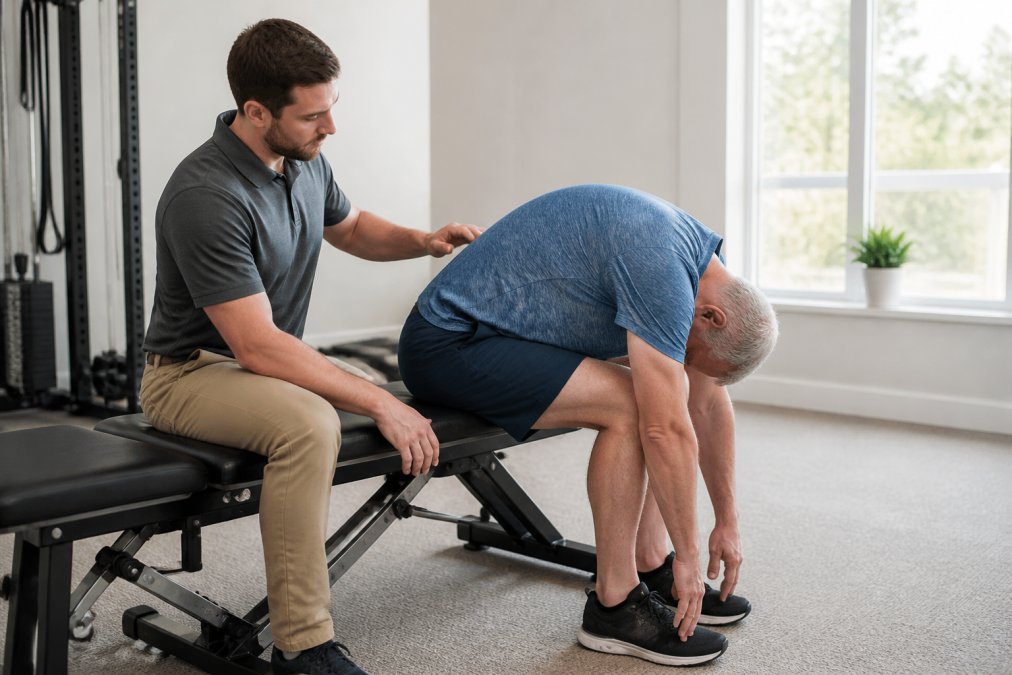
Evidence-based physical therapy begins with a thorough movement assessment to identify which directions increase pain, which reduce it, and which patterns are contributing to the chronic cycle. A personalized plan then targets those specific deficits with progressive loading, functional restoration, and patient education.
How One-on-One Assessment Changes the Outcome
One-on-one sessions allow a clinician to observe how you actually move. Two people with identical MRI findings can have completely different movement patterns and treatment needs. A group or high-volume clinic setting rarely has the time to make that distinction.
The Selective Functional Movement Assessment, or SFMA, is one structured framework for individualized evaluation. It systematically examines movement patterns to identify which dysfunctions most likely contribute to pain. This is the difference between treating a symptom and treating a root cause.
The McKenzie Method for Back Pain: Mechanical Diagnosis and Therapy
The McKenzie Method, formally known as Mechanical Diagnosis and Therapy, identifies how a patient's pain responds to specific repeated movements and positions. Most spinal pain can be categorized mechanically, and the right repeated movement can centralize and reduce pain without passive intervention.
What sets this method apart is that it actively builds patient independence. The clinician identifies the directional preference, teaches the corresponding exercises, and progressively reduces the need for hands-on treatment. Patients learn to manage their own symptoms.
Dr. Elizabeth Kingshott Cary at Spinal Haven holds certification in the McKenzie Method, a rigorous credential requiring examination beyond basic training. For patients who have been through generic physical therapy without success, a McKenzie-certified assessment often reveals a directional preference that was never identified in previous care.
Exercises for Chronic Lower Back Pain That Build Lasting Relief
Exercises for chronic lower back pain are not one-size-fits-all. The right exercise depends entirely on what assessment reveals about your specific movement pattern and directional preference.
Certain categories of exercise have strong evidence for lumbar spine rehabilitation:
- Extension-based exercises (such as prone press-ups): Effective for patients whose pain centralizes with backward bending
- Flexion-based exercises (such as knee-to-chest stretches): More appropriate for patients with stenosis-related pain that eases with forward bending
- Core stabilization work: Targets deep spinal stabilizers commonly inhibited in chronic low back pain
- Hip strengthening: Weakness in the glutes and hip external rotators frequently contributes to lumbar loading patterns that sustain pain
- Walking: Improves circulation, reduces central sensitization, and supports functional restoration without high joint loading
The most common mistake is choosing exercises based on what you have read online rather than what your individual assessment indicates. An extension exercise that helps one person can aggravate another.

A good physical therapy plan includes a home exercise program you understand well enough to perform independently, adjust when symptoms change, and progress over time.
| Exercise Category | Best For | Frequency |
|---|---|---|
| Extension exercises (prone press-ups) | Disc-related pain, centralization pattern | Daily, multiple sets |
| Flexion exercises (knee-to-chest) | Stenosis-related pain, forward-bending relief | Daily, as tolerated |
| Core stabilization | General lumbar instability, recurrence prevention | 4-5 times per week |
| Hip strengthening | Gluteal inhibition, poor lumbar load transfer | 3-4 times per week |
| Walking | All chronic low back pain presentations | Daily, 20-30 minutes |
Interventional and Minimally Invasive Procedures
Interventional procedures are appropriate when conservative management has been genuinely optimized and pain remains limiting. Many patients are referred to interventional pain management before a thorough mechanical assessment has been completed.
Epidural Steroid Injections and Nerve Blocks
An epidural steroid injection delivers corticosteroid medication directly into the epidural space to reduce inflammation around irritated nerve roots. For patients with significant neuropathic pain or acute radiculopathy, this can provide a meaningful window of reduced pain that allows engagement in rehabilitation.
A nerve block, including a sacroiliac joint block or facet joint injection, targets specific pain generators to both diagnose and treat. These procedures are not cures; their value is in reducing pain enough to make active rehabilitation possible or in providing diagnostic clarity about the pain source.
Radiofrequency Ablation, Spinal Cord Stimulation, and PRP Therapy
Radiofrequency ablation uses heat to interrupt pain signals from specific nerves, typically the medial branch nerves serving the facet joints. It is most effective when diagnostic nerve blocks have already confirmed those nerves as the pain source.
Spinal cord stimulation involves implanting a device that delivers electrical impulses to the spinal cord, modulating pain signals. It is generally reserved for patients with chronic pain that has not responded to multiple other treatments.
Platelet-rich plasma therapy uses concentrated growth factors from the patient's own blood to support tissue healing. As summarized in the American Academy of Orthopaedic Surgeons' information on biologic treatments for spine, biologic scaffolds and PRP are emerging options but are not yet considered standard of care for most presentations.
The Mental Health and Chronic Pain Cycle
Chronic back pain and mental health are interconnected in a measurable, physiological way. Persistent pain increases stress hormones, disrupts sleep, reduces physical activity, and narrows a person's world. All of those changes amplify pain sensitivity. The cycle is self-reinforcing, and no amount of physical treatment will fully resolve chronic low back pain if the psychological component is ignored.
Cognitive behavioral therapy, or CBT, is the most well-studied psychological intervention for chronic pain. It addresses the thought patterns, avoidance behaviors, and fear-of-movement responses that keep the nervous system in a heightened pain state. According to the American Psychological Association's resources on chronic pain and CBT, CBT is an evidence-based intervention that can meaningfully reduce pain intensity and improve function.
Biofeedback trains patients to recognize and regulate physiological responses, including muscle tension and stress responses, that contribute to pain amplification. A multidisciplinary approach addressing both mechanical and psychological drivers of pain consistently produces better outcomes than either approach alone.
How to Choose the Right Treatment Path
Choosing among chronic back pain treatment options is about matching the treatment to the actual driver of your pain.
A reasonable decision framework looks like this:
-
Start with a thorough assessment. Ensure someone has identified what is mechanically and functionally contributing to your pain. A diagnosis like "lumbar disc herniation" describes an imaging finding, not a treatment plan.
-
Exhaust well-delivered conservative care first. Generic physical therapy that did not work is not evidence that physical therapy does not work. Seek out a provider who uses individualized assessment methods before concluding conservative care has failed.
-
Add interventional procedures strategically. If conservative management has been optimized and pain remains limiting, targeted procedures can create the window needed for rehabilitation to take hold.
-
Address the psychological dimension. If pain has been present for more than six months, a referral to a pain psychologist or CBT practitioner recognizes that chronic pain changes the nervous system and those changes require direct treatment.
-
Measure outcomes that matter to you. Not just pain scores, but function: Can you return to work? Exercise? Participate in family activities? Patient-centered care means the treatment goal is your life.
The patients at Spinal Haven who achieve the best long-term outcomes are those who commit to understanding what drives their symptoms, not just chasing relief. That shift in perspective, from passive recipient of treatment to active participant in recovery, is where lasting improvement begins.
Chronic back pain does not have to define your daily life, but finding the right treatment path requires more than trying whatever is available next. Spinal Haven specializes in individualized, root-cause assessment, combining the McKenzie Method and the Selective Functional Movement Assessment to identify what is actually driving your pain and build a plan around your specific movement patterns and goals. If you have been through treatment that did not deliver lasting results, book a discovery call with Spinal Haven to find out what a different approach looks like.
=== FAQ ANSWERS (audit these too, same rules) ===
[1] Q: Will chronic back pain ever go away on its own? A: Some people do see improvement over time, but chronic back pain, defined as pain lasting more than 12 weeks, rarely resolves without addressing its underlying cause. Passive rest tends to make it worse, not better. Evidence-based interventions like physical therapy, movement retraining, and cognitive behavioral therapy give the lumbar spine a better chance of lasting recovery than simply waiting it out. A qualified professional can help determine which approach fits your specific presentation.
[2] Q: What are the most effective non-surgical treatments for chronic back pain? A: The strongest evidence supports a combination of physical therapy, exercise, and cognitive behavioral therapy as the foundation of conservative management. Manual therapy, acupuncture, and topical pain relievers can complement these approaches. For neuropathic pain that doesn't respond to conservative care, minimally invasive procedures like epidural steroid injections, facet joint injections, or radiofrequency ablation are options worth discussing with a pain management specialist before considering surgery.
[3] Q: How does physical therapy address the root cause of back pain rather than just the symptoms? A: Generic physical therapy often treats the area that hurts. Specialized approaches like the Selective Functional Movement Assessment (SFMA) and the McKenzie Method go further by identifying which specific movements provoke or relieve pain and why. This mechanical diagnosis guides a personalized treatment plan targeting the actual movement dysfunction, not just the symptom site. Patients who understand what drives their pain are also better equipped to manage flare-ups independently, reducing dependence on ongoing appointments.
[4] Q: What is the role of the McKenzie Method in treating spinal pain? A: The McKenzie Method, formally called Mechanical Diagnosis and Therapy (MDT), classifies back pain by how it responds to repeated movements and positions. A certified MDT clinician identifies whether your pain centralizes or worsens with specific directions of movement, then builds a home exercise plan around that pattern. This approach is particularly effective for lumbar spine pain and sciatica because it gives patients a self-treatment tool they can apply whenever symptoms flare, reducing the need for passive, ongoing care.
[5] Q: How does chronic back pain affect mental health and daily function? A: Chronic low back pain and mental health are closely linked. Persistent pain activates the nervous system's stress response, which can worsen anxiety and depression, and those conditions, in turn, lower pain tolerance and reduce motivation to exercise. Cognitive behavioral therapy (CBT) and biofeedback are recognized tools for interrupting this cycle. Addressing the psychological dimension of chronic pain is not optional; it is a core component of any multidisciplinary approach that produces durable results.
[6] Q: When should you see a specialist for persistent back pain? A: See a specialist if your pain has lasted more than six weeks, is worsening despite rest, radiates down one or both legs, or is accompanied by numbness, weakness, or changes in bladder or bowel function. A qualified professional trained in mechanical diagnosis can determine whether conservative management is appropriate or whether interventional options like nerve blocks, sacroiliac joint block, or imaging are warranted. Early specialist input generally leads to faster functional restoration.
Frequently Asked Questions
Will chronic back pain ever go away on its own?
Some people do see improvement over time, but chronic back pain, defined as pain lasting more than 12 weeks, rarely resolves without addressing its underlying cause. Passive rest tends to make it worse, not better. Evidence-based interventions like physical therapy, movement retraining, and cognitive behavioral therapy give the lumbar spine a better chance of lasting recovery than simply waiting it out. A qualified professional can help determine which approach fits your specific presentation.
What are the most effective non-surgical treatments for chronic back pain?
The strongest evidence supports a combination of physical therapy, exercise, and cognitive behavioral therapy as the foundation of conservative management. Manual therapy, acupuncture, and topical pain relievers can complement these approaches. For neuropathic pain that doesn't respond to conservative care, minimally invasive procedures like epidural steroid injections, facet joint injections, or radiofrequency ablation are options worth discussing with a pain management specialist before considering surgery.
How does physical therapy address the root cause of back pain rather than just the symptoms?
Generic physical therapy often treats the area that hurts. Specialized approaches like the Selective Functional Movement Assessment (SFMA) and the McKenzie Method go further by identifying which specific movements provoke or relieve pain and why. This mechanical diagnosis guides a personalized treatment plan targeting the actual movement dysfunction, not just the symptom site. Patients who understand what drives their pain are also better equipped to manage flare-ups independently, reducing dependence on ongoing appointments.
What is the role of the McKenzie Method in treating spinal pain?
The McKenzie Method, formally called Mechanical Diagnosis and Therapy (MDT), classifies back pain by how it responds to repeated movements and positions. A certified MDT clinician identifies whether your pain centralizes or worsens with specific directions of movement, then builds a home exercise plan around that pattern. This approach is particularly effective for lumbar spine pain and sciatica because it gives patients a self-treatment tool they can apply whenever symptoms flare, reducing the need for passive, ongoing care.
How does chronic back pain affect mental health and daily function?
Chronic low back pain and mental health are closely linked. Persistent pain activates the nervous system's stress response, which can worsen anxiety and depression, and those conditions, in turn, lower pain tolerance and reduce motivation to exercise. Cognitive behavioral therapy (CBT) and biofeedback are recognized tools for interrupting this cycle. Addressing the psychological dimension of chronic pain is not optional; it is a core component of any multidisciplinary approach that produces durable results.
When should you see a specialist for persistent back pain?
See a specialist if your pain has lasted more than six weeks, is worsening despite rest, radiates down one or both legs, or is accompanied by numbness, weakness, or changes in bladder or bowel function. A qualified professional trained in mechanical diagnosis can determine whether conservative management is appropriate or whether interventional options like nerve blocks, sacroiliac joint block, or imaging are warranted. Early specialist input generally leads to faster functional restoration.
This article was written using GrandRanker