 ultimate-guide
Physical Therapy for Active Adults: A 2026 Guide
Table of Contents
- Why Active Adults Are Choosing Physical Therapy First
- Physical Therapy for Back Pain Relief: What Actually Works
- SFMA Movement Screening Benefits: Finding the Root Cause
- A Realistic Physical Therapy Recovery Timeline
- Self-Management Strategies for Chronic Pain That Hold Up
- Preventative Care, Wearables, and the Psychology of Staying Active
- Conclusion
- Frequently Asked Questions
Last Updated: September 17, 2026
Why Active Adults Are Choosing Physical Therapy First
Physical therapy is a movement-based treatment approach that uses targeted exercise, manual techniques, and education to reduce pain and restore function without relying on surgery or long-term medication. Physical therapy is a movement-based treatment approach that uses targeted exercise, manual techniques, and education to reduce pain and restore function without relying on surgery or long-term medication. We've watched a quiet shift happen among active adults: instead of waiting for a doctor's referral after an injury, more people are seeking physical therapy for active adults as a first step, not a last resort.
The reasoning is practical. When your back hurts, your instinct is to rest. That instinct is usually wrong. Prolonged rest weakens the muscles that protect your spine, and the pain often returns worse. A structured physical therapy program keeps you moving in controlled, safe ways while your tissues heal.
What most guides miss is that physical therapy isn't one thing. A general clinic visit and a root-cause assessment are different products entirely. The first treats where it hurts.
That distinction matters more than any single exercise.
Physical Therapy for Back Pain Relief: What Actually Works
Effective physical therapy for back pain relief often combines directional exercise, manual therapy, and a home program you actually follow. Passive treatments like heat, ultrasound, and massage feel good in the moment but rarely produce lasting change on their own.
Active care is where the results live. That means:
- Strengthening the muscles that support your spine
- Restoring range of motion in stiff segments
- Retraining how you bend, lift, and sit
- Building endurance so fatigue doesn't cause flare-ups
The McKenzie Method and Mechanical Diagnosis
The McKenzie Method is a system of assessment and treatment that classifies back and neck pain by how symptoms respond to repeated movements. Instead of treating "back pain" as one condition, a trained clinician tests whether your symptoms centralize, peripheralize, or stay the same with specific directions of movement.
McKenzie Institute International overview of Mechanical Diagnosis and Therapy
SFMA Movement Screening Benefits: Finding the Root Cause
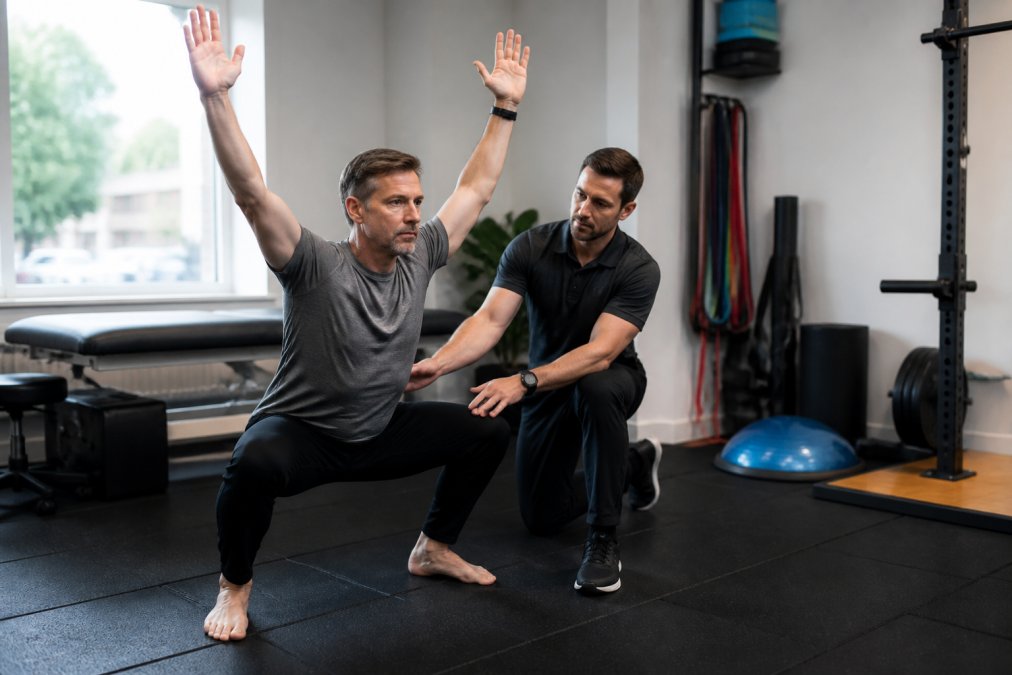
The Selective Functional Movement Assessment (SFMA) is a whole-body screening tool that breaks down fundamental movements to find where mobility or stability breaks down. Rather than examining only the painful area, SFMA movement screening benefits come from exposing the compensation patterns that created the problem.
A Realistic Physical Therapy Recovery Timeline
Many active adults notice meaningful change within two to six weeks of consistent care, though the full timeline depends on how long the problem has been present, your baseline strength, and how faithfully you do your home program. There's no universal schedule, and anyone who promises one is guessing.
- Symptom behavior: Is pain centralizing, lasting less time after activity, or waking you up less at night?
- Range of motion: Can you reach the positions your sport or work demands without a catch or a pinch?
- Load tolerance: Can you handle progressive resistance without a next-day flare?
- Movement quality: Has the compensation pattern that started the problem actually changed?
What Progress Looks Like Week by Week
Early progress is often about symptom behavior, not pain elimination. You might notice pain centralizing, lasting less time after activity, or waking you up less at night.
- Weeks 1-2: Reduction or complete abolishment of symptoms.
- Weeks 3-4: Strength work begins in earnest. Daily activities feel less threatening, and you start tolerating positions that used to cause a flare.
- Weeks 5-8: You start loading the spine more aggressively. Return to training or work becomes realistic, and the home program shifts from symptom control to capacity building.
- Beyond 8 weeks: Maintenance. The goal shifts from recovery to prevention, and the sessions get further apart on purpose.
Return-to-Activity Criteria, Not Calendar Dates
A calendar can't clear you for a golf swing, a heavy deadlift, or a full day at a desk followed by an evening workout. Criteria can. Before returning to a demanding activity, most practitioners look for:
- Full or near-full pain-free range in the involved region
- The ability to complete a session of the target activity at reduced intensity without a next-day flare
- Symmetrical movement on a screen like the overhead squat or a single-leg hinge
- A written flare-up plan you've already rehearsed once
Why the Timeline Varies So Much
Two people with the same diagnosis can have very different timelines. The variables that matter most:
- How long the problem has been present. A two-week flare behaves differently from a two-year pattern.
- Baseline strength and movement literacy. If you already train, you'll usually progress faster because you can tolerate load sooner.
- Sleep and stress. Recovery is a physiological process, and it competes with everything else your body is managing.
- Adherence to the home program. The sessions are the tune-up; the home program is the engine.
Self-Management Strategies for Chronic Pain That Hold Up
Self-management strategies for chronic pain work when they're specific and repeatable, not when they're a vague instruction to "stay active." The patients who do best long-term are the ones who leave with a written plan and know exactly what to do when symptoms flare.
Grab a Free Discovery Call Today →
A practical framework:
- Identify your two or three directional exercises and do them daily
- Set a walking or cycling baseline you can maintain on a bad day
- Track symptoms weekly, not hourly, to avoid over-monitoring
- Know your flare-up protocol before you need it
- Schedule one strength session per week you never skip
The Psychology of Trusting Your Body Again
Chronic pain changes how you trust your body. Every flare teaches your nervous system that movement is dangerous, and that lesson accumulates. Rebuilding trust is a skill, and it develops through repeated evidence that movement is safe.
A few principles that make this work:
- Grade the exposure. Start below the level that flares you, then add load or range in small steps.
- Separate pain from harm. A 3-out-of-10 ache during a controlled movement is information, not injury.
- Log the wins. Note the movements that went better than expected. Your memory for flares is naturally stronger than your memory for successes.
- Plan for the bad day. A flare is not a failure of the plan; it's a test of the flare protocol.
Flare-Up Protocols Beat Willpower
Willpower is a terrible long-term strategy because it's finite. A written flare-up protocol is better because it removes the decision from the moment you're least equipped to make it.
A workable protocol has three tiers:
- Green day: Full program as written.
- Yellow day: Reduce volume by half, keep the directional exercises, skip the heaviest loading.
- Red day: Symptom-relief positions only, plus a short walk if tolerated. Reassess in 48 hours.
The Loop Worth Protecting
Staying active protects mood, sleep, and confidence, and those feed back into physical recovery. People who feel capable tend to move more. People who move more tend to stay capable. That loop is worth protecting deliberately.
CDC physical activity guidance for adults
Preventative Care, Wearables, and the Psychology of Staying Active
Preventative physical therapy is care you seek before pain becomes limiting. Reactive care waits for a problem. Preventative care looks for asymmetries, stiffness, and strength deficits while they're still correctable.
CDC physical activity guidance for adults
Conclusion
Chronic back pain has a way of shrinking your life, one skipped activity at a time. Reversing that doesn't require endless appointments or a passive treatment you can't sustain. It requires an accurate diagnosis of the root cause, a personalized plan, and the tools to manage your own movement with confidence.
Frequently Asked Questions
How does physical therapy differ for active adults versus geriatric patients?
Active adults usually arrive with a different goal set. They want to return to lifting, running, or demanding work schedules, not just maintain basic function. That shifts the plan toward load tolerance, movement quality, and performance benchmarks rather than fall prevention alone. Geriatric physical therapy often prioritizes balance training and independence with daily tasks. For active adults, a physical therapist will typically layer in muscle strengthening, gait analysis, and sport-specific progressions so the person can resume the intensity they had before pain started. The assessment and the exit criteria look different even when the diagnosis is similar.
What are the benefits of the McKenzie Method for back pain?
The McKenzie Method uses repeated, directional movements to see how symptoms respond, then builds a plan around what reduces them. For many people with back pain, this means learning a specific exercise direction that centralizes pain away from the leg and toward the spine. The benefit is that it gives you a clear cause-and-effect test you can repeat at home. It also separates people who respond well to movement from those who need a different approach. A certified clinician can tell you which category you fall into during the first few visits.
How can the Selective Functional Movement Assessment (SFMA) identify hidden movement flaws?
SFMA breaks full-body movements into patterns and scores them, then drills into the ones that cause pain. It separates a mobility problem from a stability or motor control problem, which changes the treatment entirely. For example, someone with recurring sciatica may pass a hip hinge but fail a cervical pattern, revealing a driver they never suspected. The screening benefits show up in the plan: instead of stretching everything, you address the one broken link. This is why a movement-based assessment often finds issues that a symptom-only exam misses.
When should an active adult seek physical therapy for minor aches?
A reasonable rule is when an ache has lasted more than two weeks, keeps returning, or changes how you move during workouts. Pain that wakes you at night, radiates down an arm or leg, or comes with numbness warrants a prompt evaluation. Preventative care at this stage is usually shorter and cheaper than waiting for a flare-up that sidelines you for months. A physical therapist can screen range of motion, joint health, and neuromuscular control, then give you a short home program. If nothing is wrong, you leave with a maintenance routine.