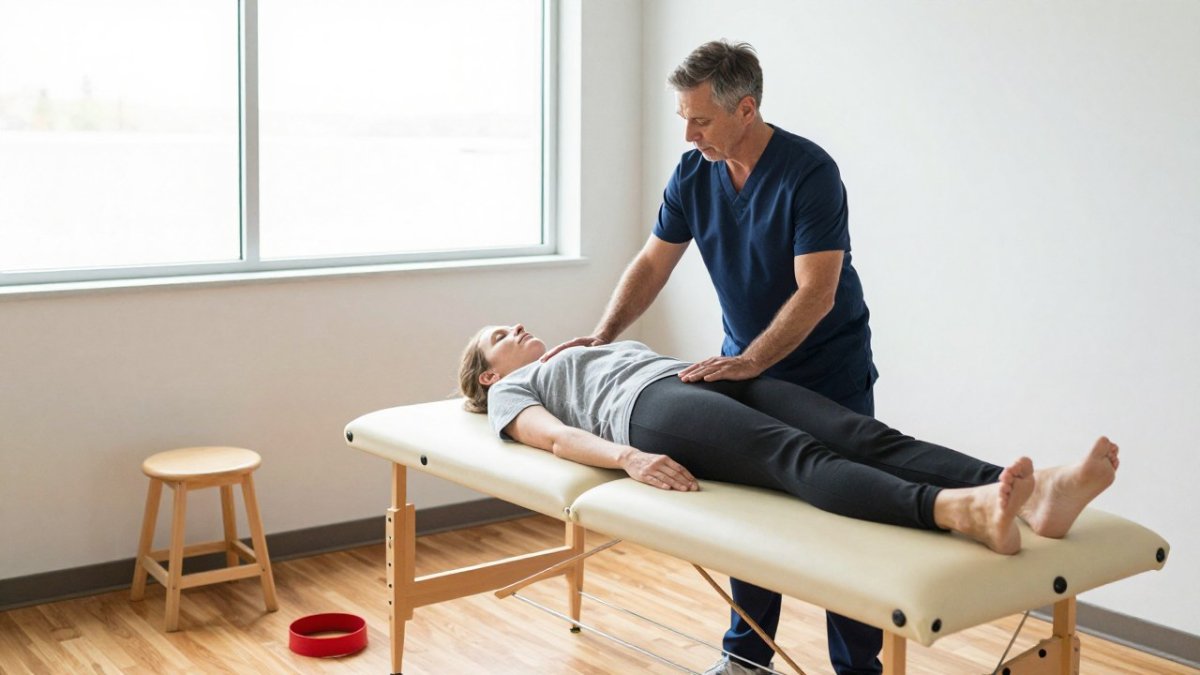
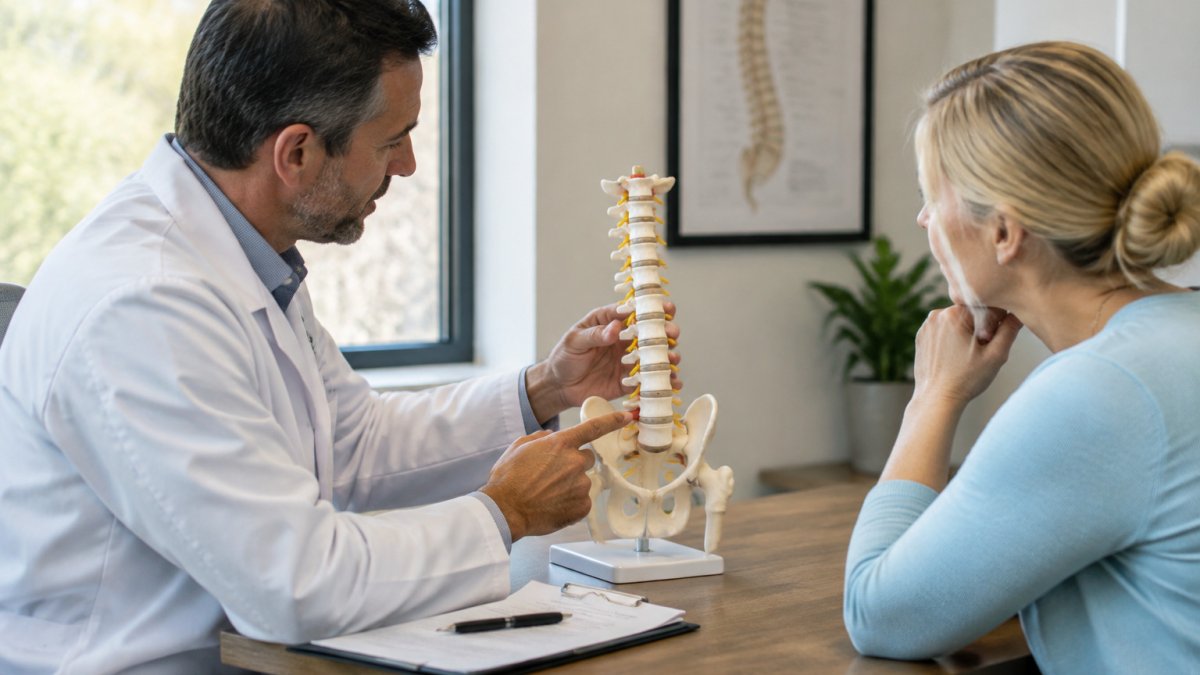
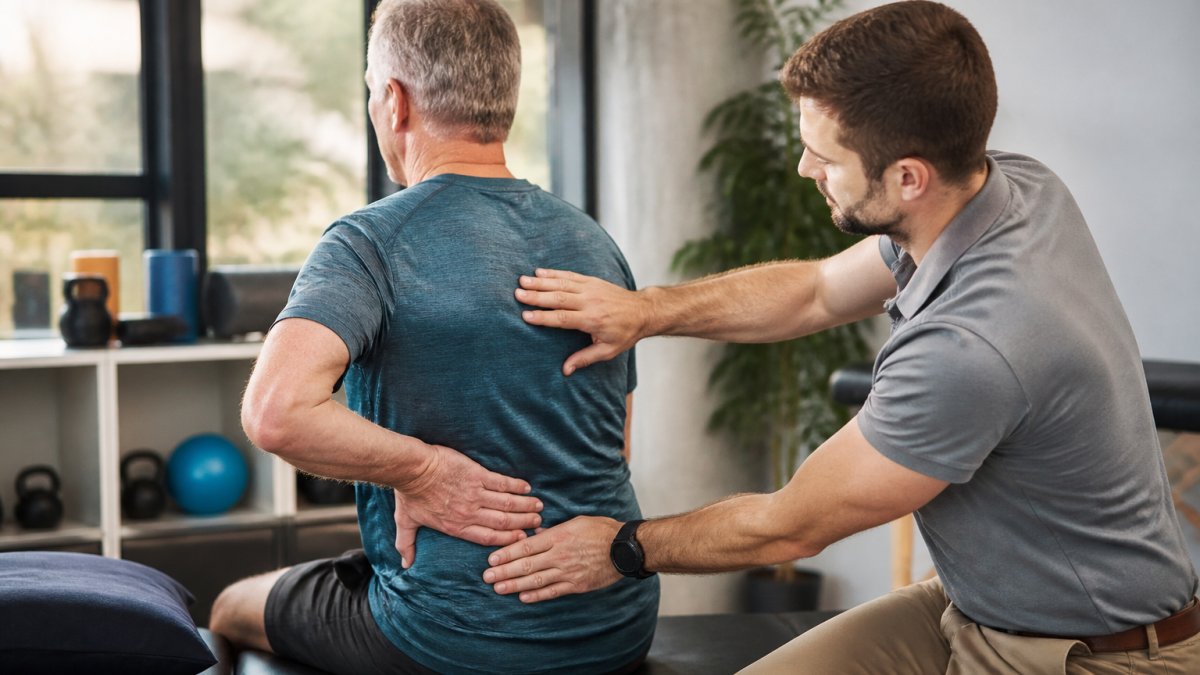
 Ultimate guide
Evidence-Based Recovery Plans for Lumbar Disc Issues
Last Updated: November 2, 2026
Quick Summary
Evidence based recovery plans for lumbar disc issues start with conservative care, combining education, activity modification, and graded exercise before considering surgery. A staged physical therapy protocol moves through symptom control, mobility, strengthening, and return to function, with progression guided by how your symptoms respond.
- Conservative treatment is the recommended starting point for most lumbar disc herniation cases, not bed rest.
- Phase 1 of a herniated disc protocol covers weeks 0-2 with symptom control and directional preference exercises.
- Progression is based on symptom response: stable or improved pain over 24 hours allows slight increases in load.
- Physical therapy after lumbar disc surgery was reported effective for pain, function, and quality of life.
- Seek prompt care for worsening leg weakness, bowel or bladder changes, or saddle numbness.
Table of Contents
- Why Lumbar Disc Recovery Needs a Plan, Not Guesswork
- What Lumbar Disc Herniation Recovery Actually Looks Like
- Inside a Herniated Disc Physical Therapy Protocol
- Lumbar Disc Herniation With Radiculopathy Exercises That Fit Your Symptoms
- Recovery Milestones by Treatment Path
- Self-Management, Shared Decisions, and Red Flags
- Book a Discovery Call to Build Your Recovery Plan
- Frequently Asked Questions
Why Lumbar Disc Recovery Needs a Plan, Not Guesswork
A lumbar disc issue is a problem with one of the cushioning discs between the bones of the lower spine, and the way it is managed in the first weeks and months shapes how well you move a year later.
That matters because the research keeps pointing the same direction.
Below, we walk through what recovery looks like on both paths, the milestones that tell you whether you are on track, and the red flags that mean you stop reading and call a clinician.
What Lumbar Disc Herniation Recovery Actually Looks Like
Recovery from a lumbar disc herniation is a staged process, not a single event. Most people improve with conservative care over weeks to months, while a smaller group needs surgery and a structured rehabilitation plan afterward.
The World Health Organization notes in its low back pain fact sheet that most acute low back pain symptoms go away on their own, but symptoms continue for some people.
Conservative Care First: What the Guidelines Say
Conservative treatment is the recommended starting point for most lumbar disc herniation cases, and it typically combines education, activity modification, and graded exercise rather than bed rest. Learn how the McKenzie Method supports self-treatment for spine pain.
That guidance is consistent across recent work. Researchers publishing in Neurospine's evidence-based clinical practice guidelines for lumbar disc herniation in 2025 developed guidelines specifically for treating lumbar disc herniation, and the through-line is a stepped approach: start with non-surgical management, reassess, and escalate only when the clinical picture calls for it.
When Surgery Enters the Conversation
Surgery is considered when conservative care has not delivered adequate relief, when nerve compression is producing progressive weakness, or when symptoms are severe enough that waiting is no longer reasonable.
A 2025 review by AG Brotis and colleagues reported that physical therapy after lumbar disc surgery was effective in alleviating pain and improving function and quality of life. In plain terms: surgery is not the finish line.
Inside a Herniated Disc Physical Therapy Protocol
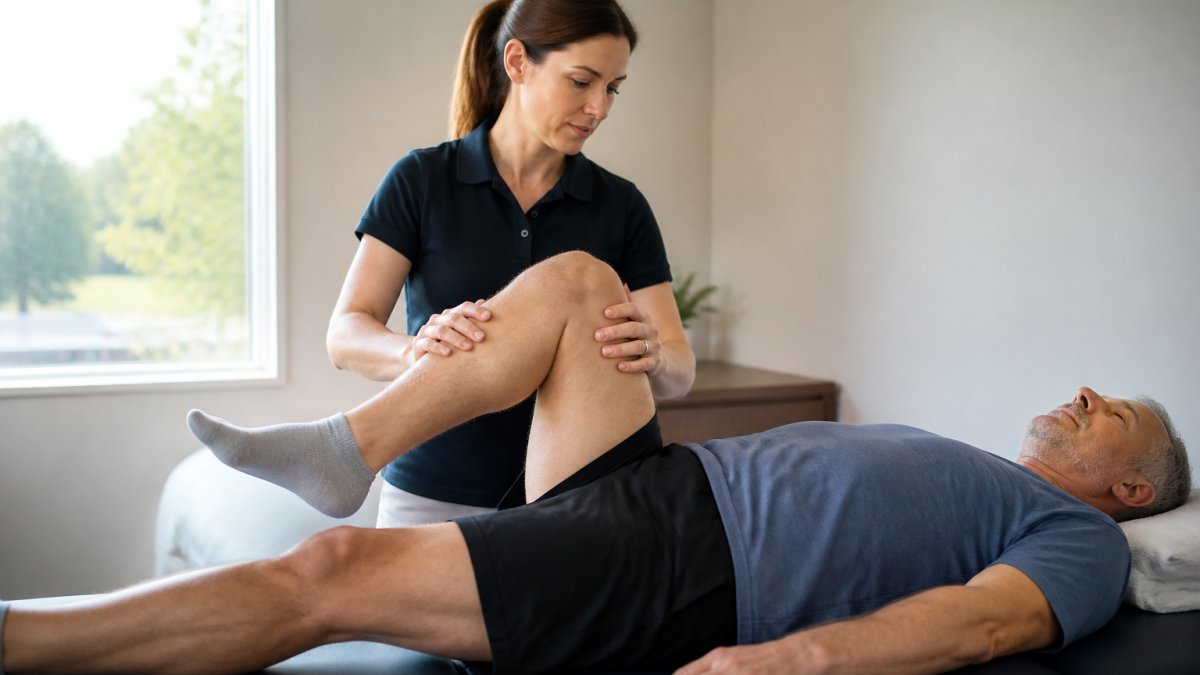
A herniated disc physical therapy protocol is a sequenced plan that starts with assessment, adds movement in controlled doses, and progresses based on how your symptoms respond.
Assessment Before Exercise
Assessment comes first because the same MRI finding can produce different symptoms in two people. A movement-based exam looks at how you bend, sit, stand, and walk, and which positions ease or worsen the leg symptoms. Clinicians also screen for red flags such as progressive weakness, bowel or bladder changes, and saddle numbness that would require urgent medical evaluation.
At Spinal Haven, the Selective Functional Movement Assessment (SFMA) is used to look for the root cause of pain rather than only the spot that hurts.
Phase 1: Symptom Control and Directional Preference (Weeks 0-2)
The first phase aims to reduce leg symptoms and establish a safe starting point. Treatment often includes education on positions that reduce nerve irritation, gentle movement breaks, and short walking bouts. Many clinicians use directional preference exercises, such as prone press-ups or side glides, when they centralize symptoms (move pain from the leg toward the back).
Watch out: if a directional exercise increases leg pain or causes new numbness, stop and report it to your clinician rather than pushing through.
Phase 2: Mobility and Motor Control (Weeks 2-6)
Once symptoms are stable, the plan adds mobility work for the hips and thoracic spine, and low-load motor control exercises for the deep abdominal and back muscles. Examples include pelvic tilts, dead bugs, and bird-dogs performed with slow, controlled breathing. The goal is not fatigue but coordination. Progression is based on symptom response: if pain remains stable or improves over 24 hours, load or range can increase slightly.
Phase 3: Strengthening and Load Progression (Weeks 6-12)
This phase introduces progressive resistance for the core, hips, and back, using body weight, bands, or light weights. The focus shifts to building capacity for work and daily activities. Clinicians monitor for next-day symptom flare; a mild increase in soreness that resolves within 24 hours is acceptable, but sharp leg pain or new neurological symptoms warrant a step back.
Phase 4: Return to Function and Sport (Months 3-6)
The final phase is about bridging to real-life demands. For office workers, this may mean prolonged sitting tolerance and carrying briefcases; for more physical roles, it involves lifting mechanics and gradual load exposure. Return-to-sport or heavy work is typically staged over weeks, with criteria such as pain-free range of motion, symmetrical strength, and the ability to perform job-specific tasks without symptom exacerbation.
Progression, Not Perfection
Progression means adding load, range, or frequency in small steps and holding steady when symptoms flare. A common mistake is doing too much on a good day and paying for it for the next three. Expect the plan to change. Directional preference, tolerance, and your work demands all shape what comes next. The goal is independence, not a permanent appointment schedule.
Grab a Free Discovery Call Today →
Lumbar Disc Herniation With Radiculopathy Exercises That Fit Your Symptoms
Exercises for lumbar disc herniation with radiculopathy should be selected by symptom response, not by a generic list.
A 2025 systematic review in Healthcare's review of exercise-based rehabilitation for lumbar conditions examined exercise-based rehabilitation approaches including hydrotherapy, core stability training, Pilates, and suspension exercise.
If you want a starting point for self-directed work, our guide to McKenzie exercises for lower back pain walks through the how-to.
Recovery Milestones by Treatment Path
The most useful milestones are tied to function, what you can do, rather than just elapsed time. Below, we break down milestones for the two main paths and explain how to measure progress beyond the calendar.
| Milestone | Non-Surgical Path | Post-Surgical Path | What It Signals |
|---|---|---|---|
| Early phase | First 1-2 weeks: symptom education, gentle movement, directional preference | First weeks: wound care, walking, light activity, nerve glides as tolerated | Tolerance is being established |
| Building phase | Weeks 2-6: graded exercise, mobility work, core control | Weeks 2-6: formal physical therapy begins, progressive walking | Tissue healing and control improve |
| Strengthening | Weeks 6-12: load progression, return to routine | Months 3-6: strength and function rebuild | Capacity returns for daily demands |
| Full return | Months 3-6: return to work and fitness | Up to one year for full recovery | Long-term outcomes settle |
Non-Surgical Milestones
The non-surgical path typically moves from calming symptoms to restoring mobility to rebuilding strength, with return to work and fitness usually measured in months rather than weeks. In the first two weeks, the focus is on education, activity modification, and finding positions that reduce leg symptoms. By weeks 2-6, most people can add graded exercise and mobility work. Between weeks 6 and 12, strengthening becomes the priority, and many return to desk work with modifications.
Post-Surgical Milestones
After lumbar fusion or discectomy, bone and tissue healing set the pace. Lifting restrictions and activity restrictions are common early on, and return to heavier work generally takes longer than return to desk work. In the first weeks, wound care and short walks are the main activities. Strength and function rebuild over months 3-6, and full recovery may take up to a year, especially for fusion.
Measuring Progress Beyond Time
Recovery is better measured by function than by the calendar. You can also track simple benchmarks: how long you can sit comfortably, how far you can walk without leg pain, and whether you can perform daily tasks like putting on socks or lifting a grocery bag.
Watch out: if you hit a plateau or your symptoms worsen after a period of improvement, that is a signal to reassess with your clinician rather than push through.
Self-Management, Shared Decisions, and Red Flags
Self-management is the part of an evidence based recovery plan that stays with you after discharge, and it works best when decisions are shared between you and your clinician.
Watch out: the most common error we see is treating a good week as permission to skip the plan entirely. The second is ignoring symptoms that need urgent attention.
Seek prompt medical care for new or worsening leg weakness, loss of bladder or bowel control, numbness in the saddle area, or severe pain after a fall.
Book a Discovery Call to Build Your Recovery Plan
The gap between a generic handout and a plan built for your diagnosis is where outcomes are decided.
If leg pain, numbness, or tingling that starts in the back is limiting your work or training, you can book a discovery call to talk through whether one-on-one spinal physical therapy is right for you.
Frequently Asked Questions
How long does lumbar disc herniation recovery take?
Timelines vary by diagnosis, symptoms, and treatment path. The World Health Organization notes that most acute low back pain symptoms resolve on their own, but symptoms continue for some people. A 2023 systematic review in the Archives of Physical Medicine and Rehabilitation describes conservative treatment as the first course for lumbar disc herniation. Recovery often spans weeks to several months, and a structured lumbar disc recovery plan with physical therapy helps track progress against realistic milestones rather than a fixed date.
What exercises help with lumbar disc herniation with radiculopathy?
A 2025 systematic review in Healthcare examined exercise-based rehabilitation for lumbar conditions, including core stability training, Pilates, hydrotherapy, and suspension exercise. For radicular symptoms, exercise selection should match your movement assessment, not a generic list. A clinician trained in mechanical diagnosis can identify which positions reduce or worsen leg symptoms and build a progression from there. Stop any exercise that increases radiating pain and discuss it with your provider.
What should a herniated disc physical therapy protocol include?
A herniated disc physical therapy protocol typically starts with a movement assessment, then progresses through symptom-guided mobility, core stability, and graded strengthening. A 2025 review in Neurospine supports evidence-based clinical practice guidelines for lumbar disc herniation, and a 2025 ScienceDirect review by AG Brotis and colleagues reported that physical therapy after lumbar disc surgery was effective in alleviating pain and improving function and quality of life. Your plan should include clear milestones and self-management instruction.
When should you seek medical care for lumbar disc symptoms?
Contact a clinician promptly if you notice new or worsening leg weakness, numbness in the groin or saddle area, loss of bladder or bowel control, or pain after significant trauma. These signs warrant urgent evaluation. For persistent sciatica, recurring low back pain, or symptoms that limit work and exercise, a movement-based assessment can clarify what is driving the pain. A 2023 systematic review by Awadalla and colleagues notes conservative care is first-line while other options, including epidural injections, are considered when needed.
Can you recover from lumbar disc issues without surgery?
Many people do. The World Health Organization reports most acute low back pain improves on its own, and a 2023 systematic review in the Archives of Physical Medicine and Rehabilitation identifies evidence-based rehabilitation as a core intervention for nonspecific low back pain with and without radiculopathy. A 2023 review by Awadalla and colleagues describes conservative treatment as the first course for lumbar disc herniation. Surgery is considered when symptoms persist or nerve compression causes progressive deficits.
How is a personalized recovery plan different from general physical therapy?
General therapy often applies similar exercises across patients. A personalized plan starts with a movement assessment to identify which positions and movements change your symptoms, then builds a progression around your diagnosis, work demands, and goals. Spinal Haven uses the McKenzie Method and the Selective Functional Movement Assessment, with an emphasis on one-on-one care and patient education. Ask any clinic how they individualize care before committing.
A lumbar disc issue asks a lot of you: patience, consistency, and a willingness to adjust. Spinal Haven provides one-on-one, personalized physical therapy built on the McKenzie Method® and the SFMA, with a focus on patient education and long-term self-management, in person and virtually. Get started with Spinal Haven and build a recovery plan that fits your diagnosis and your life.