 Comparison
Is Evidence-Based Therapy Better? A 2026 Guide
Table of Contents
- What Evidence-Based Therapy Actually Means
- The Benefits of Evidence-Based Physical Therapy
- How the McKenzie Method for Back Pain Fits the Evidence Model
- SFMA Assessment Benefits: Finding the Root Cause
- When Evidence-Based Therapy Might Not Be the Right Choice
- How to Choose a Physical Therapist Who Uses Evidence-Based Care
- Conclusion
- Frequently Asked Questions
Last Updated: September 22, 2026
What Evidence-Based Therapy Actually Means
Evidence-based therapy is the practice of combining the best available research with clinical expertise and patient values to guide treatment decisions. At Spinal Haven, we explain it as a three-legged stool: remove any leg, and the whole thing tips over.
The term gets thrown around loosely in marketing. A clinic can call itself "evidence-based" while still running the same generic protocol on every patient who walks through the door. That is not evidence-based practice. It is habit wearing a lab coat.
So is evidence based therapy better? For most people dealing with back pain, neck pain, or sciatica, yes, provided the clinician applies research to your specific presentation rather than treating you like a textbook case.
That distinction matters because the research itself is clear on one point: the American Physical Therapy Association's clinical practice guidelines consistently recommend active, movement-based approaches over passive treatments for most spinal conditions.
The Three Pillars: Research, Expertise, and Patient Values
Evidence-based practice is the integration of three elements: the best available research evidence, the clinician's expertise and judgment, and the patient's preferences, values, and circumstances.
The three pillars work together like this:
- Best available research: randomized controlled trials, systematic reviews, and clinical practice guidelines that show what generally works
- Clinical expertise: the trained judgment to know when a protocol fits and when it does not
- Patient values: your goals, your tolerance, your life, and what you are actually willing to do
Most clinics lean hard on the first pillar and ignore the other two. That is where the "evidence-based" label starts to mean less than it should.
The Benefits of Evidence-Based Physical Therapy
The benefits of evidence-based physical therapy come down to predictability, accountability, and self-management. You get a plan built on what research shows works, adjusted to your body, with the goal of needing fewer appointments over time, not more.
Here is what that looks like in practice, and why each item matters:
- Clear reasoning behind every exercise. You should know why you are doing something, not just that you were told to. Ask what the exercise is targeting, what a good response looks like, and what would tell the clinician to change course. A clinician who cannot answer is guessing.
- Measurable progress. Outcome measures, pain scales, range-of-motion numbers, functional tests like a timed sit-to-stand or a walking distance, track whether symptoms are actually improving, not just whether you showed up. Ask to see the numbers at each re-assessment.
- Less reliance on passive treatments. For most musculoskeletal pain, guidelines favor active movement over endless passive modalities, injections, or surgery as a first line. That does not mean passive care is never useful, it means it should be a bridge, not the plan.
- Long-term self-management tools. The point is to leave with skills, not a standing weekly appointment. A good program teaches you how to load, move, and progress on your own so a flare-up does not send you back to square one.
- Fewer surprises. Evidence-based care tends to have a clearer expected timeline. If you are not seeing the expected change in a reasonable window, the plan should be re-examined rather than extended indefinitely.
A common mistake is assuming evidence-based means rigid. The opposite is true. Strong evidence gives a clinician more tools, not fewer, because it clarifies which approaches are worth trying and which are a waste of your time and money.
The nuance most articles skip: the benefit is not the protocol itself, it is the match between the protocol and you. Research on the therapeutic alliance consistently finds that the quality of the relationship between patient and clinician predicts outcomes alongside the specific technique used.
How the McKenzie Method for Back Pain Fits the Evidence Model
The McKenzie Method for back pain is a structured assessment and treatment system that classifies spinal problems by how symptoms respond to repeated movements. It fits the evidence model because it produces testable, reproducible results rather than guesswork.
SFMA Assessment Benefits: Finding the Root Cause
SFMA assessment benefits come from one core idea: treat the cause, not the symptom. The Selective Functional Movement Assessment is a movement-based screen that identifies where your body breaks down during basic patterns, even before pain shows up there.
When Evidence-Based Therapy Might Not Be the Right Choice
Red flags that warrant a different path first:
-
Signs of serious pathology. Unexplained weight loss, night pain that wakes you, bowel or bladder changes, fever, or progressive weakness need medical evaluation before therapy. These are screening questions, not therapy questions.
-
Acute trauma. A fracture or significant injury needs imaging and medical clearance first. Loading a fresh injury because a protocol says so is not evidence-based, it is misapplied.
-
You want passive relief only. If you are not willing to participate in active movement, the evidence-based model will not deliver its main benefit. That is a fit problem, not a failure of the method.
-
The therapeutic alliance is missing. Research on the therapeutic alliance shows that the relationship between you and your clinician affects outcomes. If you do not trust or connect with your provider, even a well-designed protocol can underperform.
-
The protocol does not fit your life. A plan you cannot realistically do, because of work travel, caregiving, or schedule, is not evidence-based in any meaningful sense. It is evidence ignored.
-
When the evidence base is thin for your specific presentation. Some conditions have strong guidelines; others do not. In the gaps, clinical expertise and patient preference carry more weight.
-
When you have tried the standard approach and it did not work. Repeating a failed protocol louder is not evidence-based. Reassessing is.
-
When your goals are not the goals the research measured. If the trial measured pain scores and your goal is returning to a specific sport or job, the plan needs to be built around your outcome, not the study's.
-
When the relationship is not there. If after a few visits you do not feel heard or do not trust the plan, that is a legitimate reason to change providers, not a reason to abandon evidence-based care.
The honest answer to whether evidence-based therapy is better is: better than what, for whom, and delivered how. For most people with musculoskeletal pain, a plan grounded in research and adapted to the individual beats both guesswork and rigid protocol-following. The adaptation is not a compromise on the evidence, it is part of practicing it well.
How to Choose a Physical Therapist Who Uses Evidence-Based Care
Choosing a physical therapist who uses evidence-based care means asking direct questions before you commit. The credentials and the answers will tell you more than any website headline.
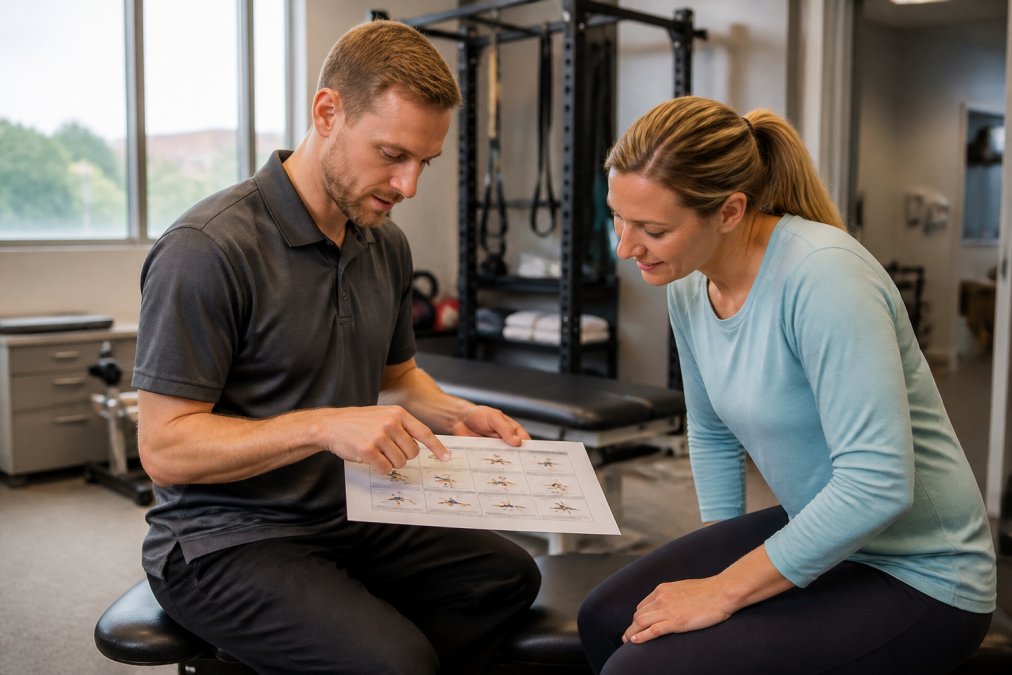
Use this checklist when you evaluate a clinic:
- Does the therapist hold certifications in specific methods, such as the McKenzie Method or SFMA?
- Will you see the same clinician one-on-one, or be passed to an aide?
- How do they measure progress, and will they show you the data?
- Do they explain why each exercise is prescribed?
- Do they have a plan to make you independent rather than dependent on visits?
- Do they offer virtual care options for follow-ups or check-ins?
Conclusion
Finding relief from chronic back or neck pain often comes down to whether your clinician treats your symptoms or your root cause. Spinal Haven was built around that distinction, with one-on-one sessions, movement-based assessment through SFMA, and certification in the McKenzie Method to guide each plan. Our patients, from those avoiding spinal fusion to those returning to work and family life, get tools they keep long after their last visit.
Frequently Asked Questions
Is evidence-based therapy more effective than traditional approaches?
Evidence-based therapy tends to produce more predictable results because it relies on treatments tested in randomized controlled trials and measured against real outcomes. Traditional approaches may work for some people, but they often lack the same level of scientific validation. That said, evidence-based practice also includes clinical expertise and patient preferences, so it is not just about following a manual. The best results come when research, a skilled clinician, and your own goals align.
What are the pros and cons of evidence-based practice?
Pros include treatments backed by empirical research, measurable progress, and a clearer path to symptom reduction. Cons can include limited flexibility if a protocol is too rigid, and the fact that some evidence-based methods have not been adapted for every cultural or personal context. A good clinician balances standard of care with your individual needs. Ask how your therapist plans to tailor the approach to you, and whether they track outcomes along the way.
How can patients verify if their treatment plan is evidence-based?
Ask your therapist which research supports the recommended treatment and how they will measure your progress. Evidence-based plans often include standardized assessments, clear goals, and regular re-evaluation. You can also ask whether the clinician holds certifications in methods like the McKenzie Method or SFMA, which have published evidence behind them. If you hear vague answers or see no outcome tracking, it may be a sign the plan is not truly evidence-based.
What role does clinical expertise play alongside scientific evidence?
Clinical expertise is one of the three pillars of evidence-based practice, alongside best available research and patient characteristics. A skilled clinician knows how to adapt a protocol to your specific presentation, when to modify an exercise, and when to refer you elsewhere. Without expertise, even the best research can be misapplied. When choosing a physical therapist, look for someone who combines formal training with years of hands-on clinical decision making.
This article is general information and not individual medical advice. Consult a qualified clinician about your specific situation.