 Listicle
Best Physical Therapy for Athletes: 7 Clinics That Deliver
Table of Contents
- Quick Comparison: Best Physical Therapy for Athletes
- How We Evaluated These Sports Physical Therapy Clinics
- Spinal Haven: Best for Athletes Who Want Root-Cause Assessment
- Resurgent Sports Rehab: Best for Runners and Endurance Athletes
- Joint Ventures Physical Therapy: Best for Performance Enhancement
- Healthy Baller: Best for Basketball and Court-Sport Athletes
- Motion RX Health: Best for Return-to-Sport Programming
- Select Physical Therapy: Best for Broad Athletic Trainer Access
- Frequently Asked Questions
Last Updated: September 18, 2026
Quick Comparison: Best Physical Therapy for Athletes
Finding the best physical therapy for athletes means matching a clinic's strengths to your sport, injury history, and goals. The right sports physical therapy clinic does more than treat pain, it rebuilds how you move.
| Clinic | Best For | Standout Approach |
|---|---|---|
| Spinal Haven | Root-cause movement assessment | SFMA and McKenzie Method |
| Resurgent Sports Rehab | Runners and endurance athletes | Manual therapy and dry needling |
| Joint Ventures Physical Therapy | Performance enhancement | Customized athletic training |
| Healthy Baller | Basketball and court sports | Expert-led individualized care |
| Motion RX Health | Return-to-sport programming | Performance-driven recovery |
| Select Physical Therapy | Broad athletic trainer access | National sports medicine network |
How We Evaluated These Sports Physical Therapy Clinics
We scored each clinic on assessment depth, one-on-one care time, sport-specific programming, and long-term self-management support. Clinics that only chase symptoms scored lower than those that identify why an injury happened.
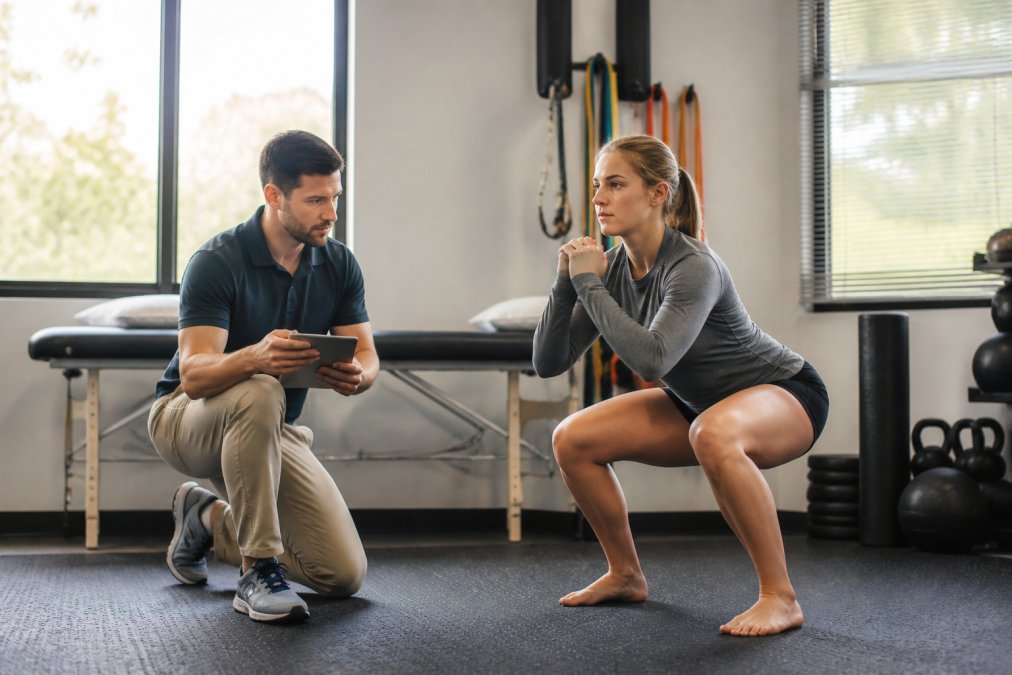
A functional movement assessment sits at the center of our evaluation, a screen that maps how your joints, muscles, and movement patterns work together during real athletic tasks, targeting the actual cause of pain instead of guessing.
The American Physical Therapy Association notes that movement-based examination is central to how physical therapists diagnose and treat injury. We weighted that heavily.
We also favored clinics that teach athletes to manage their own recovery. The best physical therapy for athletes should make you independent, not dependent on endless appointments.
Spinal Haven: Best for Athletes Who Want Root-Cause Assessment
Spinal Haven is our top pick because it treats the cause of pain, not just the symptom. The clinic is led by Dr. Elizabeth Kingshott Cary, PT, DPT, Cert. MDT, the only clinician in Michigan trained in the Selective Functional Movement Assessment (SFMA) and certified in the McKenzie Method®.
That combination matters for athletes: a movement screen shows where your mechanics break down under load, while the McKenzie Method determines whether symptoms come from a disc, a joint, or a muscle, pointing to a specific plan rather than a generic one.
Every session is one-on-one, no handoffs to an aide, and virtual care helps busy professionals keep momentum between in-person visits.
Patient education is the real differentiator. Patients leave with tools to manage flare-ups and confidence to return to training. Alexandra Budnitskiy avoided spinal fusion, Kevin saw long-term symptom improvement, Tavish returned to work and lifting, and Kerrie got back to fitness.
SFMA and McKenzie Method in Practice
The SFMA breaks full-body movement into seven scored patterns, revealing whether a knee problem traces back to a stiff ankle or a weak hip. The McKenzie Method adds a repeatable test-and-retest loop: perform a movement, check the symptom, adjust.
Resurgent Sports Rehab: Best for Runners and Endurance Athletes
Resurgent Sports Rehab built its practice around runners' needs, combining manual therapy, dry needling, and sport-specific movement retraining focused on running mechanics. If your training log matters more than your gym numbers, this is a strong fit: pain relief paired with performance-based retraining, and gait analysis that identifies the compensations behind recurring shin, knee, or hip issues. The tradeoff is reach, Resurgent operates in specific regional service areas, so availability depends on where you live.
Joint Ventures Physical Therapy: Best for Performance Enhancement
Joint Ventures Physical Therapy blends clinical rehabilitation with athletic performance training. Athletes who want to come back stronger, not just pain-free, get personalized rehab plans alongside customized performance programming.
The approach suits competitors who train year-round: instead of stopping rehab when pain fades, the clinic keeps building strength, power, and mobility toward your sport's demands.
One limitation: pricing varies by program and insurance coverage, so ask for a clear breakdown of what your plan includes before you commit.
Grab a Free Discovery Call Today →
Healthy Baller: Best for Basketball and Court-Sport Athletes
Court sports punish the knees, ankles, and hips with constant cutting, jumping, and stopping. Healthy Baller addresses those demands through a comprehensive sports medicine approach and personalized therapy programs. For a basketball player recovering from an ankle sprain or ACL concern, that means programming that mimics game movement rather than generic strengthening. Because the clinic requires direct contact for service costs, plan a conversation about fees and scheduling up front.
Motion RX Health: Best for Return-to-Sport Programming
Motion RX Health is built around getting athletes back to competition stronger than before. Its performance-driven recovery model and one-on-one care center on return-to-sport programming, the phase where most re-injuries happen.
What Return-to-Sport Testing Actually Measures
A credible return-to-sport battery does not ask "does it hurt?" It asks whether the athlete can produce and absorb force at the level their sport demands. Common components include:
- Strength symmetry. Single-leg and single-arm strength compared side to side, typically looking for the involved limb to reach at least 90% of the uninvolved limb before advancing.
- Hop and jump tests. Single-leg hop for distance, triple hop, crossover hop, and a timed 6-meter hop. These load the limb explosively and expose deficits that a straight-line strength test misses.
- Landing mechanics. A drop-jump or tuck-jump assessment scored for knee valgus, trunk control, and symmetry on landing, the same faults that predict ACL re-injury.
- Change-of-direction and agility. A 5-10-5 shuttle or a sport-specific cut that forces deceleration and re-acceleration under control.
- Sport-specific conditioning. Interval work, repeated-sprint ability, or position-specific movement that mimics game demands.
The Criteria-Based Progression
Most sports physical therapists use a phased model rather than a calendar:
- Symptom control and tissue protection. Reduce pain and swelling, restore basic range of motion.
- Strength and neuromuscular control. Rebuild force production and re-establish proper movement patterns.
- Power and plyometrics. Add speed and explosive loading once strength symmetry is close to even.
- Sport-specific skills. Reintroduce cutting, throwing, jumping, or skating in controlled doses.
- Full practice and game clearance. Only after the athlete passes the testing battery and tolerates full-contact or full-speed work without symptom flare.
Why This Matters for the Athlete
A 2024 consensus statement from the American College of Sports Medicine and allied organizations emphasized that psychological readiness, confidence, fear of re-injury, trust in the limb, should be assessed alongside physical testing before clearing an athlete. Motion RX's one-on-one model gives the clinician time to build that confidence through graded exposure, not just strength numbers.
Select Physical Therapy: Best for Broad Athletic Trainer Access
Select Physical Therapy brings a national network and a dedicated sports medicine division, including certified athletic trainers on staff. For athletes who want convenient locations and programs for all levels, that scale is the appeal.
The Cost and Insurance Questions Nobody Answers
The questions to ask before your first visit.
- Is this clinic in-network with my plan, and what is my per-visit cost after the deductible?
- How many visits does my plan allow per year, and does this condition have its own cap?
- Will I need a referral or prior authorization from my primary care provider before the first appointment?
- If I want to continue with performance work after I am discharged, what does that look like and how is it billed?
- Can I get a written plan of care with expected visit frequency so I can estimate my total out-of-pocket exposure?
For athletes balancing a demanding schedule, confirm three things before booking: network status, visit cap, and clinician continuity.
Frequently Asked Questions
What type of physical therapist works with athletes?
Sports physical therapists hold additional training in sport-specific rehabilitation, return-to-sport testing, and performance enhancement. Many earn certifications in manual therapy, dry needling, or movement assessment systems. A general physical therapist can treat athletes, but a sports specialist understands the demands of your sport, the tissue healing timelines for athletic loads, and the criteria for safe return to play. Look for one-on-one care, biomechanical assessment skills, and experience with your specific activity.
How does functional movement assessment improve athletic performance?
A functional movement assessment for athletes identifies asymmetries, mobility restrictions, and stability deficits that limit output. Clinicians use tools like the Selective Functional Movement Assessment or a functional movement screen to score patterns such as squatting, lunging, and rotating. Addressing those gaps with therapeutic exercise and mobility training can improve range of motion, proprioception, and force transfer, which supports athletic performance and lowers injury risk.
Is there a difference between a physical therapist and a sports physical therapist?
Yes. Both are licensed physical therapists, but sports specialists focus on athletes and active populations. They often hold certifications in return-to-sport testing, concussion management, or advanced manual therapy. Sports PTs also work closely with strength and conditioning coaches, athletic trainers, and orthopedic rehabilitation teams. If your goal is to return to competitive sport or high-intensity training, a sports physical therapist is usually the better fit.
What are common red flags to watch for in physical therapy?
Red flags include severe pain that worsens with every session, new numbness or weakness, loss of bladder or bowel control, unexplained weight loss, or pain that wakes you at night. These signs warrant a medical evaluation before continuing therapy. Also watch for clinics that do not reassess your progress or that keep you on passive treatments without teaching active self-management. A good plan includes measurable milestones and a clear path to independence.
How much does physical therapy for athletes cost, and will insurance cover it?
Pricing depends on your location, the clinic's fee model, your insurance plan, and the number of visits. Many sports PT clinics are fee-for-service, while others bill insurance. Check your plan's coverage for physical therapy, your deductible, and any visit limits. Ask each clinic for a written estimate before you start. For current pricing at Spinal Haven, contact the clinic directly or visit their website for details.