 How-to
How to Get Physical Therapy for a Herniated Disc in Michigan
Last Updated: November 16, 2026
Quick Summary
Physical therapy is often the first treatment doctors recommend for a herniated disc, and for many people it is the most useful place to start. Spinal Haven offers one-on-one physical therapy in Michigan, in person or virtually, built around movement-based assessment of what reduces your pain.
- Doctors often start a herniated disc with conservative care, including physical therapy.
- Seek urgent care for new bladder or bowel control loss, groin numbness, or rapidly worsening leg weakness.
- Diagnosis combines a physical exam with imaging such as MRI when symptoms are severe or persistent.
- Recovery usually takes weeks to months, progressing from calming the nerve to rebuilding strength.
- Confirm insurance benefits, referral requirements and visit limits before your first visit.
Table of Contents
- What a Herniated Disc Is and Why Physical Therapy Is Often the First Step
- Common Causes, Symptoms, and Warning Signs That Need Prompt Care
- How Is a Herniated Disc Diagnosed?
- What Physical Therapy for a Herniated Disc Involves, Step by Step
- Herniated Disc Exercises to Avoid and Safe Modifications
- How Long Physical Therapy for a Herniated Disc Takes and What Progress Looks Like
- Booking Your First Physical Therapy Visit in Michigan
- Frequently Asked Questions
Physical therapy is often the first treatment doctors recommend for a herniated disc, and for many people it is the most useful place to start. Spinal Haven, a one-on-one physical therapy clinic, works with active adults whose pain has limited their daily routines. This guide explains what a herniated disc is, how it is diagnosed, what a course of physical therapy typically involves, and how to book a first visit in Michigan.
What a Herniated Disc Is and Why Physical Therapy Is Often the First Step
A herniated disc is a condition in which the soft, gel-like center of a spinal disc pushes through its tougher outer layer. When that material presses on a nearby nerve, it can cause pain, numbness or weakness in the back, neck, or limbs.
Conservative care is usually the first approach. University of Michigan Health's overview of herniated disc treatment notes that conservative treatment often starts with physical therapy, including identifying positions that reduce referred pain.
Common Causes, Symptoms, and Warning Signs That Need Prompt Care
Disc problems often develop gradually with age, repeated lifting, prolonged sitting or sudden strain. Symptoms vary, but people commonly describe back or neck pain that travels into a leg or arm, along with tingling or numbness.
Some symptoms need urgent medical attention rather than a scheduled appointment. Seek care right away if you develop new loss of bladder or bowel control, numbness in the groin area, or rapidly worsening leg weakness.
How Is a Herniated Disc Diagnosed?
Diagnosis usually begins with a history and physical examination. A clinician checks posture, movement, reflexes and nerve function to understand which structures may be involved. Imaging such as an MRI is used when symptoms are severe, persistent, or do not follow the expected pattern.
Imaging alone does not decide treatment. Many people have disc changes on scans without pain, so the findings are interpreted alongside symptoms and the examination.
What Physical Therapy for a Herniated Disc Involves, Step by Step
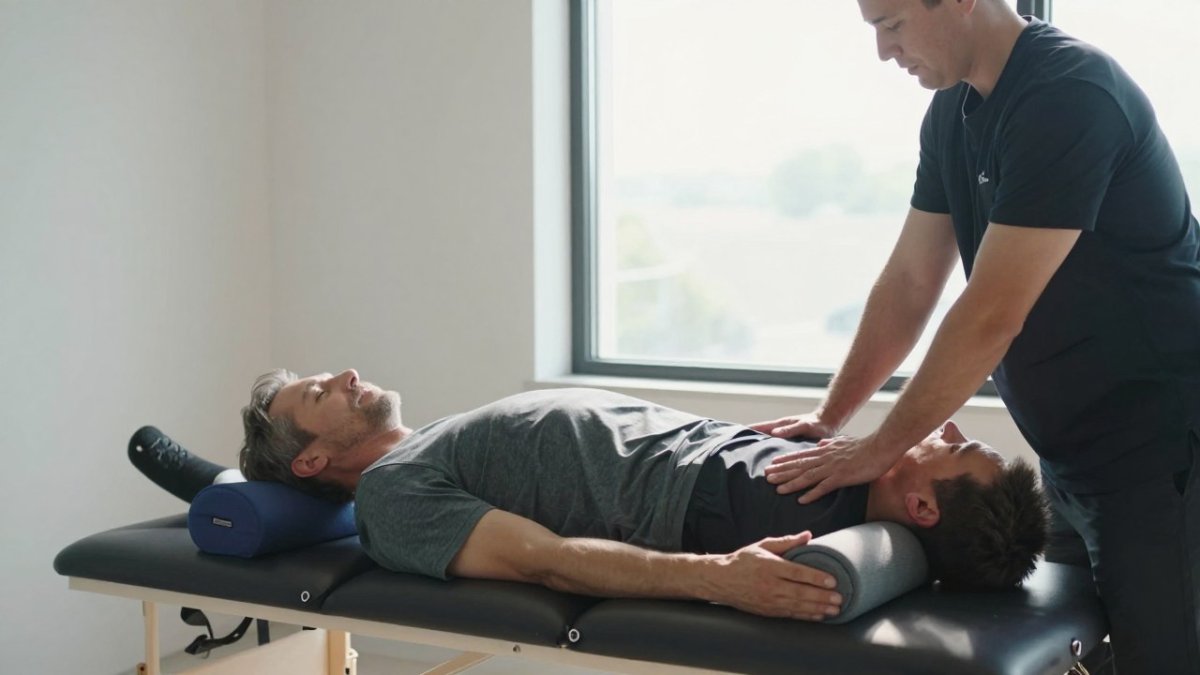
A physical therapy course for disc pain generally follows a clear sequence. The first visit is an assessment of how your symptoms change with movement, positions and daily activities. Your therapist then builds a plan around what reduces your symptoms and restores function.

At Spinal Haven, care is one-on-one and built around movement-based assessment. The clinic uses the McKenzie Method® and the Selective Functional Movement Assessment (SFMA) to identify the root cause of pain. Patients also learn how to manage their symptoms independently over time.
Exercises Used in Herniated Disc Care, Including L5-S1 Disc Bulge Exercises
Exercise plans are tailored to the individual, but they often include gentle mobility work, core and hip strengthening, and graded return to activity. Disc bulges at the lowest lumbar level, commonly described as L5-S1, are often addressed with exercises that improve control of the lower back and hips. A 2024 review describes exercise therapy goals for disc herniation as improving flexibility, strength, posture and overall function (Non-Surgical Approaches to the Management of Lumbar Disc Herniation).
Herniated Disc Exercises to Avoid and Safe Modifications
Most people with a herniated disc do not need to avoid all exercise, but a small number of movement patterns reliably provoke symptoms and are worth modifying until a therapist has assessed you. The goal is to keep moving without repeatedly irritating the nerve.
Movements that commonly aggravate a lumbar disc herniation include:
- Repeated or loaded forward bending, such as toe touches, straight-leg sit-ups, and deep seated forward folds.
- Heavy lifting with a rounded back, especially deadlifts, bent-over rows, and lifting objects from the floor with poor mechanics.
- Prolonged sitting in a slouched position, which increases pressure on the front of the disc.
- High-impact loading early on, such as running, jumping, or plyometrics, when leg symptoms are active.
- Any stretch that reproduces sharp, shooting, or electric pain into the leg or arm.
For a neck (cervical) disc, the equivalent cautions are overhead pressing, heavy shrugs, and prolonged forward-head posture at a desk.
A practical way to modify rather than eliminate is to change the angle, the load, and the range. Replace floor deadlifts with hip hinges using a light kettlebell or a trap-bar from an elevated position. Replace sit-ups with dead bugs or Pallof presses. Replace running with incline walking or a stationary bike if those keep leg symptoms calm. Shorten the range of motion on any lift that provokes symptoms and add a pause at the point where symptoms begin.
Use a simple symptom rule before, during, and after exercise. A common pattern therapists teach is the 24-hour rule: if symptoms are no worse the morning after a session, the load was likely appropriate; if leg pain or numbness is worse the next day, reduce the load or range and reassess. Symptoms that move toward the spine (centralization) are generally a good sign; symptoms that move farther down the leg (peripheralization) are a signal to back off.
Watch out: stop the exercise and contact a clinician promptly if you develop new or worsening leg weakness, numbness in the groin or saddle area, or any change in bladder or bowel control, these are red flags that need urgent assessment, not a home-program adjustment.
A 2024 review notes that back-extension exercises have been studied for low back pain (Comprehensive Analysis of Treatment Approaches for Lumbar Disc Herniation), but whether extension helps or hurts depends on your directional preference. Some people feel better bending backward; others feel worse. That is exactly why a therapist tests movement directions in person rather than prescribing a generic list.
How Long Physical Therapy for a Herniated Disc Takes and What Progress Looks Like
Recovery from a herniated disc is measured in weeks to months, not days, and the timeline depends on how long symptoms have been present, which nerve is involved, and how consistently you follow the plan. A realistic frame most practitioners use is three phases.
Phase 1, Calm the nerve (roughly the first 1-3 weeks). The focus is on positions and movements that reduce leg or arm symptoms, gentle mobility, and avoiding provocation. Success here looks like sleeping through the night, sitting for a work meeting without shooting pain, and walking a few blocks without symptoms worsening.
Phase 2, Rebuild capacity (roughly weeks 3-8). Strength and endurance work begins: core and hip stabilization, graded lifting, and a gradual return to cardio. Success looks like carrying groceries, climbing stairs without pain, and tolerating a full workday at a desk with planned movement breaks.
Phase 3, Return to full activity (roughly weeks 8-12 and beyond). The plan shifts to sport- or job-specific loading, heavier lifting mechanics, and confidence with previously feared movements. Success looks like returning to the gym, recreational activities, or travel without a flare.
These ranges are typical, not guaranteed. Some people improve in two to three weeks; others, especially those with symptoms lasting more than three months or with significant weakness, need a longer course. A common pattern is one to two visits per week early on, tapering to every other week as you become independent with your program.
Progress is best judged by function, not by pain score alone. Useful milestones to track include: how long you can sit before symptoms start, how far you can walk, whether you can put on socks and shoes without pain, and whether you can complete a workday or training session without a flare the next day. Bring those observations to each visit so your therapist can adjust load.
Clinical guidelines note that evidence is insufficient to recommend for or against physical therapy as a stand-alone treatment, so results are best judged by how your own symptoms and function change over time (Clinical guidelines for diagnosis and treatment of lumbar disc herniation). Your therapist should review progress with you at set intervals and discuss what happens if symptoms do not improve, including whether imaging, a specialist referral, or a different approach is warranted.
Before your first visit, confirm your insurance benefits with your provider, including any referral requirements and visit limits. If you are paying out of pocket, ask the clinic about current pricing, which depends on the number of visits and plan details, and check Spinal Haven's website for current rates or a quote.
Booking Your First Physical Therapy Visit in Michigan
If you are looking for physical therapy for a herniated disc in Michigan, start by describing your symptoms and what activities they limit. Spinal Haven offers both in-person and virtual care, and you can book a discovery call with Dr. Elizabeth Kingshott Cary, PT, DPT, Cert. MDT, to see whether one-on-one care is the right fit.
Bring a list of your symptoms, previous treatments and any imaging results to your first visit. Frequently Asked Questions covers evaluations, insurance and what to expect on your first visit.
Ready to take the next step? Book a discovery call with Spinal Haven to find out whether one-on-one physical therapy can help you manage your herniated disc and return to the activities you care about.
Frequently Asked Questions
Can physical therapy fix a herniated disc?
Physical therapy is a common conservative option for many people with a herniated disc. It is not guaranteed to resolve every case. Whether it is a good fit depends on your symptoms, imaging findings, and overall health, so a consultation with a qualified clinician is the best way to decide.
How is a herniated disc diagnosed?
Diagnosis usually starts with a clinical evaluation: a history of your symptoms, a physical exam that tests movement, reflexes, strength, and nerve sensation, and sometimes imaging such as MRI when symptoms are severe, persistent, or suggest nerve involvement. A movement-based assessment can also help identify which positions or motions change your pain. Because symptoms like sciatica can have several causes, a qualified professional should confirm the diagnosis before a treatment plan is set.
What activities should you avoid with an L5-S1 disc bulge?
General guidance for many people with a lower-back disc problem is to avoid heavy lifting with a rounded spine, repeated deep forward bending, and high-impact movements while symptoms are active. Movements that worsen leg pain, numbness, or weakness should be modified or stopped. Because the right limits depend on your specific condition, ask a physical therapist to review your activities and build a plan that protects the disc while you rebuild strength.
How long does physical therapy for a herniated disc take?
The length of care varies with the severity of symptoms, how long they have lasted, your activity level, and how consistently you complete your home exercise program. Many plans are structured in phases, with early focus on symptom control and movement, followed by strengthening and a return to daily activities. Your therapist can discuss an estimated timeline after your initial evaluation and track measurable progress, such as improved range of motion and reduced pain with specific tasks, so you can see whether the plan is working.