 How-to
How to Stop Chronic Sciatica Pain: 7 Steps That Work
Table of Contents
- Why Chronic Sciatica Pain Persists
- Chronic Back Pain Treatment Options That Actually Help
- The McKenzie Method for Sciatica: A Directional Approach
- Exercises for Sciatica Relief You Can Do at Home
- How to Manage Sciatica Flare-Ups Without Panic
- Ergonomics, Sleep, and the Mental Toll of Chronic Pain
- Conclusion: Building a Long-Term Plan
- Frequently Asked Questions
Why Chronic Sciatica Pain Persists
Chronic sciatica is nerve pain traveling along the sciatic nerve path, lower back through the buttock and down the leg, and it becomes "chronic" when symptoms outlast the typical few-week healing window. This guide explains why that pain keeps returning and the seven steps that change it.
Nerve Compression and the Root Cause
Nerve compression happens when a herniated disc, bone spur, or narrowed spinal canal presses against a nerve root in the lower back. The medical term is lumbar radiculopathy.
Chronic Back Pain Treatment Options That Actually Help
Chronic back pain treatment options fall into two groups: conservative care (physical therapy, targeted exercise, posture correction) and interventional care (epidural steroid injections or surgical intervention). Most people should start conservatively. Physical therapy built around your specific movement problem outperforms generic plans because it addresses the direction and pattern that provokes your symptoms.
Conservative Care vs. Injections and Surgery
| Approach | What It Does | Best For | Main Limitation |
|---|---|---|---|
| Physical therapy | Builds tolerance and corrects movement | Most cases, first line | Needs consistency |
| NSAIDs | Reduces inflammation short term | Flare-up control | Not a long-term fix |
| Epidural steroid injections | Delivers steroid near the nerve root | Severe, persistent pain | Temporary relief |
| Surgery | Decompresses the nerve | Failing conservative care | Recovery time, risk |
NSAIDs calm a flare but do not change the mechanics causing it. Injections can break a severe pain cycle long enough for therapy to work. Surgery is a genuine option for a minority, not a default. At Spinal Haven, a movement-based assessment can help identify the actual driver of pain, providing an alternative perspective before committing to irreversible interventions.
The McKenzie Method for Sciatica: A Directional Approach
The McKenzie Method for sciatica rests on a simple idea: your spine has directions that make symptoms better and directions that make them worse. Find the right direction, repeat it, and symptoms often move out of the leg toward the center, centralization, one of the most useful signals in chronic pain management. It is not a set of stretches copied from a video but a diagnostic process: a trained clinician tests repeated movements and builds a program from what your spine reveals.
McKenzie Institute International on mechanical diagnosis and therapy
Exercises for Sciatica Relief You Can Do at Home
Exercises for sciatica relief work best when they match your directional preference, so treat the list below as a starting menu, not a prescription. Some respond to extension, others to flexion, the wrong direction can worsen things.

Common starting points:
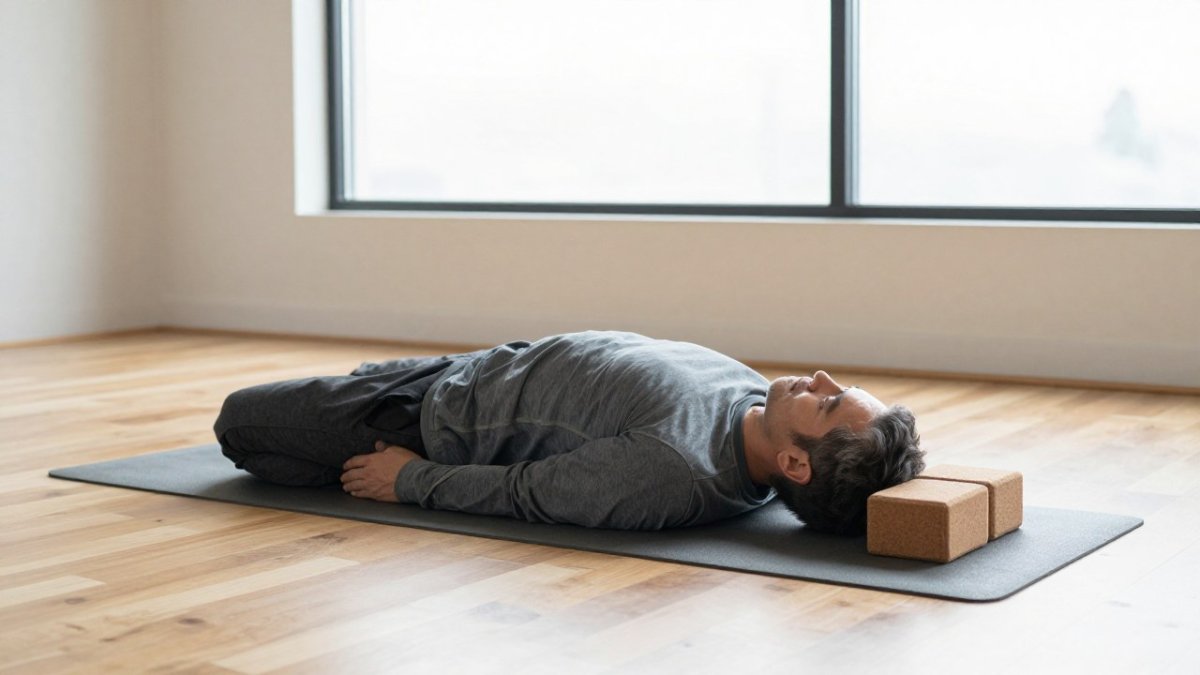
- Prone press-up. Lie face down, press your upper body up while your hips stay down. Stop short of pain.
- Prone lying. Flat on your stomach, propped on your elbows. Often the first step before press-ups.
- Standing extension. Hands on lower back, gently arch and return. Good for people who sit all day.
- Sciatic nerve glide. Seated, extend the leg while tilting the head back, then reverse. Moves the nerve without stretching it hard.
- Bird dog. On hands and knees, extend opposite arm and leg. Builds the stability that keeps symptoms away.
- Side plank from knees. A shorter lever version that trains the lateral core without loading the spine.
How to Manage Sciatica Flare-Ups Without Panic
How to manage sciatica flare-ups comes down to three things: settle the nerve, keep moving gently, and avoid the extremes of total rest and pushing through. A flare is not proof your plan failed, it is information about your current tolerance. The first 72 hours matter most, and most people get them wrong: they either lie down until the pain "calms down" or stretch through it.
Cold and Heat: What to Use and When
Use a cold pack in the first 24 to 48 hours of a sharp new flare, especially with swelling or fresh injury; cold reduces inflammation and numbs the area. Switch to a heating pad after that window, when the goal shifts to relaxing guarding muscles before movement. Heat does not heal a nerve, but it makes gentle movement possible, and gentle movement is what helps.
Movement, Not Bed Rest
Bed rest beyond a day or two works against you. Prolonged rest stiffens the spine, weakens supporting muscles, and makes the next flare easier to trigger. Walk short distances instead, people who rest for a week come back stiffer and more fearful of movement than those who walked ten minutes three times a day from day one. The goal during a flare is not to fix the underlying problem but to keep the nerve moving through its available range without provoking it: short, frequent walks, gentle directional exercises if you know your preference, and avoiding positions that push symptoms down the leg.
A Flare Plan You Can Actually Follow
Write this down before the next flare, because decision-making is harder when you are in pain:
- Day 1-2: Cold pack 20 minutes, several times a day. Short walks. No stretching into pain. No prolonged sitting.
- Day 3-7: Switch to heat before movement. Resume your directional exercises at half your normal volume. Walk daily.
- Week 2: If symptoms are centralizing (moving from the leg toward the back), gradually return to your normal routine. If they are peripheralizing (moving further down the leg), stop and get evaluated.
- Any time: Red flags override the plan. See below.
When a Flare Is Not a Flare
Also get evaluated if pain wakes you at night, you have unexplained weight loss, a history of cancer, or the flare follows a significant fall or accident. Those are not typical sciatica patterns.
The Fear Cycle
There is a psychological component to flares most guides skip. After enough of them, people brace before they move, tensing the core, shortening the stride, avoiding movements that previously triggered pain. That guarding pattern loads the spine differently and can keep symptoms alive. This is fear-avoidance, well documented in chronic pain research. The way out is not to ignore pain but to build a graded, measurable record of movements you can do without a flare.
Ergonomics, Sleep, and the Mental Toll of Chronic Pain
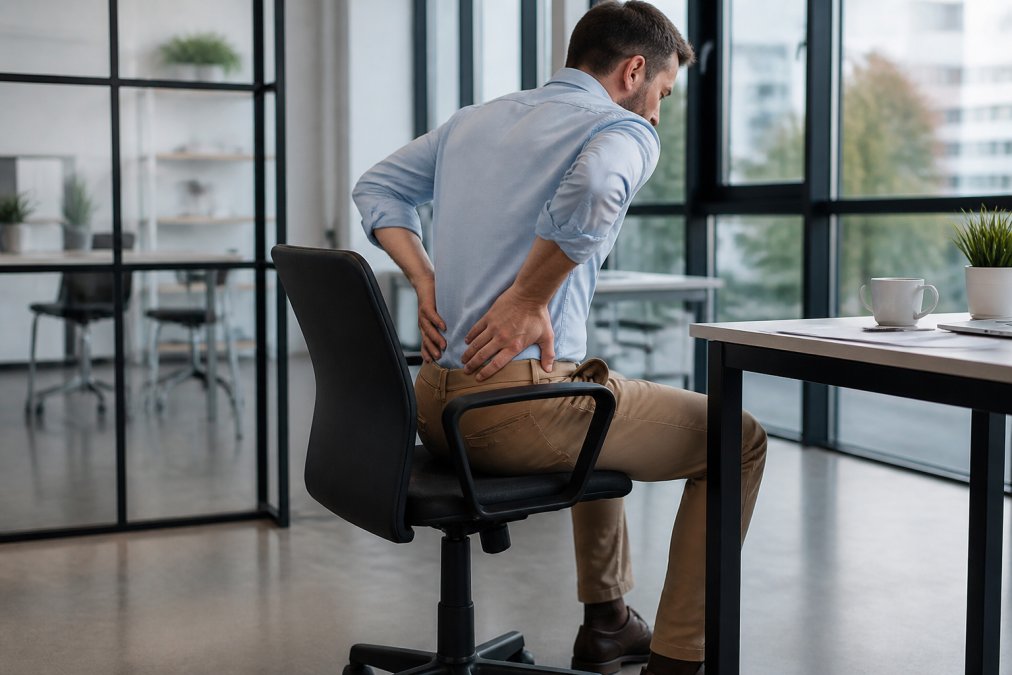
Ergonomics, sleep hygiene, and mental health are the three levers most people ignore, and they often separate a good week from a bad one. Your chair, monitor height, and phone posture all load the same structures your therapy is trying to calm. Poor sleep sensitizes pain, and fear around chronic pain quietly shrinks your life. For someone in an office role, these are often the difference between a plan that holds and one that keeps collapsing.
Grab a Free Discovery Call Today →
Ergonomics for Desk Workers: A Practical Setup
Here is what actually matters for someone sitting eight hours a day.
- Chair height: Feet flat on the floor, knees at or slightly below hip level. If your feet dangle, your lumbar spine rounds to compensate.
- Seat depth: Two to three fingers of space between the back of your knee and the edge of the seat. Deeper than that and you slump to reach the backrest.
- Lumbar support: The curve of the chair should meet the small of your back, not your mid-back. A rolled towel works if the chair has no adjustment.
- Monitor height: Top of the screen at or slightly below eye level. Looking down for hours loads the cervical and lumbar spine in a chain.
- Keyboard and mouse: Elbows at roughly 90 degrees, wrists neutral. Reaching forward all day is a slow lumbar load.
- Phone: Hold it up rather than looking down. The "text neck" position translates down the chain.
Sleep Hygiene for Sciatica Sufferers
Sciatica punishes poor sleep, and poor sleep sensitizes pain.
Sleeping positions that reduce nerve compression:
- On your side, pillow between the knees. This keeps the hips and lumbar spine neutral and takes load off the nerve root. Most people with sciatica find this the most tolerable position.
- On your back, pillow under the knees. This flattens the lumbar curve slightly and reduces disc pressure. A rolled towel under the small of the back can help too.
- Avoid sleeping on your stomach. It forces the neck to rotate and the lumbar spine into extension for hours.
Mattress and pillow specifics:
- A sagging mattress undoes a day of good work. Medium-firm is the general recommendation for back and nerve pain, firm enough to support the lumbar curve, soft enough to avoid pressure points.
- Replace a mattress with visible sagging or one over eight to ten years old.
- Pillow height should keep your neck in line with your spine when side sleeping.
Before bed:
- Avoid alcohol as a sleep aid; it fragments the second half of the night, when deep sleep does its restorative work.
- Keep the room cool and dark. Pain sensitivity rises with poor sleep quality and compounds over consecutive nights.
- If pain wakes you, do not lie there. Get up, walk gently, and return. Staying in bed frustrated trains your brain to associate the bed with pain.
The Mental Toll Nobody Writes About
Then there is the part most articles skip: the psychological weight of chronic pain. Chronic pain management is not just physical. People who have lived with leg pain for a year shrink their lives around it, they stop lifting their kids, stop traveling, stop trusting their own body, and eventually stop making plans. That fear is a real clinical factor, not a character flaw.
A few things that help:
- Track function, not just pain. "I walked to the mailbox without stopping" is data. Pain scores alone tend to stay flat even when function improves.
- Set small, specific goals. Not "get better" but "carry groceries from the car by the end of the month." Concrete targets give your brain evidence the situation is changing.
- Name the fear. Fear-avoidance is well documented in chronic pain research. Recognizing that you are avoiding a movement because you are afraid, not because it is dangerous, is the first step to testing it safely.
- Talk to someone. Pain psychologists and therapists trained in chronic pain are not a last resort; they are part of the treatment plan for many people, and the evidence for cognitive behavioral approaches is strong.
What Progress Actually Looks Like
Alexandra Budnitskiy came to Spinal Haven and avoided spinal fusion. Tavish returned to work and lifting. Marriah returned to family activities. Kerrie returned to fitness. Kevin experienced long-term symptom improvement. These individuals achieved their goals of not just less pain, but a life that moved again. Hold your plan to that standard, not "is the pain gone today" but "am I doing more this month than last month." If the answer is no for two months running, the plan needs to change, not your effort.
Conclusion: Building a Long-Term Plan
The hardest part of chronic sciatica is not finding something that helps for a week. It is building a plan that keeps working after the appointments stop. That means knowing your directional preference, keeping a small daily movement habit, protecting your sleep and workspace, and understanding what your symptoms are telling you when they change. Acute relief and long-term maintenance are different jobs, and most people only get help with the first one.
Frequently Asked Questions
What helps chronic sciatica long term?
Long-term relief usually comes from addressing the cause of nerve compression, not just masking symptoms. A structured program that combines directional exercises, posture correction, and gradual strengthening helps many people reduce flare-ups. The McKenzie Method and movement-based assessments are often used to identify which positions and movements centralize or reduce pain. Consistency matters more than intensity. Working with a clinician who teaches self-management can help you stay independent rather than relying on ongoing passive treatments.
What are the top exercises for sciatica relief?
Common exercises for sciatica relief include prone press-ups, standing extensions, and gentle nerve glides. The right choice depends on your directional preference, which a clinician trained in the McKenzie Method can identify. Some people respond to extension exercises, while others need flexion-based movements. A physical therapist can assess your range of motion and symptoms to build a personalized routine. Stop any exercise that increases pain or numbness and consult a professional.
Can physical therapy permanently resolve chronic sciatica?
Physical therapy can significantly reduce pain and improve function for many people with chronic sciatica, though results vary by cause and individual. A movement-based approach that identifies the root cause, such as the McKenzie Method or SFMA, often produces better outcomes than generic strengthening alone. The goal is to give you tools to manage symptoms independently. Some cases involve structural issues like spinal stenosis or herniated discs that may need additional medical evaluation.
When should I see a specialist for persistent sciatica?
See a specialist if pain lasts more than six weeks, worsens over time, or comes with numbness, tingling, or muscle weakness in the leg. Red flags include loss of bladder or bowel control, which requires immediate medical attention. A physical therapist or pain management specialist can assess whether diagnostic imaging like an MRI is needed. Early intervention with a movement-based approach often prevents the need for more invasive chronic back pain treatment options.