 How-to
7 Ways Patient Engagement Improves Physical Therapy Outcomes
Last Updated: November 1, 2026
Quick Summary
Patient engagement improves physical therapy outcomes because engaged patients practice between visits, report changes honestly, and stick with a plan long enough for tissue to adapt. Higher patient activation is linked to better health outcomes and lower costs two years later.
- Engagement is a skill taught over time, not a personality trait patients either have or lack.
- Three exercises done daily beat ten done twice for home program follow-through.
- Graded exposure addresses kinesiophobia by building from a movement the patient trusts.
- Ask which exercises patients are most likely to do so the plan becomes theirs.
- Asking about beliefs as well as symptoms surfaces barriers that scheduling fixes miss.
Table of Contents
- What Patient Engagement in Physical Therapy Actually Means
- How Patient Engagement Improves Physical Therapy Outcomes
- Physical Therapy Adherence Strategies That Hold Up in Real Life
- Using Patient-Reported Outcome Measures in Physical Therapy to Track Progress
- How to Stay Motivated During Physical Therapy When Progress Stalls
- The Engagement Barriers Most Clinics Overlook
- Book a Discovery Call to Build Your Engagement Plan
- Frequently Asked Questions
What Patient Engagement in Physical Therapy Actually Means
Patient engagement in physical therapy is the active partnership between a patient and their clinician in planning, doing, and adjusting a rehab program. It goes past attendance. A review of patient engagement and healthcare quality found that engagement can improve treatment outcomes, satisfaction, health, and provider productivity.
Engagement can be treated as a skill taught over time, not a personality trait a patient either has or lacks.
Engagement Is Not the Same as Showing Up
A patient who arrives on time and does nothing between visits is compliant, not engaged. One-on-one care looks different from passive attendance, because the clinician and patient adjust the plan together at each visit. Compliance means following orders. Engagement means the patient understands why a movement matters and adjusts it when symptoms shift.
How Patient Engagement Improves Physical Therapy Outcomes
Engaged patients get better results because they practice between visits, report changes honestly, and stick with a plan long enough for tissue to adapt. Three things drive that link: better home exercise program follow-through, more accurate symptom reporting, and stronger therapeutic alliance.
The Evidence Behind the Engagement-Outcome Link
The CDC's summary of patient activation research reports that higher patient activation is linked to better health outcomes and lower costs two years later. That is a meaningful window. Rehab gains fade when patients stop on the last visit.
A study of patient and therapist perspectives on physical therapy found that wider use of outcome measures may improve engagement and support patient autonomy. Measurement, in other words, is not paperwork. It is a conversation starter.
Physical Therapy Adherence Strategies That Hold Up in Real Life
Most adherence advice fails because it treats noncompliance as a scheduling problem. In practice, the patients who abandon their home program usually do so for one of three reasons: the plan collides with their actual week, the plan asks too much of a body they do not yet trust, or the plan was never theirs to begin with. Each cause needs a different fix.
Fix the Plan, Not the Patient
A home exercise program that survives a busy week is short, anchored, and adjustable. Personalized treatment plans are built around the patient's actual week, which is why they tend to hold up. These strategies hold up:
- Shrink the program. Three exercises done daily beat ten done twice. A program a patient can finish in eight minutes is more likely to be repeated than one that requires a dedicated block of time.
- Anchor to an existing habit. Pair exercises with coffee, lunch, or the evening news. Habit stacking works because it borrows an existing cue rather than asking the patient to build a new one.
- Set a floor, not a ceiling. A two-minute bad day still counts. Patients who believe a partial session is worthless tend to skip the whole day, then the whole week.
- Track it visibly. A paper calendar on the fridge works better than an app most patients ignore. Visibility creates a small accountability loop without requiring a login.
- Review barriers at every visit. Ask what got in the way, not whether they did it. The first question invites problem-solving; the second invites a yes or no.
A common mistake is loading patients with a long home exercise program in week one. That plan usually collapses by week three. Start small and build.
Address the Fear Behind the Skip
Many patients do not skip exercises because they are busy. They skip because movement hurt last time, and their nervous system learned to avoid it. This is kinesiophobia, and it is one of the most underdiscussed drivers of poor adherence in outpatient rehab. A patient who fears a flare will quietly stop the very movements that would resolve it.
Graded exposure, in which a patient and clinician agree on a movement the patient is confident they can do without a flare and build from there, is one commonly described approach.
Make the Program the Patient's
Adherence improves when the patient has a hand in designing the plan. Ask which exercises they are most likely to do, which time of day is realistic, and what would make the program easier. A plan the patient helped shape is a plan the patient is more likely to keep. This is the practical side of shared decision-making, and it costs a few minutes per visit.
The article names three reasons patients abandon a home program, and each cause calls for a different fix.
| Cause of abandonment | Fix | Example from the article |
|---|---|---|
| Plan collides with the actual week | Shrink the program | Three exercises done daily beat ten done twice |
| Plan asks too much of a body they do not trust | Address the fear behind the skip | Graded exposure to a movement the patient trusts |
| Plan was never theirs to begin with | Make the program the patient's | Ask which exercises they are most likely to do |
Using Patient-Reported Outcome Measures in Physical Therapy to Track Progress
Patient-reported outcome measures are standardized questionnaires that capture how a patient feels and functions, scored over time. They turn vague progress into numbers you can act on. Examples include pain rating scales, function indexes, and condition-specific tools for the back or neck.
Why bother? Because memory is unreliable. Patients who feel better forget how bad week one was, and patients in a flare forget the gains before it. A score from four weeks ago settles the argument.
Grab a Free Discovery Call Today →
The McKenzie Method® is built on repeated movements and symptom response, so tracking change is part of that approach.
How to Stay Motivated During Physical Therapy When Progress Stalls
Motivation stalls for a reason, and it is rarely laziness. Plateaus, fear of re-injury, and slow timelines wear people down. Name the cause before you try to fix the feeling.
- Expect the plateau and plan for it in advance.
- Shift the goal from pain to function for a few weeks.
- Celebrate small wins: stairs, sleep, driving, lifting.
- Ask for a plan review instead of pushing harder.
If therapy feels pointless right now, the problem may be the approach rather than the patient. Why physical therapy can feel ineffective covers the common reasons and what to do next.
The Engagement Barriers Most Clinics Overlook
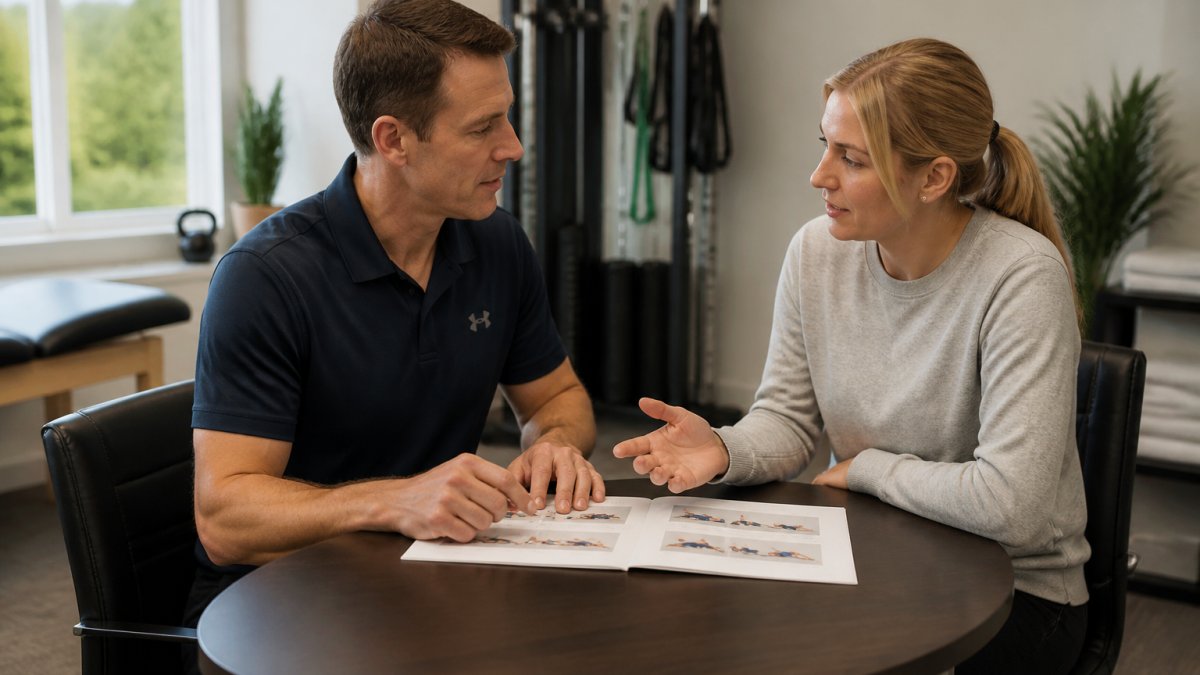
The barriers that quietly kill engagement are psychological and cultural, not logistical. Scheduling problems are visible and easy to fix. The barriers below are neither, which is why they persist.
Pain-Avoidance Behavior and Kinesiophobia
Fear of movement after a bad flare is one of the most common reasons patients disengage, and it is rarely named in the chart. A patient who believes pain equals damage will protect the injured area, move less, and lose ground, then interpret the loss of ground as proof that therapy is not working. The cycle is self-reinforcing.
A common clinical response is to separate pain from harm in plain language, agree on a movement the patient trusts, and build tolerance gradually.
Beliefs About Pain and Recovery
Patients arrive with prior explanations for their pain, a diagnosis from years ago, a family member's experience, something they read. Those beliefs shape whether they follow a plan. A patient who believes their back is "out" may resist the very movements that would stabilize it. Asking what the patient believes about their pain, before correcting anything, surfaces the barrier early.
Cultural and Communication Gaps
Language is only the most visible cultural barrier. Expectations about who leads a conversation, how directly to describe pain, and whether exercise is appropriate at all vary across communities. A patient who was raised to defer to clinicians may not push back on a plan that does not fit their life, and then quietly abandon it. Clinics that use teach-back, invite questions explicitly, and ask about the patient's actual day catch more of this than clinics that rely on written instructions alone.
A History of Being Dismissed
Patients who have been told their pain is "nothing" or "in their head" bring that history into the next appointment. They may underreport symptoms or disengage preemptively. The repair is consistency: take the report seriously, explain the reasoning, and follow through on what was promised.
The Business Case for Fixing These Barriers
Engagement is not only a clinical issue. Missed visits and early discharge are expensive. A clinic that reduces no-shows and keeps patients through the full plan of care protects revenue that would otherwise leak out of the schedule. The operational moves are unglamorous, reminder calls, flexible scheduling, and a first-visit conversation about what the patient actually wants, but they compound.
Addressing only scheduling can miss these barriers. Asking about beliefs as well as symptoms, using teach-back to confirm understanding, and matching the plan to the patient's day are commonly recommended steps.
Book a Discovery Call to Build Your Engagement Plan
Engagement is a set of habits, and habits need a plan built for one person. If you want to know whether one-on-one care fits your situation, book a discovery call with Dr. Elizabeth Kingshott Cary.
Frequently Asked Questions
Why is patient engagement important in physical therapy?
Engagement is what turns a treatment plan into something a person actually does between visits. A 2022 review by Marzban and colleagues found that patient engagement can improve treatment outcomes, patient satisfaction, health, and provider productivity. The CDC's summary of Hibbard and Greene's work links higher patient activation to better health outcomes and lower costs two years later. In practice, an engaged patient reports symptoms accurately, does the home exercise program, and flags problems early instead of disappearing for a month.
How does patient adherence affect rehabilitation outcomes?
Adherence determines how much of the prescribed dose of movement a person actually receives. A 2023 study by Kwok and colleagues on physical therapy perspectives found that maximizing the use of outcome measures may improve patient engagement and support relational autonomy, which in turn supports follow-through. When adherence drops, the therapist is essentially restarting each visit. Strong physical therapy adherence strategies, such as shortening the home program and tying it to an existing daily routine, keep the plan moving between appointments.
How do patient-reported outcome measures in physical therapy show whether therapy is working?
Patient-reported outcome measures capture function, pain, and confidence in the patient's own words, which is often more useful than a single clinical test. A physical therapy article on the value of patient-reported outcomes describes them as supporting communication, engagement, and personalized care plans. Reviewing scores every few weeks shows whether the plan is working before a plateau becomes a setback, and it gives the patient a visible record of progress on days when improvement feels invisible.
What if I start treatment and have a flare-up?
A flare-up is information, not a failure. The useful response is to note what changed in the days before it, bring that to your next session, and adjust the plan rather than abandon it. Ask your therapist up front how flare-ups are handled: whether the plan gets modified, whether you keep the same visit schedule, and what signs mean you should call rather than wait. Getting that answer before you start removes the worry that a bad week will derail months of work.
Your back pain has probably already cost you enough time, money, and missed mornings. Spinal Haven offers one-on-one sessions, movement-based assessment to find the root cause, and a plan you can run yourself long after the last visit. Get started with Spinal Haven and build a plan that holds up in real life.