 how-to
Physical Therapy for Chronic Neck Pain: A 2026 Guide
Table of Contents
- Why Won't My Neck Pain Go Away? Understanding Chronic Neck Pain
- What Physical Therapy for Chronic Neck Pain Actually Involves
- How Long Does Physical Therapy Take for Neck Pain?
- Key Exercises for Chronic Neck Pain You Can Start Today
- Building Your Chronic Neck Pain Self-Management Strategies
- Common Mistakes to Avoid During Recovery
- Conclusion: Finding Lasting Relief
- Frequently Asked Questions
Last Updated: September 5, 2026
Why Won't My Neck Pain Go Away? Understanding Chronic Neck Pain
Chronic neck pain is persistent discomfort in the cervical spine that lasts longer than three months, often outliving the original injury or strain that triggered it (peer-reviewed research). Unlike acute pain, which signals tissue damage and resolves as you heal, chronic pain becomes a condition of the nervous system itself, where pain signals continue firing even after structural issues have healed. This distinction matters because it changes the entire treatment approach: chronic neck pain typically responds poorly to rest and better to graded activity and movement retraining.
The cervical spine is a complex structure of seven vertebrae, intervertebral discs, ligaments, and more than 20 pairs of muscles that must coordinate precisely to support a head weighing 10 to 12 pounds (the NIH). When those muscles fatigue or become deconditioned, other structures compensate, leading to stiffness, trigger points, and nerve irritation that radiates into the shoulders and arms.
At Spinal Haven, we see patients every week who have tried generic stretching routines or relied on passive treatments like massage alone, only to find their pain returns within days. The missing piece is usually specific, evidence-based rehabilitation rather than more symptom relief. This guide walks through what physical therapy for chronic neck pain actually involves, how long recovery typically takes, and which self-management strategies prevent relapse.
What Physical Therapy for Chronic Neck Pain Actually Involves
Physical therapy for chronic neck pain is a structured rehabilitation process that combines hands-on techniques with targeted exercise to restore normal movement, reduce nerve irritation, and retrain muscles that have forgotten how to fire correctly. The goal is not simply pain relief during a session but building durability so the neck tolerates daily demands without flaring up.
A thorough evaluation comes first. Rather than asking only "where does it hurt?", a movement-based assessment examines how you move, which directions aggravate symptoms, and what positions ease them. This classification approach, central to the McKenzie Method, helps determine whether your pain is mechanical and responsive to specific directional exercises, or whether it involves nerve root compression requiring different management.
Manual Therapy and Hands-On Techniques
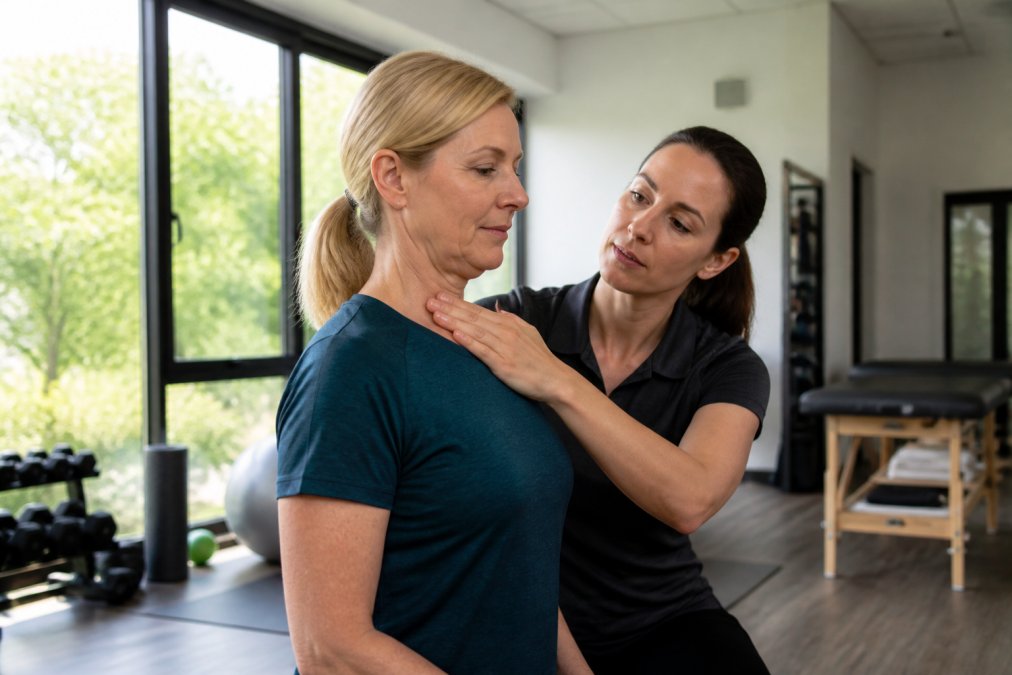
Manual therapy refers to skilled hands-on techniques applied by a physical therapist to mobilize stiff joints and soften restricted soft tissue. Common approaches include joint mobilization of the cervical spine, soft tissue mobilization for tight muscles, and trigger point release for hyperirritable bands within muscle tissue. These techniques temporarily reduce pain and improve range of motion, creating a window where therapeutic exercise becomes more effective.
The evidence supporting manual therapy is strongest when it is combined with exercise rather than used alone. A session might begin with soft tissue work to relax the upper trapezius, followed by specific mobility exercises for a stiff segment, then finish with activation exercises for weakened stabilizers.
Targeted Exercises and Movement Retraining
Exercise is the backbone of lasting improvement. Physical therapists prescribe specific movements to address the impairments found during evaluation, not generic neck rolls. Common targets include deep neck flexors, the muscles at the front of the neck that stabilize the head; scapular stabilizers around the shoulder blades; and spinal mobility at stiff segments.
Movement retraining also addresses motor control, teaching your brain to recruit the right muscles at the right time. Many people with chronic neck pain overuse superficial muscles like the upper trapezius while underusing deeper stabilizers. Correcting this pattern reduces strain on sensitive structures.
How Long Does Physical Therapy Take for Neck Pain?
Most people with chronic neck pain need 6 to 12 weeks of physical therapy to achieve meaningful, lasting improvement, with sessions typically occurring one to two times per week. This timeline reflects the biology of tissue adaptation: muscles and movement patterns take weeks of consistent practice to change, not days.
Several factors influence your individual timeline. Duration of symptoms matters, as pain present for years requires more retraining than a recent flare-up. Your baseline fitness level, the specific impairments found during evaluation, and how consistently you perform prescribed home exercises all affect progress. Some patients notice reduced pain within two to three weeks; others need the full course to build sufficient strength and confidence.
Key Exercises for Chronic Neck Pain You Can Start Today
While a full rehabilitation program is best designed by a physical therapist after a thorough evaluation, these foundational exercises are safe for most people with chronic neck pain. Perform them gently, never pushing into sharp or radiating pain, and stop if symptoms worsen significantly. The key is not just performing the movement, but understanding the why behind each one.
1. Chin Tucks (Deep Neck Flexor Activation)
This is the single most important exercise for chronic neck pain because it directly targets the deep neck flexors, the longus colli and longus capitis, which act as the primary dynamic stabilizers of your head. In many people with chronic pain, these muscles are inhibited and weak, forcing the larger, more superficial muscles like the upper trapezius and levator scapulae to overwork. This imbalance leads to the classic "forward head posture" and perpetuates strain on the cervical facet joints.
- How to do it: Sit or stand tall with your shoulders relaxed and eyes forward. Without tilting your head up or down, gently glide your head straight back, as if you are making a "double chin." You should feel a mild lengthening at the base of your skull and a gentle contraction in the front of your neck. Hold for 5 seconds, then relax completely.
- Progression: Start with 10 repetitions, twice daily. As this becomes easier, you can progress to holding for 10 seconds, or add a gentle resistance by placing two fingers on your forehead and pushing back lightly (isometric contraction). A common pattern is that patients feel this exercise in the back of the neck if they are using the wrong muscles (extensors) to pull the head back; the movement should be a slow, controlled glide, not a forceful yank.
2. Scapular Setting and Squeezes (Scapular Stabilization)
The shoulder blades (scapulae) form the base of support for your neck. If they are weak or positioned incorrectly (often protracted or "winged"), the muscles attaching from them to your neck, like the levator scapulae, must work overtime to stabilize your arm and head, leading to chronic tension and trigger points.
- How to do it: Sit or stand with your arms relaxed. Gently draw your shoulder blades down and slightly together, as if you are trying to place them in your back pockets. Do not shrug your shoulders up toward your ears. Hold for 5 seconds, then fully relax. Perform 10 repetitions.
- Progression: Once you can perform this without upper trapezius dominance, progress to holding a light resistance band (5-10 lbs) in front of you and performing a row, squeezing the shoulder blades together at the end of the movement. This builds endurance in the mid and lower traps, which are crucial for maintaining a stable base for the neck.
3. Suboccipital Release (Cervical Flexion Mobilization)
The suboccipital muscles are a group of four small muscles at the base of your skull that are notoriously tight in people with chronic neck pain and tension headaches. They are rich in muscle spindles (proprioceptors) that help control head position, and when they are in constant spasm, they refer pain into the head and behind the eyes.
- How to do it: Lie on your back with a small rolled towel or a cervical roll placed under your neck, not your head. Gently nod your chin toward your chest by about a quarter of an inch, this is a tiny, subtle movement. You should feel a deep, satisfying lengthening at the base of your skull. Hold for 10 seconds, then relax. Repeat 5 times.
- Progression: This is a mobility and relaxation exercise, not a strengthening one. If you feel sharp pain or dizziness, stop immediately. A common mistake is using the large neck muscles to push the head into the floor; the movement should originate from a subtle nod, not a crunch.
Start with one set of each and gradually increase as tolerated. Consistency matters more than intensity; five minutes twice daily produces better results than one long weekly session. These exercises are a starting point, but they do not replace a comprehensive assessment. If you have nerve pain radiating down your arm, or if any exercise increases dizziness or numbness, stop and consult a physical therapist for a personalized program that addresses your specific movement impairments.
Building Your Chronic Neck Pain Self-Management Strategies
Chronic neck pain self-management strategies are the daily habits and environmental adjustments that keep symptoms controlled between therapy sessions and after discharge. The shift from passive treatment to active self-management is what separates temporary relief from lasting recovery.
Ergonomic Workspace Audit
Your workspace may be undoing the progress made in therapy. A simple audit addresses three key contact points: monitor height, chair support, and keyboard position. Your monitor should sit at eye level so you look straight ahead, not down. Your chair should support your lower back with feet flat on the floor. Your keyboard should allow elbows at roughly 90 degrees with shoulders relaxed.
Sleep Hygiene and Relapse Prevention
Sleep quality directly influences pain perception, and poor sleep can amplify chronic pain. Your pillow should keep your cervical spine neutral, neither propping your head too high nor letting it drop too low. Side sleepers typically need a firmer, higher pillow; back sleepers a thinner one. Beyond pillow choice, consistent sleep timing and a wind-down routine support the restorative sleep that tissue healing requires.
Relapse prevention means recognizing early warning signs, such as increasing stiffness or tension, and responding with your prescribed exercises before a full flare-up develops. This proactive approach builds confidence that you can manage your condition independently.
Common Mistakes to Avoid During Recovery
The most common mistake during recovery is doing too much too soon. People feel better after a few sessions and resume heavy lifting or prolonged screen time, only to trigger a flare-up that sets progress back. Recovery from chronic pain follows a gradual curve, not a straight line, and setbacks are normal parts of the process, not signs of failure.
Another frequent error is relying solely on passive treatments. Massage, heat, and electrical stimulation feel good during the session but do little to change the underlying movement impairments that perpetuate pain. The lasting changes come from active exercise and movement retraining.
A third mistake is ignoring the psychological dimension of chronic pain. Persistent pain affects sleep, mood, and activity levels, which in turn can amplify pain through central sensitization. Approaches that address stress, pacing, and fear of movement, sometimes called mind-body or cognitive-behavioral strategies, meaningfully improve outcomes when combined with exercise. The American Physical Therapy Association's clinical practice guidelines emphasize that a comprehensive approach addressing both physical and psychological factors produces the best results for chronic neck pain.
Conclusion: Finding Lasting Relief
Chronic neck pain does not have to define your daily life, but lasting relief requires more than another passive treatment. The path forward involves understanding what drives your specific pain, engaging in targeted rehabilitation, and building self-management habits that prevent relapse.
Spinal Haven takes a root-cause approach that combines the McKenzie Method and the Selective Functional Movement Assessment to identify why your neck hurts rather than simply treating symptoms. Every session is one-on-one with a clinician, and the focus extends beyond the clinic to patient education and long-term self-management strategies that restore strength and return you to the activities you value. If you have tried generic physical therapy without results, or you are unsure where to begin, book a discovery call with Spinal Haven to discuss whether this approach fits your situation.
Frequently Asked Questions
What is the most effective treatment for chronic neck pain?
For many people, a combination of manual therapy and targeted exercise delivered by a physical therapist is highly effective for chronic neck pain. This approach addresses joint stiffness, muscle weakness, and poor movement patterns that contribute to persistent symptoms. A thorough assessment helps identify your specific pain drivers, allowing treatment to focus on the root cause rather than just temporary relief. Consistency with your home exercise program is a major factor in long-term success, alongside professional guidance.
How long does physical therapy take to relieve neck pain?
Many people notice meaningful improvement in their chronic neck pain within 4 to 6 weeks of starting physical therapy. However, the timeline varies based on how long you've had pain and what's causing it. Your therapist will track your progress and adjust your plan as you improve. The goal is not just to reduce pain, but to build strength and movement habits that prevent symptoms from returning. Your therapist can give you a clearer estimate after your initial evaluation.
Why won't my neck pain go away on its own?
Chronic neck pain often persists because the underlying movement impairments and muscle imbalances never get corrected. Resting or avoiding activity can lead to further deconditioning and stiffness. Physical therapy for chronic neck pain targets these root causes, such as weak deep neck flexors or poor scapular control, with specific exercises and hands-on treatment. Learning chronic neck pain self-management strategies also helps you respond to early signs of a flare-up before it becomes a prolonged episode.