 How-to
Sleeping Comfortably With Chronic Back Pain: A Practical Guide
Last Updated: November 5, 2026
Quick Summary
To sleep comfortably with chronic back pain, start by finding the position that feels least painful, then set up pillows to keep your spine supported. Side sleeping with knees bent and a pillow between the knees is a common starting point, especially for sciatica. Test each position for several nights and track how you feel each morning.
- Chronic low back pain is linked to more sleep disturbance, shorter sleep, and poorer sleep quality.
- Side sleeping with knees bent often helps people with sciatica by opening space around the nerve root.
- Place a pillow between your knees to keep your hips square and prevent your top leg from twisting your pelvis.
- Stomach sleeping often strains the neck and lower back, so change the habit gradually with a body pillow.
- Seek a professional assessment if you wake with new leg weakness, numbness, or tingling that does not resolve.
Table of Contents
- Why Chronic Back Pain Disrupts Sleep
- Step 1: Find the Best Position to Sleep for Lower Back Pain
- Step 2: Set Up Pillows to Support Your Spine
- Step 3: Adjust Your Sleep Setup for Sciatica and Lower Back Pain
- Step 4: Manage Upper Back Pain Between Your Shoulder Blades
- Step 5: Stop Sleeping on Your Stomach Without Fighting Your Habit
- When Your Sleep Problem Needs a Professional Assessment
- Frequently Asked Questions
Chronic back pain does not just hurt during the day. It can make every night harder, too, and make it tough to sleep comfortably. Many adults with long-term lower back pain or sciatica wake up stiff, shift position again and again, and struggle to fall back asleep. Physical therapy can help active adults who want to sleep through the night again. Below, we walk through practical steps you can try tonight, and we explain when it is time to get a professional assessment.
Why Chronic Back Pain Disrupts Sleep
Sleep and back pain feed each other. A review indexed by PubMed review on chronic low back pain and sleep found consistent evidence that chronic low back pain is linked to more sleep disturbance, shorter sleep, poorer sleep quality, and a longer time to fall asleep.
That creates a loop. Pain makes it hard to rest, and poor sleep can make pain feel worse the next day. Breaking the loop starts with changing how you position your body at night.
Step 1: Find the Best Position to Sleep for Lower Back Pain
Most people with chronic back pain try a handful of positions and settle on whatever feels least bad. That approach misses a key point: the position that reduces pain is not always the position that protects a compressed nerve. Understanding the difference matters, especially if you have sciatica or leg symptoms.
Start by identifying what your pain is telling you. If your pain is a dull ache that worsens with certain movements, position changes can often relieve it. If you have sharp, shooting pain down one leg, numbness, or tingling, you may be dealing with nerve compression. In that case, the goal shifts from comfort to reducing pressure on the nerve.
Here are commonly discussed sleeping positions, along with the reasoning behind each:
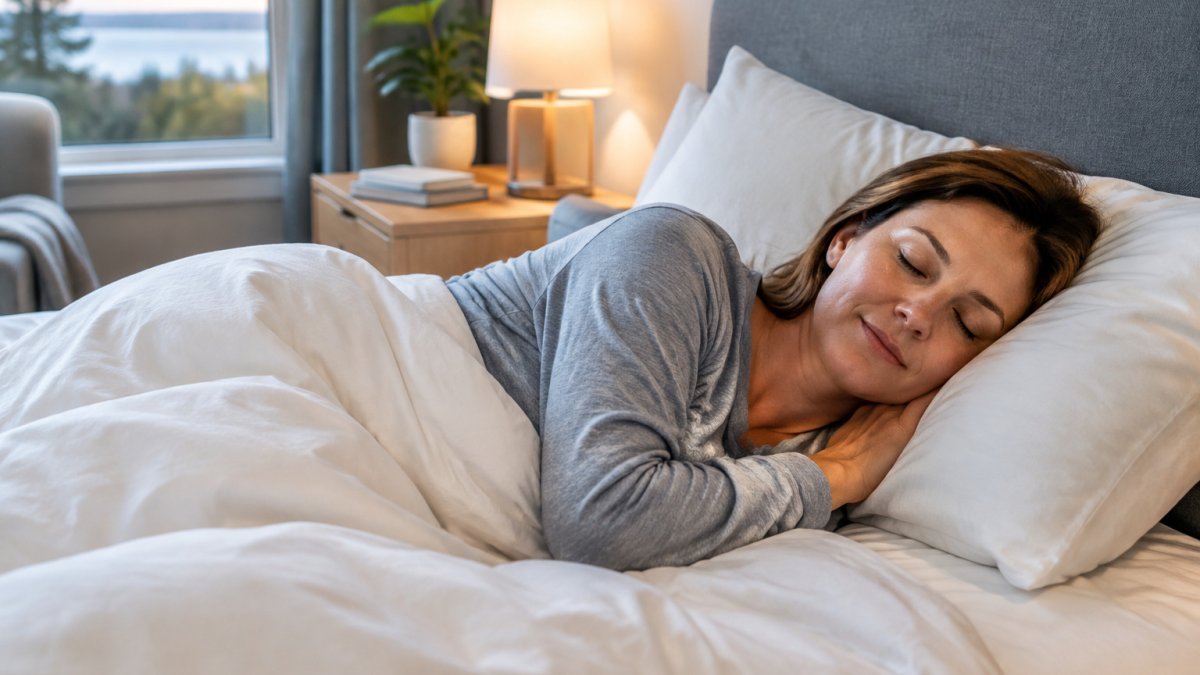
- Side sleeping with knees bent: This position keeps the spine in a more neutral alignment and reduces the curve in the lower back. Place a pillow between your knees to prevent your top leg from dropping forward and twisting your pelvis. This is often the best starting point for people with sciatica because it opens space around the nerve root.
- Back sleeping with a pillow under the knees: Lying on your back with a pillow under your knees flattens the lumbar curve slightly, which can ease strain on the lower back. This position works well for people whose pain is centered in the lower back rather than radiating down a leg. If you have sciatica, however, back sleeping can sometimes increase nerve pressure, so test it carefully.
- Stomach sleeping: This is the position most likely to strain both the neck and lower back. It forces the lumbar spine into extension and rotates the head to one side, which can aggravate nerve symptoms. If you habitually sleep on your stomach, see Step 5 for a gradual approach to changing that habit.
Research on sleeping position preferences in chronic low back pain is not definitive, and individual variation is significant. The practical takeaway is that no single position is universally best, so test each option for several nights and track how you feel in the morning.
Watch out: If you wake up with new or worsening leg weakness, numbness, or tingling that does not resolve within a few minutes of moving, do not assume it is just a bad sleeping position. That pattern can signal nerve compression that needs a professional assessment.
Our team at Spinal Haven often helps patients sort out which position works for their own body, especially when sciatica is involved. You can read more about our back pain physical therapy approach for lower back pain.
Step 2: Set Up Pillows to Support Your Spine
Pillows do more than make you comfortable. They determine whether your spine stays in a neutral line or gets pushed into a position that increases pressure on a nerve. Getting the setup right can mean the difference between waking up stiff and waking up rested.
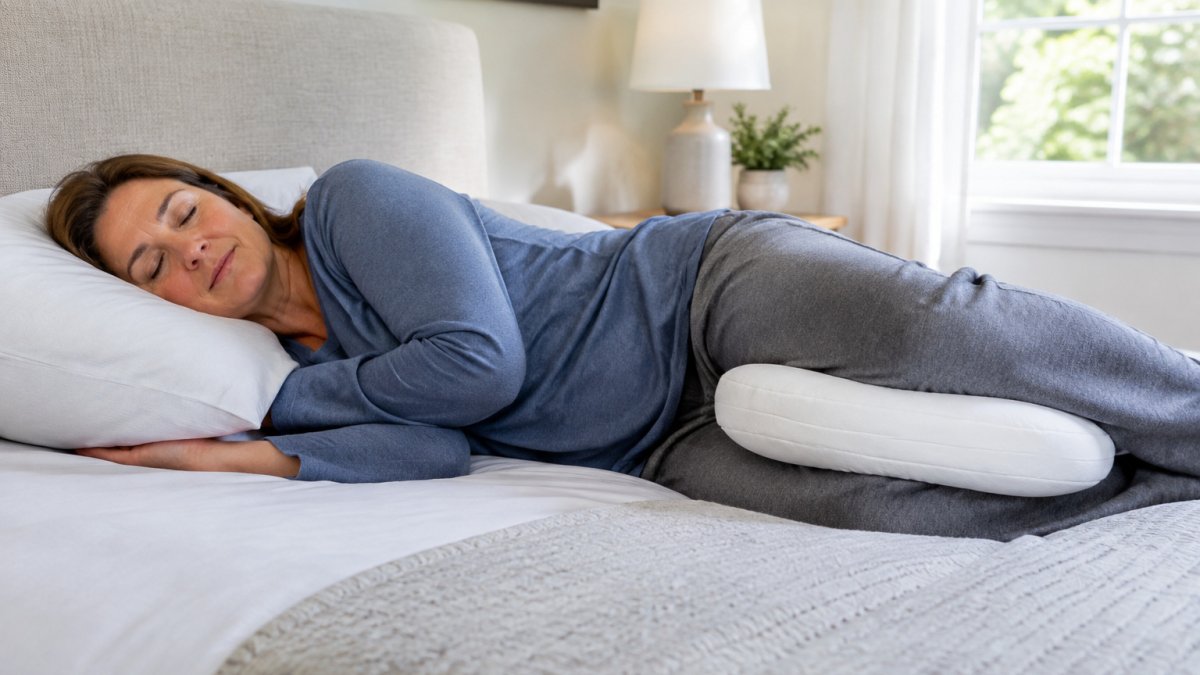
Here is how to set up pillows for each sleeping position:
- Side sleepers: Your head pillow should fill the gap between your neck and the mattress so your head stays level with your spine. If the pillow is too thick, your head tips up; too thin, and it drops down. Both positions strain the neck and upper back. Place a firm pillow between your knees to keep your hips square. A body pillow can serve both purposes.
- Back sleepers: Use a thinner pillow under your head so your chin does not tuck toward your chest. Place a pillow under your knees to support the natural curve of your lower back. Some people also benefit from a small rolled towel under the lower back for additional support.
- Stomach sleepers: If you cannot avoid stomach sleeping, use a very thin pillow or no pillow under your head to reduce neck strain. Place a pillow under your hips to take some pressure off the lower back. This is a compromise, not a solution.
Pillow height matters more than most people realize. A pillow that is too high or too low can tilt your head and neck, which pulls on the muscles and fascia that run down your back. Over time, that tension can contribute to upper back pain between the shoulder blades and even headaches. The right height keeps your head and neck in line with the rest of your spine.
Watch out: If you have sciatica, a pillow between your knees is not optional. Without it, your top leg can drop forward, rotating your pelvis and increasing tension on the sciatic nerve. This is one of the most common reasons people wake up with worse leg symptoms.
Replace pillows that have gone flat or lumpy. A pillow that no longer holds its shape stops supporting you well, and a sagging pillow can push your spine out of alignment. Pillows generally wear out over time, and how often to replace them depends on the material and how you use them.
Grab a Free Discovery Call Today →
If you have tried pillow adjustments and still wake up with pain or numbness, the issue may be more than pillow height. A professional assessment can identify whether nerve compression or another condition is contributing to your sleep problems.
Step 3: Adjust Your Sleep Setup for Sciatica and Lower Back Pain
Sciatica often brings pain, numbness, or tingling down one leg. Small changes can ease pressure on the nerve at night:
- Keep a pillow between your knees when lying on your side.
- Avoid curling tightly into a fetal position if it increases leg symptoms.
- Choose a mattress that supports your body without sinking too far.
- Keep your bedding loose around your feet so nothing presses on them.
If leg symptoms stay the same or get worse after a few weeks of adjustments, sciatica physical therapy may be the next step. Our sciatica physical therapy program focuses on the source of leg pain that starts in the back.
Step 4: Manage Upper Back Pain Between Your Shoulder Blades
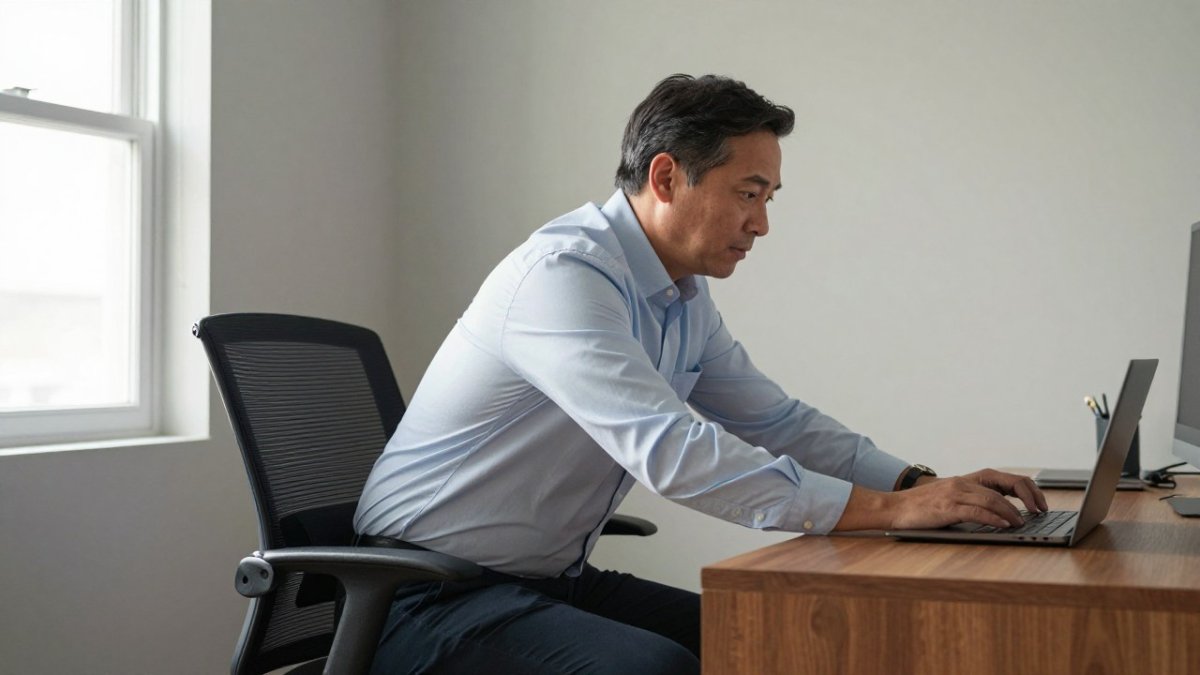
Upper back pain is often tied to a slumped or rounded posture, especially after long hours at a desk. At night:
- Sleep on your back with a small pillow under your head and a pillow under your arms for support.
- Sleep on your side with your arms slightly forward, not squeezed against your chest.
- Avoid a pillow that pushes your head too far forward.
Some people find that gentle movement before bed helps them relax. Stop any movement that increases pain.
Step 5: Stop Sleeping on Your Stomach Without Fighting Your Habit
Many people sleep on their stomach without realizing how much it strains the neck and lower back. Changing a long habit takes time, so try a gradual approach:
- Place a pillow along your side or chest to make it harder to roll onto your stomach.
- Use a body pillow to hug while on your side.
- Reset every time you wake up on your stomach. Roll back to your side without judging yourself.
Give yourself a few weeks. Most people find the habit fades as their body adjusts.
When Your Sleep Problem Needs a Professional Assessment
Home changes help many people, but some sleep problems need a closer look. Consider booking a professional assessment if your pain keeps you up most nights, if you have leg weakness or numbness, or if you have tried several changes without relief.
At Spinal Haven, Dr. Elizabeth Kingshott Cary, PT, DPT, Cert. MDT, uses the Selective Functional Movement Assessment to look for the root cause of your pain rather than only the sore spot. She is certified in the McKenzie Method, and our care is one-on-one, with both in-person and virtual options. You can learn more about Dr. Cary and her background before you decide.
If you want to see whether our one-on-one care is a good fit, you can schedule a discovery call. It is a conversation to talk through your symptoms and goals.
Better sleep may be possible even with long-term back pain. Start with one or two changes tonight, track how you feel, and consider a professional assessment when you are ready for a plan built around your body.
Frequently Asked Questions
What is the best sleeping position for lower back pain?
For many people with lower back pain, sleeping on the side with a pillow between the knees or on the back with a pillow under the knees helps keep the spine in a more neutral position. Research has found that sleep is often disrupted by chronic low back pain, so the goal is a position that lets you rest without strain. Positions that change the curve of the lower back, such as stomach sleeping, often make symptoms worse. Try a position for a few nights and note how you feel on waking. If pain stays severe or worsens, speak with a physical therapist or physician for an individual assessment.
Why can't I sleep because I'm in too much pain?
Chronic back pain is associated with greater sleep disturbance, shorter sleep duration, poorer sleep quality, and a longer time to fall asleep, according to a review of studies indexed in PubMed. Pain makes it hard to stay in one position, and each waking adds to fatigue. Small changes such as adjusting pillow height, using a supportive mattress, and reducing the strain of getting in and out of bed can help. A clinician can help identify which factors are driving your symptoms.
Which sleeping position is worst for back pain?
Sleeping on the stomach is commonly advised against for people with back pain because it tends to flatten the natural curve of the lower spine and can twist the neck. Many people with back pain report avoiding prone sleep. Sleeping-position advice should not be treated as a universal rule, so if you find a position that works without pain, it may be a reasonable choice. Consult a qualified professional if you are unsure.
Should I see a professional if sleeping keeps aggravating my back pain?
Yes, a persistent pattern of pain that keeps you awake or limits your daily activities is a reason to schedule a consultation with a qualified professional, such as a physical therapist or physician. Seek urgent care right away if you have new numbness in the groin or inner thighs, new bladder or bowel changes, or leg weakness that is worsening. A professional can assess the cause of your symptoms and recommend a plan tailored to you. Spinal Haven offers consultations for active adults dealing with back pain and sciatica; check the website for current scheduling options and pricing.