 How-to
How to Improve Thoracic Spine Mobility at Your Desk
Last Updated: November 21, 2026
Quick Summary
You can improve thoracic spine mobility at your desk with a five-minute routine of cat-cow, seated rotation, thread the needle, wall angels, and chair extension, done twice a day. Seated versions cover the same movement directions when floor space is limited.
- Do the five-move sequence mid-morning and mid-afternoon, about five minutes each time.
- Start with the listed reps for week one, then add one slow breath at end range in week two.
- Keep the pelvis still during seated rotation so the movement comes from the mid-back.
- Stand and reset every 30 to 45 minutes; thirty seconds of walking and two slow rotations is enough.
- Stop and seek an assessment for numbness, tingling, or weakness in an arm or hand.
Table of Contents
- Why Your Mid-Back Stiffens at a Desk Job
- A Five-Minute Thoracic Spine Mobility Routine for the Workday
- Seated Thoracic Mobility Exercises You Can Do Without Standing Up
- Upper Thoracic Mobility Exercises for the Shoulder Blades and Neck Base
- Floor Drills for Thoracic Extension and Rotation
- How Thoracic Mobility Exercises Physiotherapy Sessions Differ From a Desk Routine
- Progressions, Regressions, and Ergonomic Adjustments That Make the Work Stick
- Book a Discovery Call With Spinal Haven
- Frequently Asked Questions
Why Your Mid-Back Stiffens at a Desk Job
Your thoracic spine mobility refers to how well the section of spine that runs through your upper and mid-back, from the base of your neck to the bottom of your rib cage, can move. It is built to rotate and extend. Desk work asks it to do neither.
Sit for hours with your hands on a keyboard and your eyes on a screen, and the mid-back rounds forward. The joints stiffen. The muscles between the shoulder blades tighten.
The stiffness is rarely a sign that something is damaged. It is usually a sign that a mobile segment of the spine has stopped being asked to move.
A small study of office workers with chronic neck pain found that a mobility program of 25 minutes, twice weekly for six weeks, was linked to better range of motion and less neck pain and disability (study of thoracic mobility exercises in office workers). That study was small, so treat it as encouraging rather than definitive.
A Five-Minute Thoracic Spine Mobility Routine for the Workday
The best routine is the one you actually do. Five minutes, twice a day, beats a thirty-minute session you skip.
The sequence (about five minutes total):
- Cat-Cow, 8 slow rounds, breathing with each rep. If you cannot get on the floor, do a seated version: hands on knees, alternate rounding and arching the mid-back while keeping the pelvis still.
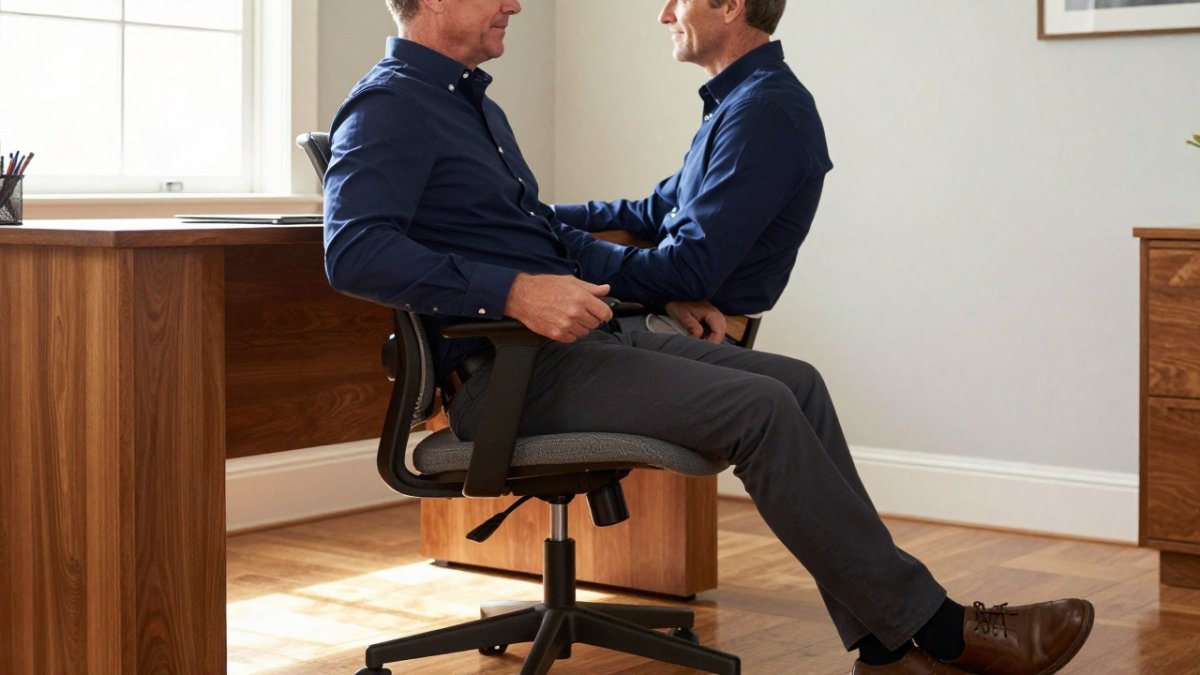
- Seated rotation, 6 turns per side, hands behind the head, elbows wide. Move from the rib cage, not the lower back.
- Thread the Needle, 5 slow reps per side. If the floor is not an option, substitute a seated side bend: reach one arm overhead and lean away, holding for two breaths per side.
- Wall angels, 8 reps, back flat against the wall. Keep the ribs down; if your lower back arches away from the wall, reduce the range.
- Chair extension, 5 gentle reps over the chair back. Slide your hips forward, hook your hands behind your head, and lean back only as far as the chair allows without pinching.
When to do it: Once mid-morning and once mid-afternoon is a realistic target.
How to progress: Start with the reps above for the first week. In week two, add one slow breath to each end range.
How to regress: If any move produces more than a gentle stretch, reduce the range by half and slow the tempo. For rotation, cross your hands over your chest instead of behind your head.
Watch out: a sharp catch, pinching, or pain that travels into the arm is a signal to stop that movement, not to push through it. Return to a gentle range or skip the move for the day.
If you work in a shared office or a cubicle where floor space is limited, the seated substitutions above cover the same movement directions, rotation, extension, and side bending, without requiring privacy.
Here is the five-move sequence at a glance, with reps and how to scale each one.
| Move | Reps | Regression |
|---|---|---|
| Cat-Cow | 8 slow rounds | Seated version, hands on knees |
| Seated rotation | 6 turns per side | Hands crossed over chest |
| Thread the Needle | 5 slow reps per side | Seated side bend, two breaths per side |
| Wall angels | 8 reps | Step feet further from the wall |
| Chair extension | 5 gentle reps | Lean back only as far as comfortable |
Seated Thoracic Mobility Exercises You Can Do Without Standing Up
Seated thoracic mobility exercises are movements you perform in your chair to restore rotation and extension in the mid-back. They suit shared offices, small cubicles, and anyone who would rather not lie on the floor at work.

Three moves cover most of what you need:
- Seated rotation: Sit tall, hands behind your head, elbows wide. Turn your torso to one side, hold for two breaths, return, and switch.
- Chair extension: Slide your hips forward, hook your hands behind your head, and gently lean back over the top of the chair. Keep your ribs from flaring.
- Seated side bend: Reach one arm overhead and lean away from it, feeling a stretch along the side of your ribs. Hold, then switch.
Keep your pelvis still. The movement should come from your mid-back, not your lower back.
Upper Thoracic Mobility Exercises for the Shoulder Blades and Neck Base
Upper thoracic mobility exercises target the segment just below the neck, where stiffness often turns into rounded shoulders and neck-base tension. If your shoulders roll forward and your head drifts ahead of your body, this is the area to work.
Two drills help most:
- Wall angels: Stand with your back, head, and hips against a wall. Slide your arms up and down like a snow angel while keeping contact with the wall.
- Thread the Needle: On hands and knees, slide one arm under your body and let your shoulder and upper back rotate toward the floor. Hold, then switch sides.
For a deeper look at posture, see our guide on how to fix rounded shoulders from desk work. If neck-base stiffness comes with headaches, our neck pain physical therapy page explains how targeted movement care works.
Floor Drills for Thoracic Extension and Rotation
Floor drills give you more room to move than a chair allows. They work well at the start and end of the day.
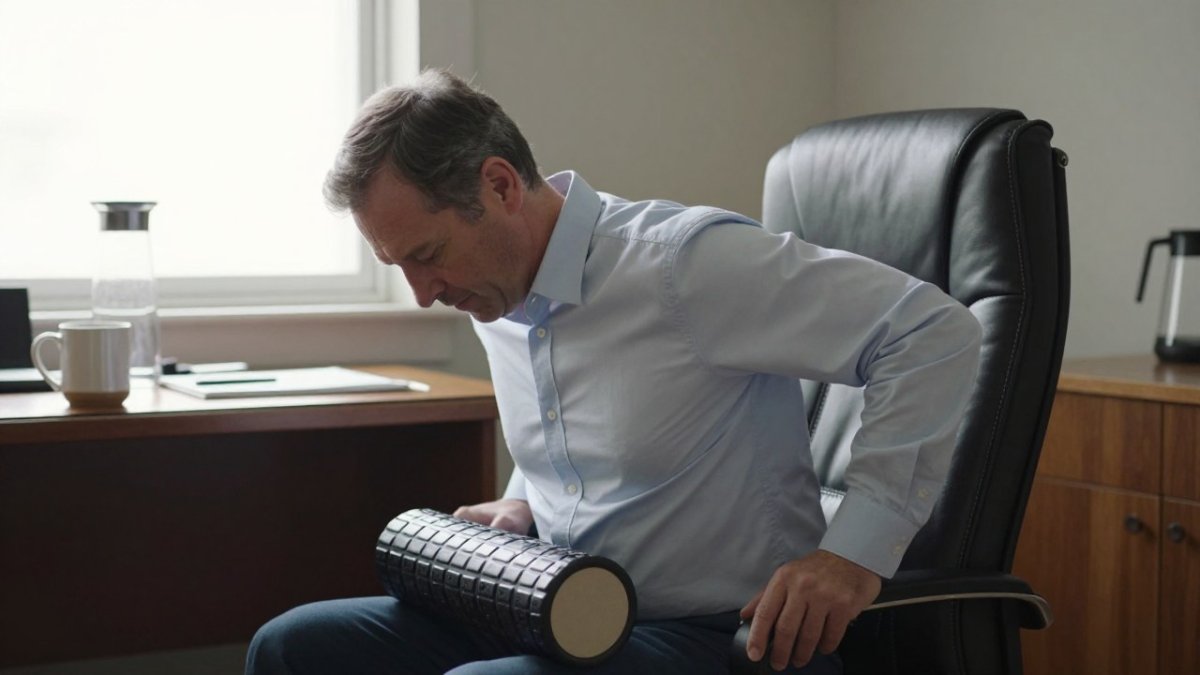
For extension, lie on a foam roller placed across your mid-back. Support your head, breathe out, and let your upper back drape backward over the roller. Move the roller a little at a time. A peanut roller, two balls joined together, lets you work one side of the spine at a time.
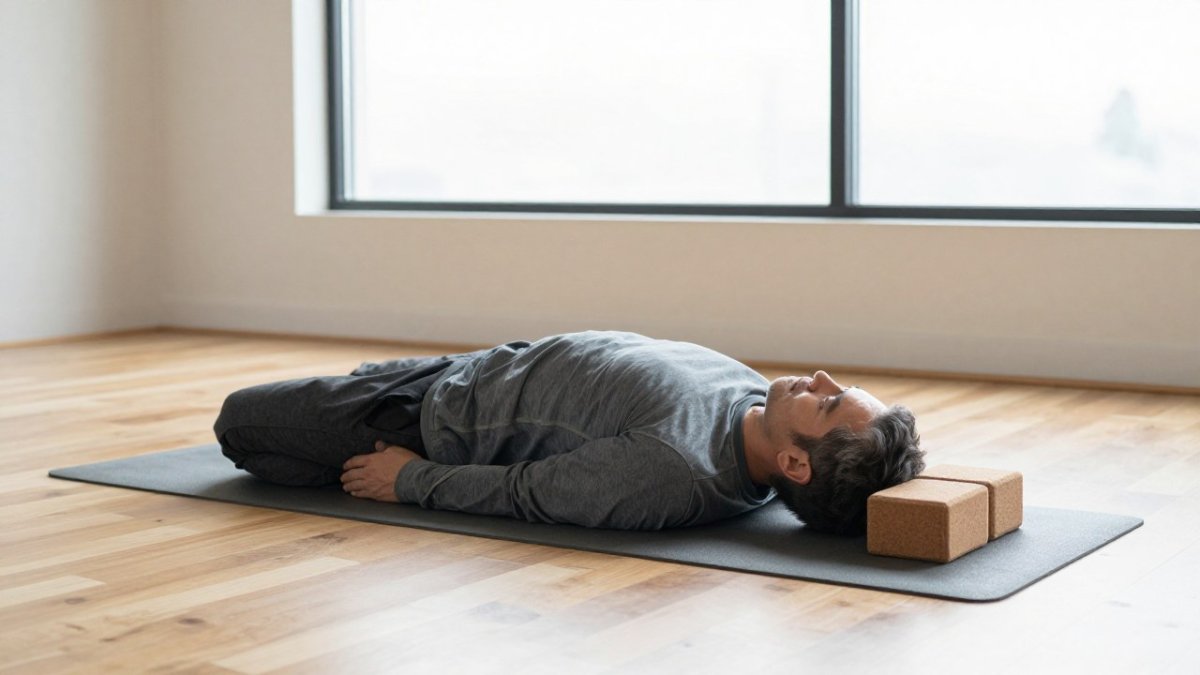
For rotation, try the Open Book. Lie on your side with knees bent, then open the top arm across your body and let your chest turn toward the ceiling. Follow your hand with your eyes. Repeat slowly on each side.
Keep the range comfortable. A gentle stretch is the goal, not a deep crack.
How Thoracic Mobility Exercises Physiotherapy Sessions Differ From a Desk Routine
A desk routine maintains what you have. Thoracic mobility exercises in physiotherapy go further by finding out why your mid-back stiffened in the first place.
We start with a movement assessment. That means watching how your spine, hips, and shoulders work together, not just where it hurts. The Selective Functional Movement Assessment (SFMA) and the McKenzie Method® are the evidence-based approaches our clinic uses to identify and treat the source of movement limitations.
Sessions are one-on-one. The aim is independence, not endless appointments.
If stiffness, weakness, or a movement limitation is limiting your day, our mobility and movement restoration service is built for exactly that.
Progressions, Regressions, and Ergonomic Adjustments That Make the Work Stick
Exercises only help if your setup stops undoing them. The goal is not a perfect posture; it is a setup that lets you change position often enough that the mid-back is not held in one shape for hours.
Make it easier (regression):
- Do rotation with hands crossed over your chest instead of behind your head.
- Reduce the range by half and hold for two breaths at the end of each rep.
- Do the moves seated if the floor is not an option.
- Skip the foam roller and use a rolled towel across the mid-back for a gentler extension.
Make it harder (progression):
- Add a light resistance band around your ribs for seated rotation, pulling against the band as you turn.
- Hold each end range for three to five breaths instead of two.
- Add a rep or a second round each week, not both at once.
- Progress from a chair extension to a foam roller extension once the chair version feels comfortable and controlled.
Desk adjustments that support the drills:
- Raise your monitor so the top of the screen sits at eye level. This reduces the forward head position that loads the upper thoracic spine.
- Keep your feet flat and your hips slightly higher than your knees. A slight forward tilt of the seat pan can help you sit on your sit bones rather than your tailbone.
- Position your keyboard so your elbows stay near 90 degrees and your wrists are neutral. Reaching forward rounds the mid-back.
- Stand and reset your posture every 30 to 45 minutes. A standing break does not need to be long; thirty seconds of walking and two slow rotations is enough to change the load.
What to expect and how to track it: Mobility work is not a cure for all mid-back discomfort. Changes are gradual and vary by person. Track one or two simple markers, how far you can turn your head to check a blind spot, or how your mid-back feels at 3 p.m., rather than judging by feel alone.
When to seek professional care: Stop and seek an assessment if you have numbness, tingling, or weakness in an arm or hand; pain that follows a fall or injury; pain that wakes you at night; or stiffness that steadily worsens rather than eases with movement.
Watch out: forcing a crack or pushing into a sharp pain can irritate the joints. Move to a gentle stretch and stop there.
Book a Discovery Call With Spinal Haven
Stiffness that lingers for weeks, comes with numbness or weakness in an arm, or follows an injury deserves a proper look. A clinician should assess those symptoms rather than a desk routine.
Spinal Haven offers one-on-one physical therapy built around your movement, not a template. Our owner, Dr. Elizabeth Kingshott Cary, PT, DPT, Cert. MDT, is certified in the McKenzie Method® and trained in the SFMA. We focus on teaching you to manage your own movement long term.
You can book a discovery call to see whether this approach fits you. Before you book, our frequently asked questions page covers evaluations, visits, and what to expect.
Your mid-back will not loosen up from one session or one stretch. It responds to small, repeated movement, done most days, with a setup that supports it. If you have tried generic routines and still feel stuck, we can help you find the root cause and build a plan around it.
Frequently Asked Questions
How often should I do thoracic spine mobility exercises?
Short, frequent sessions beat one long stretch. A five-minute routine two or three times across the workday keeps the mid-back moving without eating into your schedule. Start with daily five-minute breaks and add longer sessions as the movement feels easier.
Which seated thoracic mobility exercises work best at a desk?
Three moves cover most of the mid-back: the seated rotation with hands behind the head, the seated cat-cow, and the chair-based wall angel variation where you slide your shoulder blades down and back. Do five to eight slow repetitions of each, moving only as far as feels comfortable. Keep your feet flat and your ribs stacked over your hips so the motion comes from the upper back rather than the low back.
Can thoracic mobility exercises help with upper-back stiffness?
They target the exact area that stiffens during prolonged sitting. The mid-back carries most of the rounding posture that builds up over a desk day, and extension and rotation drills restore range of motion there.
When should I stop an exercise and seek professional guidance?
Stop if a drill produces sharp pain, numbness, tingling, or symptoms that travel down an arm or leg, and seek a qualified clinician before continuing. Mild stiffness that eases as you move is usually fine. A physical therapist trained in movement assessment can check whether your mid-back is the real driver of symptoms or whether the neck, shoulders, or low back need attention first.