 How-to
7 Steps to Manage a Sciatica Flare-Up at Your Desk
Last Updated: November 20, 2026
Quick Summary
A sciatica flare-up at your desk calls for quick, gentle action: stop and assess the pain, change position slowly, try one pain-free movement, and reset your workstation with feet flat, lower back supported and screen at eye level. Seek emergency care right away for numbness in the groin or saddle area or loss of bladder or bowel control.
- Stop and assess first; numbness in the groin or saddle area, or loss of bladder or bowel control, needs emergency care.
- Change position gently, using armrests for support, and stop any movement that increases leg pain or numbness.
- Reset your desk with feet flat, hips level with or slightly above knees, and screen at eye level.
- Alternate between sitting and standing every 20 to 30 minutes if you have a sit-stand desk.
- Request accommodations by describing the functional need, such as standing briefly every hour, rather than disclosing a diagnosis.
Table of Contents
- What a Sciatica Flare-Up Feels Like at Work
- Why Prolonged Sitting Triggers Sciatica Symptoms
- How to Sit at a Desk with Sciatica
- Office Ergonomics for Sciatica: Setting Up Your Workstation
- Sciatica Stretches You Can Do at Your Desk
- A Minute-by-Minute Plan for a Flare-Up at Work
- When to Seek Care for Sciatica and Talk to Your Employer
- Frequently Asked Questions
What a Sciatica Flare-Up Feels Like at Work
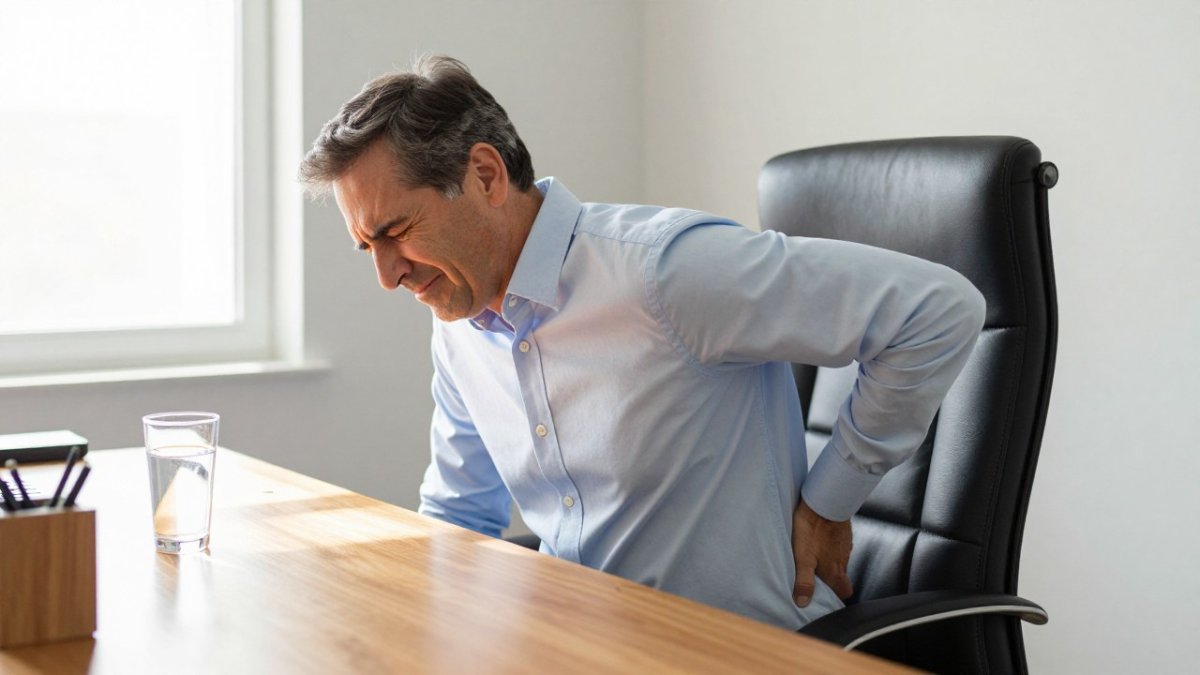
A sciatica flare-up at work often starts small. You feel a dull ache in your lower back, then a sharp pain shoots down one leg. By the afternoon, sitting through a meeting feels like a test of endurance.
Sciatica describes pain that follows the sciatic nerve, the large nerve that runs from the lower back through the buttock and down each leg. Pain from this nerve can feel burning, electric, or numb, and it may spread into the foot.
Flare-ups at a desk are frustrating because they hit during the workday. You cannot always stop what you are doing to rest. Knowing the common signs helps you act early, before the pain builds.
Common signs of a flare-up include:
- Pain that starts in the lower back and travels down one leg
- Numbness or tingling in the foot or toes
- Pain that worsens after long periods of sitting
- Stiffness when you stand up from your chair
- Weakness that makes it hard to push off the floor
If symptoms feel severe or change quickly, see a qualified clinician. The sections below explain what you can do at your desk in the meantime.
Why Prolonged Sitting Triggers Sciatica Symptoms
Sitting for long stretches puts steady pressure on the lower spine and the tissues around the sciatic nerve. Many people find that symptoms build gradually over a workday spent in one position.
General guidance suggests alternating between seated and standing postures during the day. Start with what feels tolerable for you and adjust over time.
How to Sit at a Desk with Sciatica
Good sitting habits reduce strain on the lower back. Keep these points in mind at your desk:
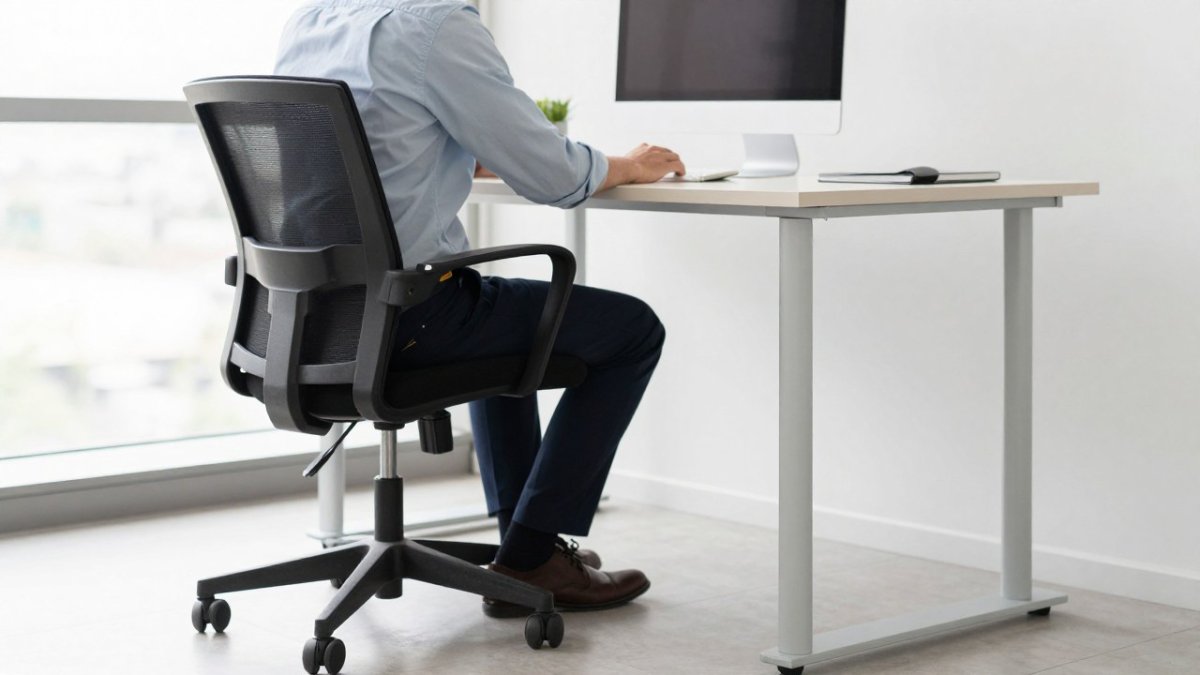
- Sit with your feet flat on the floor. Avoid crossing your legs.
- Keep your hips level with or slightly above your knees.
- Support the natural curve of your lower back. A small cushion or rolled towel can help.
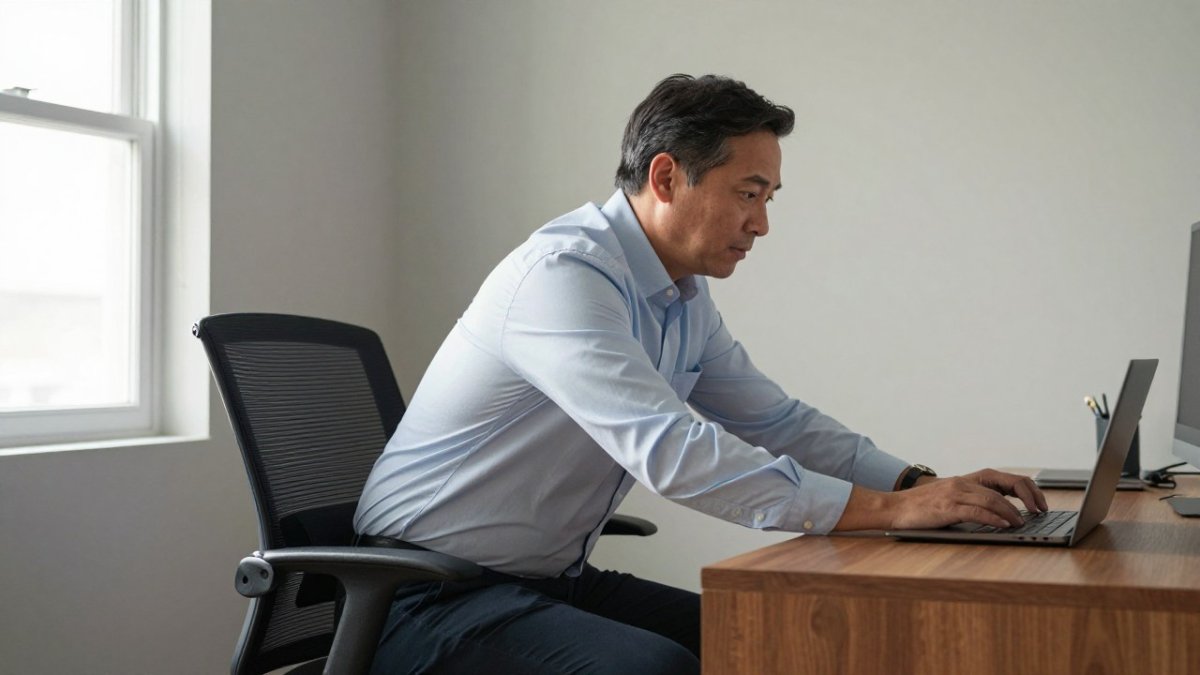
- Keep your screen at eye level so you do not lean forward.
- Change position often. Shift your weight, recline slightly, or stand up.
Gentle movement during the day is generally a better choice than staying still during a flare.
Office Ergonomics for Sciatica: Setting Up Your Workstation
A well-set workstation makes it easier to sit comfortably for longer. Small adjustments can make a noticeable difference.
Chair, Monitor and Desk Height
Start with your chair. Set the seat height so your feet rest flat and your knees bend at about a right angle. Use the backrest to support your lower back.
Next, position your monitor. The top of the screen should sit at or just below eye level, about an arm's length away. This keeps your neck and upper back in a neutral position.
Finally, check your desk height. Your forearms should rest on the desk with your elbows near a right angle and your shoulders relaxed.
Adjusting for Standing Desks and Seated Roles
If your job lets you stand, a sit-stand desk can help you change positions through the day. Begin with short standing periods and build up gradually. Standing for too long at once can also aggravate symptoms, so variety matters more than duration.
If your role keeps you seated for most of the day, focus on frequent movement breaks. Stand to take calls, walk to a colleague's desk instead of emailing, or use a reminder to shift your posture each hour.
Sciatica Stretches You Can Do at Your Desk
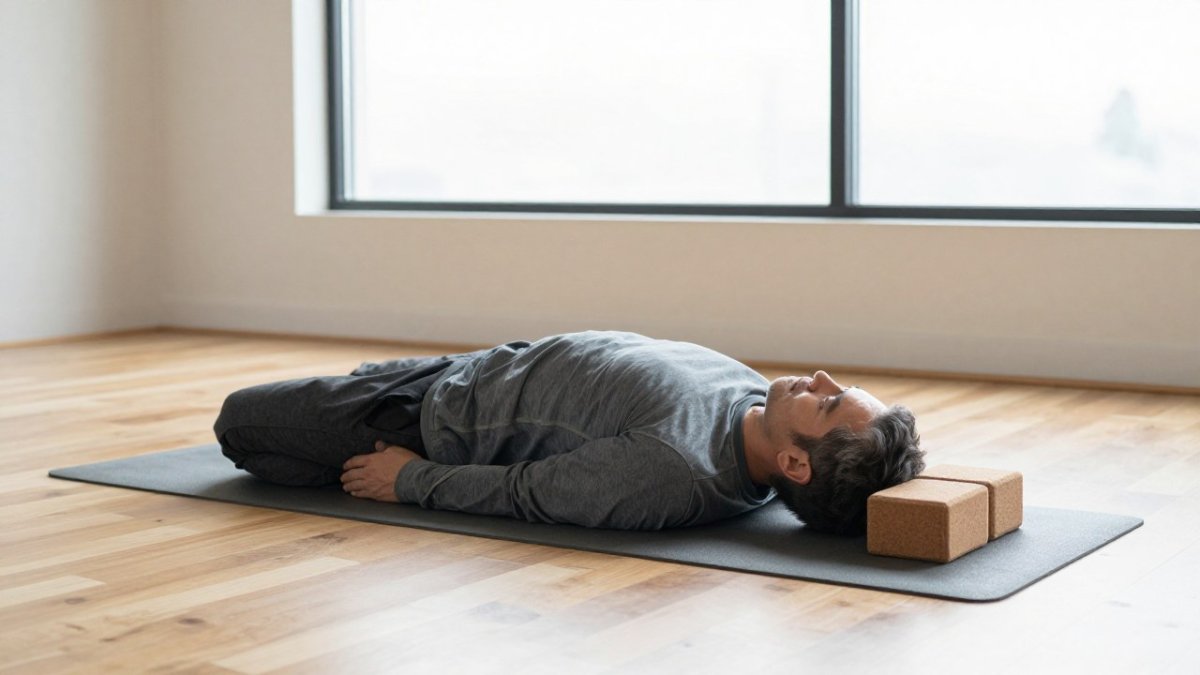
Gentle stretches can ease stiffness during a workday. Stop any movement that increases leg pain, numbness or weakness, and check with a qualified clinician before starting a new routine.
- Seated pelvic tilts: Sit tall and gently rock your pelvis forward, then back. Repeat slowly.
- Seated hamstring stretch: Extend one leg, heel on the floor, and lean forward gently from the hips.
- Standing back extension: Stand, place your hands on your lower back, and lean back a small amount.
- Glute stretch: Sit, cross one ankle over the opposite knee, and lean forward slightly.
Readers managing ongoing symptoms may benefit from a broader self-management plan with a qualified clinician. Our guide on how to manage chronic back pain without surgery covers non-surgical approaches beyond desk stretches.
A Minute-by-Minute Plan for a Flare-Up at Work
When sciatic pain spikes at your desk, a calm, sequenced response keeps you from making it worse. The plan below is designed for an office setting and assumes you are otherwise healthy. It prioritizes safety and gentle movement over pushing through pain.
Minute 0-2: Stop and assess. Pause what you are doing. Notice where the pain is and whether it is changing. Is it a familiar ache, or is it sharp, electric, or spreading further down the leg than usual? If you feel sudden numbness in the groin or saddle area, loss of bladder or bowel control, or new severe weakness in the leg, stop and seek emergency medical care immediately, do not wait to finish the plan. For a typical flare, continue.
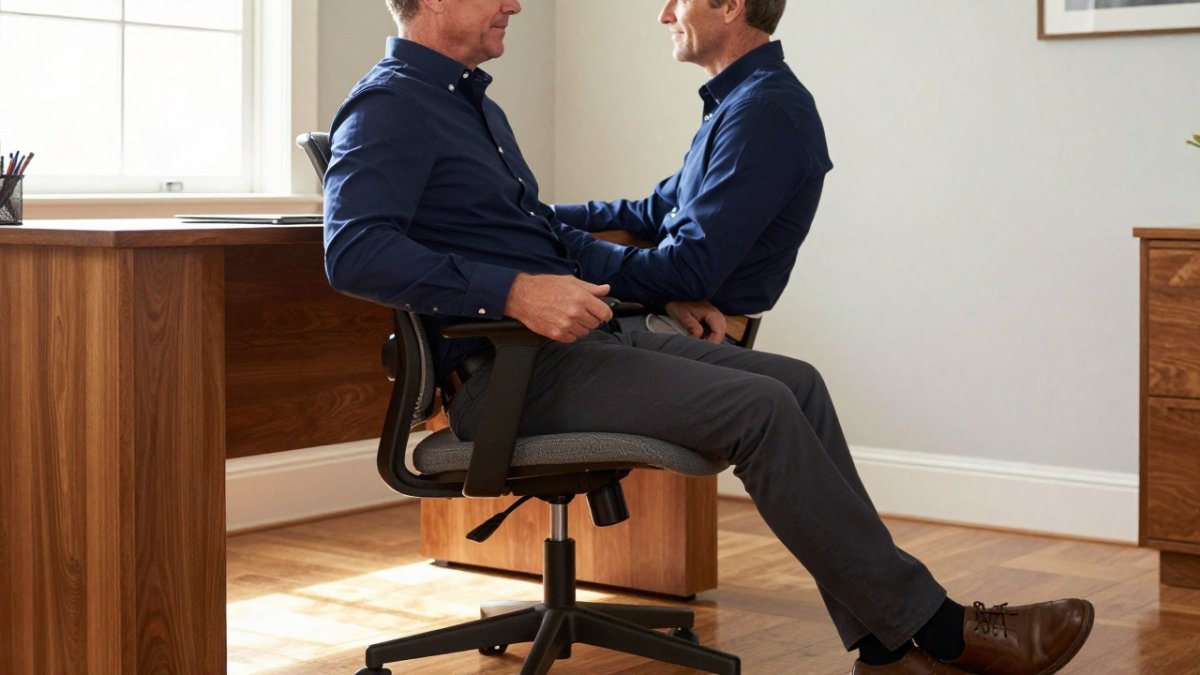
Minute 2-5: Change position gently. Stand up slowly, using the armrests for support. Shift your weight side to side a few times. If standing feels worse, sit back down and try a different approach. The goal is to find a position that reduces leg symptoms, not to force a stretch.
Minute 5-10: Try one gentle movement. Choose one of these, staying within a pain-free range:
- Seated pelvic tilts: sit tall and rock your pelvis forward and back slowly, 5-10 times.
- Standing back extension: stand, place your hands on your lower back, and lean back a small amount, holding for 2-3 seconds.
- Slow walking: walk around your office or hallway for 2-3 minutes at a comfortable pace.
Watch out: if any movement increases leg pain, numbness, or tingling, stop immediately. Do not repeat it. A safe rule is that symptoms should not travel further down the leg during or after the movement.
Minute 10-15: Apply heat or cold, if it helps. Use a cold pack for 10-15 minutes if the area feels hot or inflamed, or a heat pack if the pain feels tight and achy. Wrap either in a towel to protect your skin. If you have reduced sensation or circulation, check with a clinician before using temperature therapy.
Minute 15-20: Reset your workstation. Return to your desk and adjust your setup: feet flat, lower back supported, screen at eye level. If you have a sit-stand desk, alternate between sitting and standing every 20-30 minutes for the rest of the day. Keep movement breaks short and frequent rather than one long break.
Minute 20 onward: Monitor and modify. For the rest of the workday, avoid prolonged static positions. Stand during phone calls, walk to refill water, and take a 2-minute movement break every 30-45 minutes. If pain continues to escalate despite these steps, or if you develop new symptoms, contact a qualified clinician. Most flare-ups settle with gentle activity, but persistent or worsening symptoms warrant professional evaluation.
This plan is not a substitute for individualized medical advice. If you have experienced similar flares before, your clinician may have given you specific exercises or restrictions that should take precedence.
When to Seek Care for Sciatica and Talk to Your Employer
Many flare-ups ease within a few weeks with self-care, but knowing when to escalate is important. Contact a qualified clinician if you notice:
- Pain that lasts beyond a few weeks or keeps getting worse
- Pain that disrupts sleep or prevents you from working
- Numbness or weakness that spreads or intensifies
- Symptoms after a fall or injury
- Any loss of bladder or bowel control, or numbness in the saddle area, seek emergency care immediately
Persistent symptoms may need further evaluation, so do not wait too long to ask for help.
Talking to your employer about accommodations
For many office professionals, the biggest barrier is not knowing how to ask for changes. You do not need to disclose a diagnosis to request accommodations. Focus on the functional need: “I need to change positions more frequently to manage a temporary back issue” is often enough.
Practical accommodations to request:
- A sit-stand desk or an adjustable chair with lumbar support
- More frequent short breaks to stand and move
- A temporary reduction in prolonged sitting during meetings (e.g., standing or walking meetings)
- Flexible scheduling to allow for medical appointments or remote work on high-pain days
If your employer has an HR department, you can ask about the accommodations process. Under the Americans with Disabilities Act (ADA), eligible employees may request reasonable accommodations for a qualifying condition, and the U.S. Equal Employment Opportunity Commission (EEOC) publishes guidance on the process. You are not required to use specific legal language; a simple conversation about what you need to perform your job can start the process. Keep requests specific and tied to your job duties.
Framing the conversation
- Be concrete: “I need to stand for a few minutes every hour” is easier to accommodate than “I need to move more.”
- Propose a trial period: “Can we try this for two weeks and see how it goes?”
- Document your requests and any agreed changes in writing (email is fine) so there is a record.
If you are unsure how to start, a clinician or occupational health professional can help you describe your needs without sharing unnecessary medical details. The goal is to keep you productive and comfortable while you recover.
Ready to talk through your symptoms? Book a discovery call with Spinal Haven to build a plan that fits your job and your life.
Frequently Asked Questions
How do I sit at a desk when I have sciatica?
Sit with your feet flat on the floor, knees at about hip height, and your lower back supported by the chair or a small lumbar cushion. Keep the screen at eye level so you are not leaning forward. Change position often, alternating between sitting and standing, because staying in one posture for long periods is a common trigger for symptoms. If sitting consistently worsens your leg pain, speak with a qualified clinician about an individual plan.
Is it okay to go to work with sciatica?
Many people keep working during a sciatica flare-up, provided the job does not require heavy lifting or movement that clearly worsens symptoms. Gentle activity is generally preferred over prolonged bed rest. Adjust your workstation, take regular movement breaks and stop any activity that sharply increases pain. If symptoms are severe or you are unsure what is safe for your job, consult a licensed physical therapist or physician before returning to full duties.
When should I seek medical care for sciatica symptoms?
See a healthcare professional if symptoms do not improve after a few weeks of self-care, if pain is severe or getting worse, or if leg pain is accompanied by numbness, weakness or changes in bladder or bowel control. Those signs can indicate a more serious problem that needs prompt evaluation. A licensed clinician can assess the cause of your symptoms and recommend an appropriate plan. This article is general information and does not replace an individual consultation.