 How-to
Stretches for Neck Tension After Long Workdays
Last Updated: November 13, 2026
Quick Summary
Neck tension after long workdays usually comes from holding the head forward toward a screen for hours, which overloads the muscles that keep it upright. Simple stretches done in a short, ordered routine can ease neck tension, starting with chin tucks, base-of-skull releases, and gentle side bends. Holding each stretch for 15 to 30 seconds and repeating two to three times per side works well.
- Your head weighs about as much as a bowling ball, so forward posture strains neck muscles.
- Start with five slow chin tucks to reset head position before stretching.
- Hold each neck stretch for about 15 to 30 seconds, breathing normally.
- Repeat each stretch two to three times on each side.
- Stop any stretch that causes sharp pain, numbness, or tingling down an arm.
Table of Contents
- Why Your Neck Tightens After a Long Day at the Desk
- Neck Pain Exercises at Home You Can Do in Five Minutes
- Neck Stretching Exercises With Pictures: Forward, Back, Side and Rotation
- How Long Should I Hold a Neck Stretch?
- Workplace Neck Stretches You Can Do Without Leaving Your Chair
- Choosing Stretches Based on Where You Feel the Tension
- When to Stop Stretching and Book a Discovery Call
- Frequently Asked Questions
Neck tension after a long day at the desk is one of the most common complaints among people who work at a computer. Most people feel it build slowly over hours of looking at a screen, then notice it again the next morning. Simple, well-chosen stretches can offer real relief, along with a clear sense of when a stretch is not enough.
Why Your Neck Tightens After a Long Day at the Desk
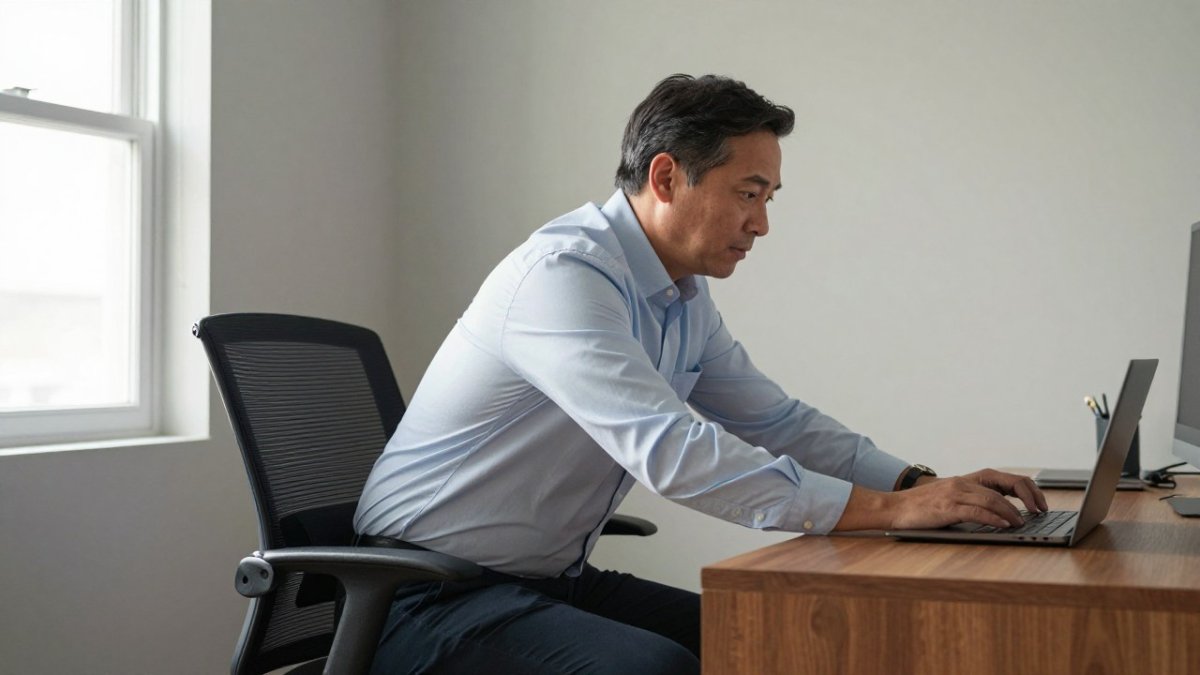
Your neck holds your head, which weighs about the same as a bowling ball. When your head drifts forward toward a screen, those muscles work harder to keep it upright. Over several hours, that extra effort adds up to stiffness and soreness.
Long periods of sitting make the problem worse. Muscles that stay in one position for too long lose blood flow and begin to ache. Common signs include:
- A dull ache at the base of the skull
- Tightness across the top of the shoulders
- Stiffness when turning to check a mirror or back up a car
- Headaches that start near the back of the head
Stretching helps. A 2017 review of exercise in office workers with neck pain found that the one included study using stretching reported significant improvement in neck pain (Effectiveness of exercise in office workers with neck pain). A separate 2025 review describes stretching as a way to reduce stress on the neck and increase range of motion (The Effect of Tissue Stretching and Release Strategies). The evidence for stretching alone is still limited, though, so think of stretches as one useful tool, not a full fix.
Neck Pain Exercises at Home You Can Do in Five Minutes
Most neck routines online are a flat list of stretches with no order and no sense of timing. A routine built for the end of a long workday is different: it should move from the tightest, most guarded area outward, ramp up gently, and finish with something that calms the nervous system rather than revs it up.
Minute 1, Reset the head position. Sit tall with feet flat on the floor. Do five slow chin tucks: pull your head straight back as if making a double chin, hold each for five seconds, and release.
Minute 2, Release the base of the skull. Lower your chin toward your chest and hold for 20 to 30 seconds. Breathe out slowly on each exhale. Then do a gentle suboccipital release: interlace your fingers behind your head at the base of the skull and let the weight of your forearms gently traction the head for 20 seconds.
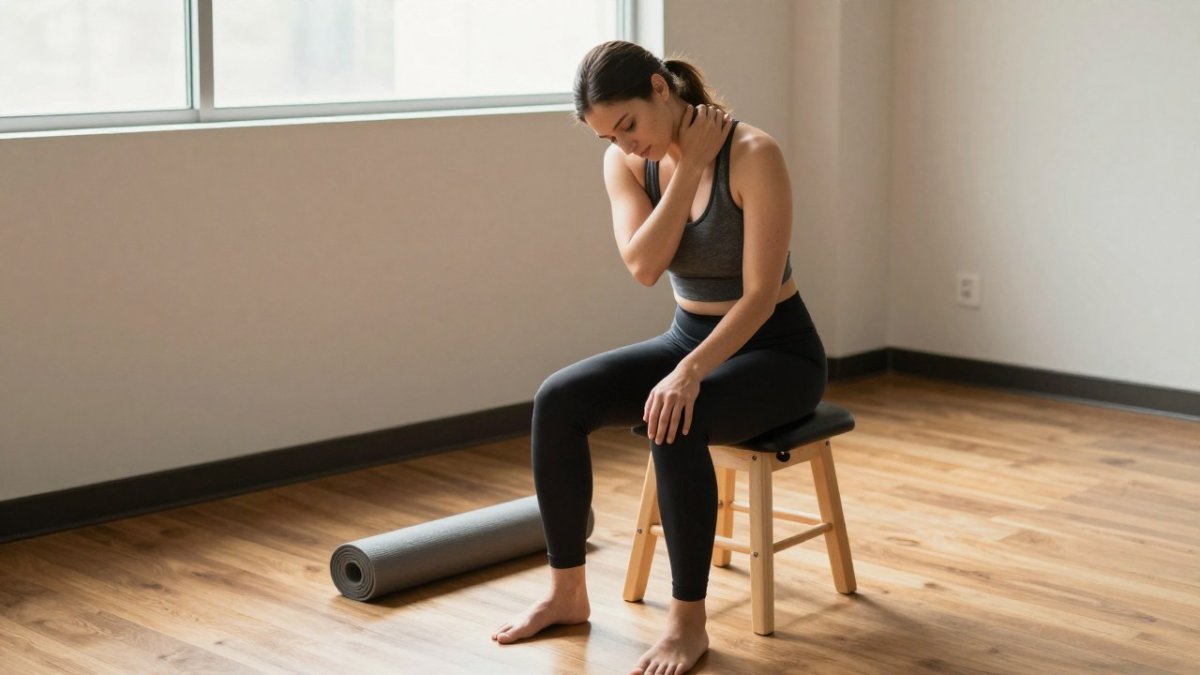
Minute 3, Open the sides. Tilt your right ear toward your right shoulder and hold for 20 to 30 seconds, keeping the left shoulder down. Switch sides. Then add a small variation: place your right hand lightly on the left side of your head for a slightly deeper stretch, but keep the pressure gentle.
Minute 4, Rotate and mobilize. Turn your head slowly to the right and hold for 10 seconds, then to the left and hold for 10 seconds. Repeat twice per side. Follow with five slow shoulder rolls backward, then five forward.
Minute 5, Cool down. Clasp your hands behind your back, straighten your arms, and lift your chest gently for 20 seconds. Finish with three slow breaths, letting your shoulders drop on each exhale.
Watch out: if any step produces sharp pain, numbness, or tingling down an arm, stop that movement and skip to the cool-down, those are not normal stretch sensations.
A common pattern is that people rush the first minute and skip the reset, then wonder why the side stretches feel like they are pulling rather than releasing. The order matters more than the total time.
Neck Stretching Exercises With Pictures: Forward, Back, Side and Rotation
Most neck stretches fall into four directions. Working through each one covers the main muscles of the neck and upper back.

Forward stretch: Gently drop your chin toward your chest. Feel the stretch along the back of your neck.
Backward stretch: Slowly tilt your head back as far as is comfortable. Keep your movements small. This direction can pinch if you move too quickly.
Side stretch: Tilt your ear toward one shoulder while keeping your opposite shoulder down. Hold, then switch sides.
Rotation: Turn your head to look over one shoulder, then the other. Keep the motion smooth and within a comfortable range.
Picture yourself in a bright home office, one hand resting on the desk and shoulders relaxed, as you tilt your head to the side. Keeping your shoulders loose is just as important as the head movement itself.
How Long Should I Hold a Neck Stretch?
Most guidance suggests holding each neck stretch for about 15 to 30 seconds. Shorter holds may not give the muscle time to relax. Holding much longer than that often adds strain without adding benefit.
Repeat each stretch two to three times on each side. Breathe normally during the hold. Holding your breath tends to tighten the muscles you are trying to loosen.
Workplace Neck Stretches You Can Do Without Leaving Your Chair
You can stretch between tasks without standing up or leaving your workspace. These moves are discreet enough for most office settings:
- Chin tucks: Pull your head straight back as if making a double chin. Hold for five seconds and repeat five times.
- Shoulder rolls: Roll both shoulders up, back and down, ten times.
- Upper back reach: Clasp your hands behind your back and gently straighten your arms while lifting your chest.
- Seated side bend: Reach one arm overhead and lean gently to the opposite side.
Set a reminder to move every hour. Short, frequent breaks often do more than one long stretch session at the end of the day.
Choosing Stretches Based on Where You Feel the Tension
Not every neck feels the same, and the location of your tension usually points to a specific cause at your desk. Matching the stretch to the pattern, and fixing the setup that created it, is what separates a routine that gives temporary relief from one that reduces how often tension returns.
Tension at the base of the skull, with headaches starting at the back of the head. This pattern typically comes from a screen that sits too low, so you spend hours looking down. The fix: raise your monitor so the top third of the screen is at eye level. The stretch: chin tucks and the forward chin-to-chest stretch, done slowly.
Tightness along the top of the shoulders, especially on the side you mouse with. This usually traces to a keyboard placed too far forward or a mouse reached for at an angle, which keeps the shoulder elevated and the upper trapezius shortened. The fix: bring the keyboard close enough that your elbows stay near your ribs, and keep the mouse at the same height as the keyboard.
Stiffness between the shoulder blades, with a feeling of being pulled forward. This pattern often comes from a chair with no lumbar support or a seat that is too deep, which rounds the upper back and tightens the chest. The fix: add a lumbar cushion or roll a towel behind your lower back, and set the seat depth so you can sit with your back against the backrest.
Pain that turns your head poorly, with tightness on one side of the neck. This can come from holding your phone between your ear and shoulder, or from a monitor positioned off to one side. The fix: use a headset or speakerphone, and center the monitor directly in front of you. The stretch: slow rotation within a comfortable range, plus a gentle side bend toward the tight side.
Watch out: if the tension is consistently worse on one side and comes with numbness or weakness in that arm, that is not a posture pattern, stop stretching and have it looked at.
If you are unsure where your tension sits, try the four patterns above and notice which one matches both the location and the desk habit. For a structured self-treatment approach, you can follow a McKenzie Method guide for neck pain step by step. Pay attention to what changes over a week, not just what feels good in the moment. Persistent tension that keeps returning despite setup changes is a sign that a movement assessment, not another stretch, is the next step. If it keeps coming back, targeted neck pain care can address the cause directly.
When to Stop Stretching and Book a Discovery Call
Stretching should never cause sharp, shooting, or numbing pain. Stop right away if a stretch brings any of the following:
- Pain that spreads into the arms or hands
- Numbness, tingling, or weakness
- Headaches that get worse after exercise
- Dizziness or vision changes
Seek prompt medical care if you have sudden severe neck pain, pain after an injury, fever with a stiff neck, or new trouble with balance or walking.
If your neck pain lasts more than a few weeks, or stretching gives only short relief, consider talking with a professional. A discovery call is a low-pressure way to find out whether one-on-one physical therapy may fit your situation. Schedule Your One-On-One Evaluation with Dr. Elizabeth Kingshott Cary, who is certified in the McKenzie Method (Mechanical Diagnosis and Therapy) and trained in the Selective Functional Movement Assessment (SFMA). You can also book a discovery call by phone at (248) 677-0720 or by email at recovery@spinalhaven.com.
Stretches can be a good daily habit, but they work best as part of a plan that addresses what is driving your tension in the first place. Start with the routines above, pay attention to your body's response, and reach out when you need more support.
Frequently Asked Questions
How can I release neck tension after a long workday?
Start by standing up and changing position every 30 to 60 minutes. Gentle movements such as slow chin tucks, easy side bends and shoulder rolls can ease stiffness that builds from sitting. Hold each stretch without bouncing and stop if you feel sharp pain, numbness or tingling. Pairing these movements with a better monitor height and a chair that supports your lower back can reduce how much tension builds up in the first place. If tension keeps returning, a physical therapist can assess the cause and build a plan around your specific movement patterns.
How long should I hold a neck stretch?
Most people hold a gentle neck stretch for about 15 to 30 seconds, repeating it two to three times on each side. Holding longer is not always better, especially if the stretch increases pain. The goal is a mild pull, not discomfort. Breathe slowly through the stretch and ease off as soon as you feel the muscle release. If you feel pain that lingers after you finish, reduce the intensity or stop and consult a qualified professional.
What stretches help neck and shoulder tension from sitting at a desk?
Shoulder rolls, upper trapezius stretches and chin tucks target the muscles most often strained by desk work. Shoulder rolls can loosen the top of the shoulders, and a gentle side bend can stretch the upper trapezius. Chin tucks help counter a forward head posture. Repeat each movement slowly, a few times a day, and keep the motions pain-free. These exercises support general comfort but are not a substitute for an individual assessment.
When should I seek help for persistent neck pain?
See a qualified health professional if neck pain lasts more than a few days without improving, wakes you at night, spreads into your arms, or comes with numbness, tingling, weakness, headaches, dizziness or fever. Sudden severe pain after an injury also warrants prompt medical attention. A physical therapist can evaluate how your neck, shoulders and upper back move and recommend a personalized plan. Book a discovery call to talk through your symptoms and what a consultation would involve.